

Walk into an Italian kitchen on a Sunday afternoon, and you hear it before you see it: overlapping voices, sudden laughter, the clatter of plates, and a grandmother insisting that everyone eat just a little more. Nobody is in a hurry. Nobody is checking the time.
I was born in Italy and now live in Australia, and it was only from this distance that I began to see my own culture clearly. So what makes an Italian, Italian? The honest answer runs far deeper than pizza, football, and waving hands. The most telling Italian characteristics are not habits at all, but values: family, warmth, beauty, and a quiet art of savoring life. This is a warm look at the seven traits that define us and the deeper meaning beneath each.
What makes someone Italian? Beyond the passport
Being Italian is less about a passport than a way of being. Italian characteristics blend fierce family loyalty, emotional expressiveness, a love of good food and beauty, and a philosophy of savoring life known as la dolce vita. Shaped by centuries of art, history, and Mediterranean living, these traits form a shared cultural identity.
Of course, no single list can capture 60 million people. An Italian from Milan and one from Palermo may feel as different as two strangers. Yet certain threads run through the whole peninsula, stitched in over generations. They show up at the dinner table, in the way we greet a friend, and in how we treat an ordinary Tuesday. Understanding these threads is the closest thing there is to understanding the Italian heart.
Passion and gestures: Speaking with the whole body
Italians speak with the whole body. A conversation is rarely just words; it is eyebrows, shoulders, and above all, hands. Researchers have cataloged more than 250 distinct hand gestures in everyday Italian speech, from the pinched-fingers gesture of “ma che vuoi?” (roughly, “What do you want?”) to a flat hand that says: “Let me finish.” There are signs of hunger, of disbelief, of “Be careful,” even of “That idea is nonsense.” They are learned in childhood, as naturally as words, and many Italians could hold half a conversation with their hands alone. To an outsider, it can look like an argument. To us, it is simply full attention.
This passion is often mistaken for drama. Volume, in Italy, is not a sign of anger but of engagement; we get loud because we care about what we are saying. As the cultural reference Cultural Atlas notes, Italians tend to be direct, curious, and openly emotional communicators who expect the same honesty in return.
That same warmth is physical. We hug, we kiss both cheeks, we touch an arm to make a point. Every culture has its own choreography of connection. Where some traditions greet with a respectful bow, Italians close the distance and pull you in. And we have little patience for small talk. Ask an Italian how they are, and you may get a real answer. We would rather have one meaningful conversation than ten polite ones. It is the same romantic streak that fills our songs and legends, from opera to the sighing tales of Venice. If you enjoy the poetry of Italian culture, you will love the myths of Venice’s Bridge of Sighs.
Famiglia: The heart of Italian life
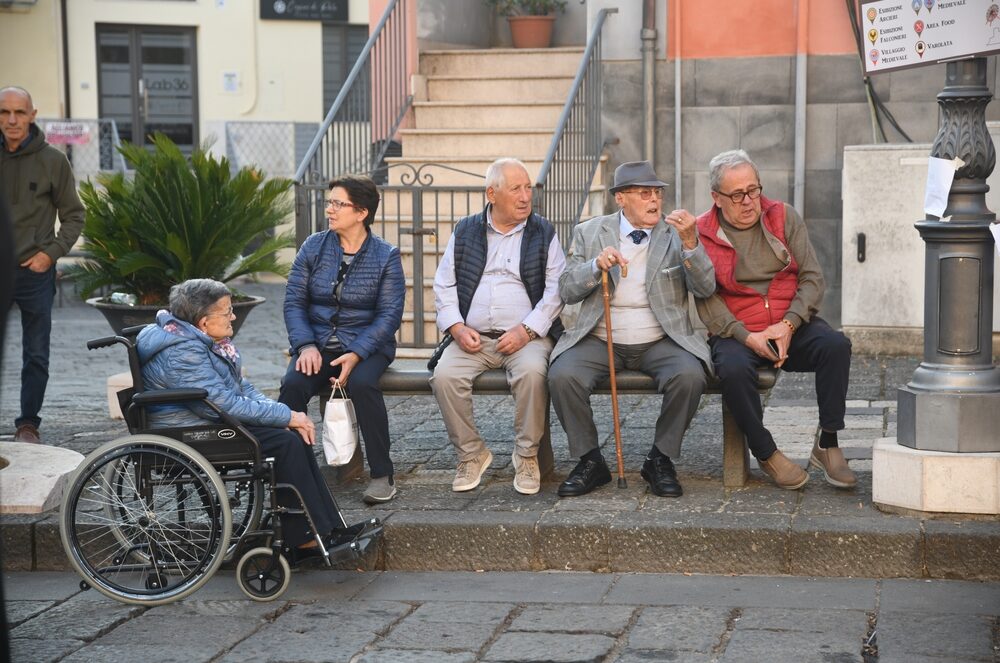
If one word explains most Italian characteristics, it is famiglia. Family is not one priority among many; it is the ground from which everything else grows. Grandparents, aunts, cousins, and children orbit close, often within the same town or even the same building. At least once a week, usually on Sunday, everyone gathers for a long lunch that can stretch into the evening.
Outsiders sometimes tease Italians for living with their parents well into adulthood. There is truth in it, and it is not only about rent. In Italy, home is a place of belonging, not just shelter, and independence tends to arrive later and more gently than in other cultures. The bond with one’s mother, in particular, is legendary for a reason.
The result is a deep sense of loyalty and security. You are never quite alone. When trouble comes, the family closes ranks; when there is joy, it multiplies around the table. That warmth rarely stops at the family door, either. Guests are folded in quickly, fed generously, and treated as honorary relatives for the length of a visit; hospitality, or l’ospitalità, is really family feeling turned outward. This closeness is the quiet engine behind Italian warmth, and it teaches a lesson that travels well: relationships, tended patiently over years, are where a life is actually built.
The Italian table: Where food becomes love
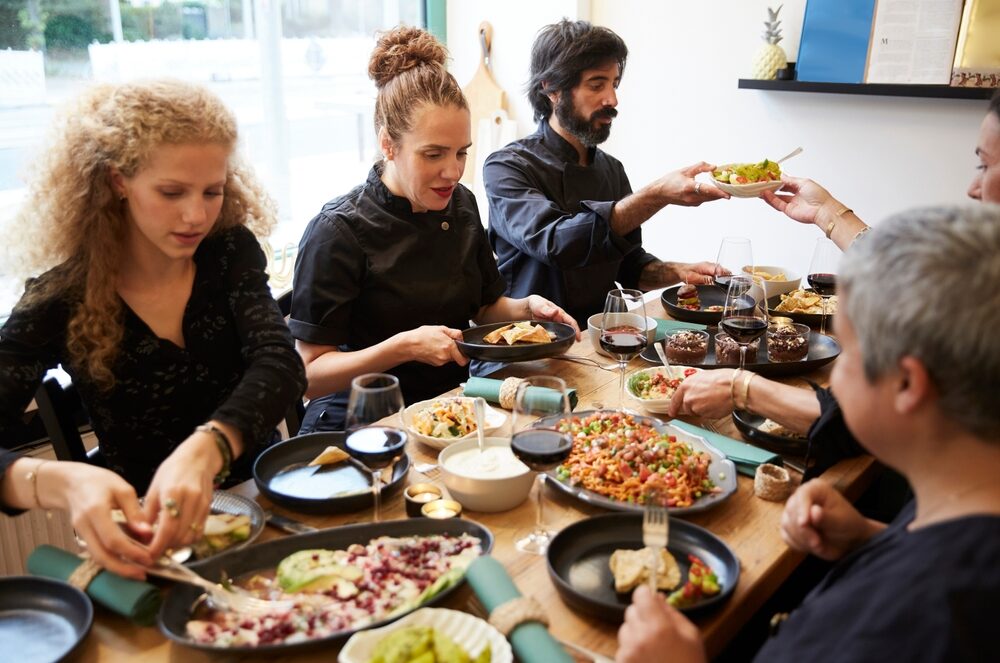
Food and family are almost one and the same in Italy. But Italian cooking is not really about elaborate recipes; it is about respect for good ingredients. A perfect tomato, fresh basil, real olive oil, and bread bought that morning. Simplicity, done with care, is the whole philosophy. Italians eat an estimated 23.5 kilograms of pasta per person each year, more than anyone else in Europe, yet the meal is never rushed. This is why the Mediterranean diet has become shorthand for eating well. It is not a fad but a heritage, so valued that UNESCO added it to its list of Intangible Cultural Heritage in 2010. Courses arrive in a deliberate order, each one savored, so a meal becomes an event rather than a refueling stop.
The rituals reach beyond the plate. A morning espresso taken standing at the bar, an evening aperitivo with friends before dinner, a coffee that no one hurries; these small ceremonies punctuate the Italian day and turn eating and drinking into quiet occasions for connection. At its heart, the Italian table is where food becomes love. To cook for someone is to care for them; to leave food on your plate can quietly wound the cook. Meals are the daily ritual where the family renews itself, where children learn who they are, and where the day slows down long enough for everyone to be together. That is the real recipe.
Bella figura and la dolce vita: The art of living beautifully
Two ideas explain why Italians treat everyday life as something worth doing beautifully. The first is bella figura; the second is la dolce vita.
Bella figura: Looking and living well
Bella figura means “making a good impression,” but it runs deeper than vanity. Italians are famously well-dressed, yet there is no single Italian style; taste is personal, and looking sloppy simply is not the point. To present yourself with care is a form of respect, for yourself and for the people you meet. It extends to a tidy home, a graceful welcome, and the effort to do things properly. It is why a grandmother will dress with care just to buy bread, and why cutting a scruffy corner is quietly frowned upon. Appearance, in the Italian sense, is really about dignity.
La dolce vita and dolce far niente: Savoring the moment
La dolce vita, the “sweet life,” is the philosophy the rest of the world romanticizes, and for good reason. Crystallized in Italy’s postwar years and made famous by Fellini’s 1960 film, it champions beauty, leisure, and human connection over haste. Its gentle cousin, dolce far niente, means “the sweetness of doing nothing,” an unhurried pleasure in a sunset walk or a coffee that lasts an hour. This is not laziness. It is the deliberate choice to be present, a small daily rebellion against the rush of modern life.
Creativity and ingenuity: A nation of makers and rule-benders
Italians are, almost by inheritance, creative. This is the land of Leonardo da Vinci, Michelangelo, Botticelli, and Dante, a place where art, music, and design are woven into ordinary life. Much of the vocabulary of music itself is Italian, and the instinct to make something beautiful shows up everywhere, from a hand-painted shop sign to the shape of a sports car. It is no accident that the same country gave the world Renaissance masters and modern fashion houses, opera and cinema, Ferrari and the espresso machine. Beauty here is not a luxury reserved for museums; it is expected in everyday life.
That creativity also has a mischievous side. Italians have a genius for arrangiarsi, the art of getting by, of finding the clever, unofficial solution when the rules are inconvenient. It can frustrate outsiders, but it reflects a flexible, resourceful mind that trusts human judgment over rigid systems. Centuries of layered history, including the cross-currents that shaped the wider Mediterranean, gave Italy this inventive spirit; you can trace similar threads in the hidden influence of Moorish culture on Europe.
The upside is a culture that improvises with style. For a broader view of that artistic lineage, Britannica’s overview of Italy traces how its art and design shaped the Western world. Italians did not just inherit beauty; they keep remaking it.
Beyond the stereotype: The real, regional Italy
Here is the honest caveat every list needs. Not every Italian talks with their hands, adores their mother, or lingers over 3-hour lunches. Italy is a mosaic, not a single portrait. The north is often seen as more modern, individual, and business-minded, while the south holds more tightly to tradition and a slower rhythm. Between the two lie countless local worlds, each with its own dialect, dish, and pride. A Neapolitan pizza, a Bolognese ragù, a Sicilian cannolo, and a Piedmontese risotto are not interchangeable; each region guards its recipes like heirlooms. Italy became a single country only in 1861, and those older local identities never truly faded.
Stereotypes, even affectionate ones, only ever capture a sliver of the truth. Many Italians are quiet, reserved, or private, no different from anyone anywhere. Treating an entire people as a caricature, however fond, overlooks the individuals within it. The point of exploring Italian characteristics is not to flatten them into a cliché but to understand the values that so many Italians genuinely share, and then to notice how differently each person lives them out.
That mix of shared culture and fierce individuality is, perhaps, the most Italian thing of all. To read more stories that celebrate the world’s living cultures, explore Nspirement’s coverage of culture and community.

Common questions about Italian characteristics
Why are Italians so passionate and expressive?
Italian expressiveness grows from a culture that prizes emotional honesty and human connection. Speaking with the hands, raising the voice, and greeting with a kiss are not signs of conflict but of engagement. Shaped by close family life and Mediterranean warmth, Italians tend to show what they feel rather than hide it.
What is la dolce vita?
La dolce vita, meaning “the sweet life,” is the Italian art of savoring everyday existence. Rooted in postwar Italy, it values beauty, leisure, good food, and human connection over hurry and materialism. Its companion idea, dolce far niente, celebrates the simple pleasure of doing nothing at all.
Why is family so important in Italian culture?
In Italy, family, or famiglia, is the foundation of identity and belonging. Extended relatives often live close and gather weekly for long Sunday meals. This closeness offers lifelong loyalty and security, and it shapes many other Italian characteristics, from warmth toward guests to the central role of shared food.
What being Italian really teaches us
So, what makes an Italian? Not one thing, but a woven whole: passion that speaks with the hands, a family that anchors everything, a table where food becomes love, a care for beauty in both dress and daily life, a philosophy of savoring the moment, a restless creativity, and the honest truth that no two Italians are alike. These Italian characteristics are less a checklist than a way of moving through the world with heart.
You do not need an Italian passport to borrow the best of it. Slow down over a meal. Call your family. Do one thing beautifully today, for no reason but the joy of it. Let a conversation run longer than it should. That, more than any stereotype, is la dolce vita, and it is available to anyone willing to live a little more warmly.
Follow us on X, Facebook, or Pinterest
