
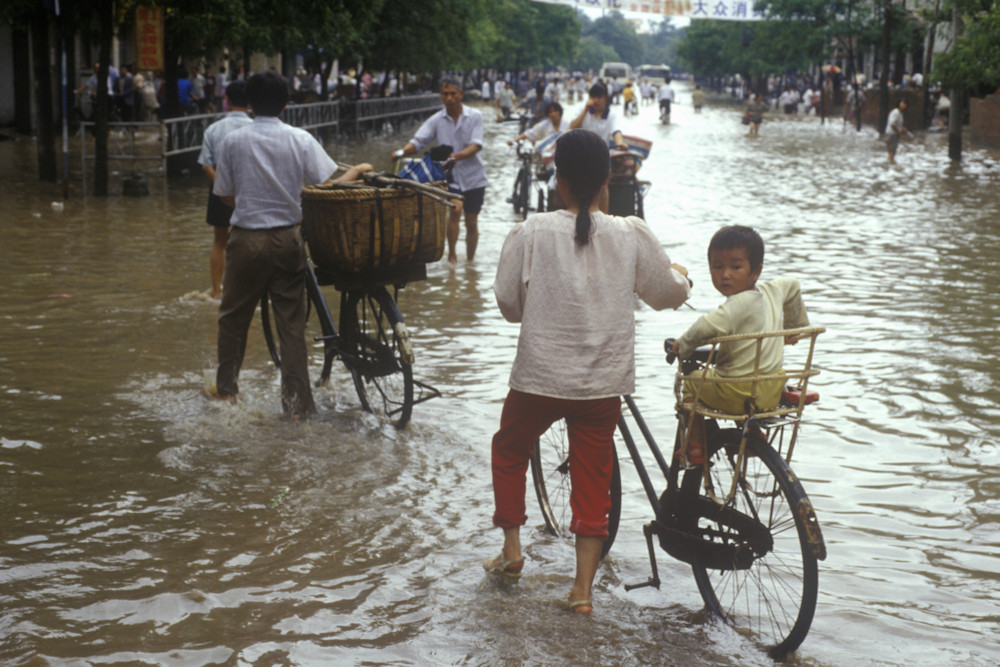
Severe flooding swept through parts of Guangxi after days of heavy rain caused several reservoirs to overflow or breach their dams. Among the worst affected was Liulan Reservoir in Hengzhou, a county-level city under Nanning’s administration, where floodwaters destroyed homes and farmland and inundated several downstream communities.
Dutian Old Village suffered extensive damage. Houses were reduced to rubble, roads were buried beneath debris, and farmland disappeared under the water. Despite the destruction, no deaths were reported in the village.
Accounts differed over whether anyone was injured. One report said that no villagers were hurt, while another said one person was injured after jumping from a building. Villagers nevertheless regarded the absence of fatalities as extraordinary and credited their survival to the protection of the village’s Earth God.
A warning in a dream
On July 6, heavy rain associated with Tropical Storm Maysak caused Liulan Reservoir to overtop and breach. At around 8 a.m., powerful floodwaters rushed downstream, rapidly submerging villages and sweeping away buildings and crops.
According to villagers, many residents had experienced similar dreams the previous night. They said an elderly man with a white beard appeared carrying a cane, knocked on their doors, and repeatedly urged them to seek safety in the mountains.
Other residents reportedly heard unusual noises coming from the village’s Earth God temple before the flood.
Alarmed by the warnings, villagers notified one another and helped elderly residents and children evacuate. By the time the floodwaters reached the village the following morning, many residents had already reached higher ground.
Villagers could not independently verify the dream accounts, but later interpreted them as a warning from the Earth God.
A statue amid the ruins
The Earth God, known in Chinese as Tudigong and also called Fude Zhengshen, or the God of Fortune and Virtue, is among the most familiar deities in Chinese folk religion.
Traditionally regarded as the guardian of a particular area, the Earth God is associated with the land, agriculture, community welfare, and local peace. Small temples dedicated to the deity are especially common in rural communities, where residents may pray for protection and successful harvests.
The Earth God temple in Dutian Old Village was heavily damaged by the flood. Large portions of its walls collapsed, and villagers said eight of the structure’s 12 pillars were washed away.
Nevertheless, four pillars remained standing, preventing the shrine from collapsing completely. The Earth God statue remained seated in its original position, while couplets attached to a broken wall behind it also appeared to have survived.
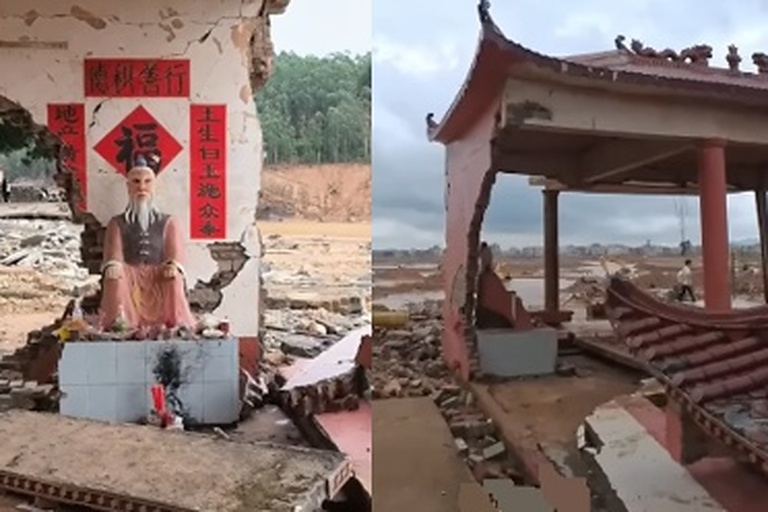
Images and videos showed the small statue surrounded by shattered walls, mud, and the remains of nearby buildings.
For villagers returning after the flood, the sight carried deep spiritual significance. Some reportedly wept when they saw that the statue was still in place.
Residents said dozens of houses had been damaged or swept away, with some foundations torn from the ground. They believed the Earth God had exhausted his strength protecting the village and warning its residents to escape.
Many people later visited the damaged temple to worship and express gratitude.
Images attract attention online
Videos and photographs of the surviving statue spread rapidly across Chinese social media. Commenters described it as “the strongest local deity” and praised the Earth God for remaining “as steadfast as Mount Tai.”
One commenter wrote that people should retain a sense of reverence for the divine. Others saw the statue’s survival and the villagers’ survival as evidence that good deeds had protected the community.
Some residents said the timing of the dam breach had also spared lives. Because the flood struck during the morning rather than at night, villagers had a greater opportunity to recognize the danger and escape.
“If it had happened at night, the consequences would have been unimaginable,” one person said.
Another commenter suggested that the village must have been home to many people who had accumulated virtue through good deeds and were therefore protected.
The incident became a source of comfort and hope for some people following the disaster, although the village itself remained badly damaged. Roads were blocked by debris, preventing vehicles from entering, and some residents could reach their homes only on foot.
Questions over the official warning
Alongside expressions of gratitude and religious devotion, the disaster also prompted criticism of the official response.
According to local residents, officials fully opened the reservoir’s floodgates at approximately 6 a.m. on July 6. Villagers said they did not receive evacuation notices until around 8 a.m., roughly two hours later.
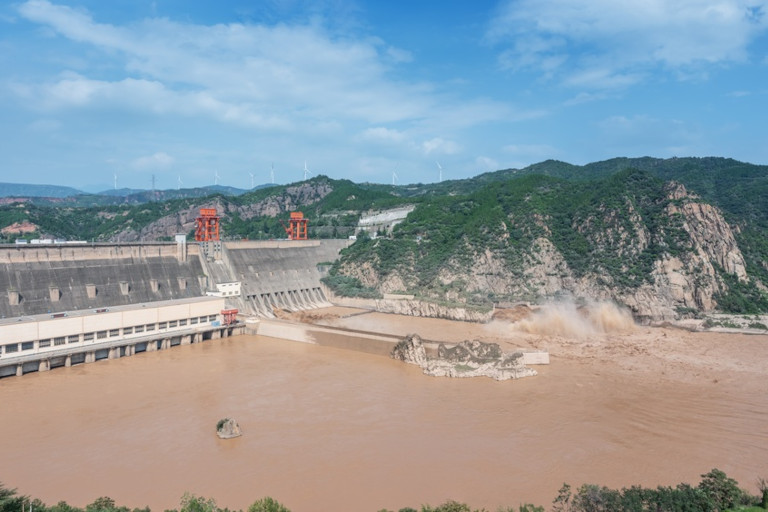
Many criticized authorities for failing to warn residents earlier.
Commenters also contrasted the survival of the modest Earth God shrine with the reservoir’s failure, which they said had received substantial funding for reinforcement against a once-in-a-century flood.
The two Chinese reports framed the incident within broader concerns about reservoir management during periods of extreme rain. In recent years, floods in China have repeatedly been accompanied by allegations that reservoirs discharged water without giving downstream communities sufficient notice.
Such delays can leave residents with little time to protect their families, livestock, homes, and property.
For the people of Dutian Old Village, however, the surviving statue became the defining image of the disaster. Surrounded by ruins, it represented not only the destruction the village had endured, but also the villagers’ belief that they had received a warning and were protected from an even greater tragedy.
Translated by Chua BC
Follow us on X, Facebook, or Pinterest
