
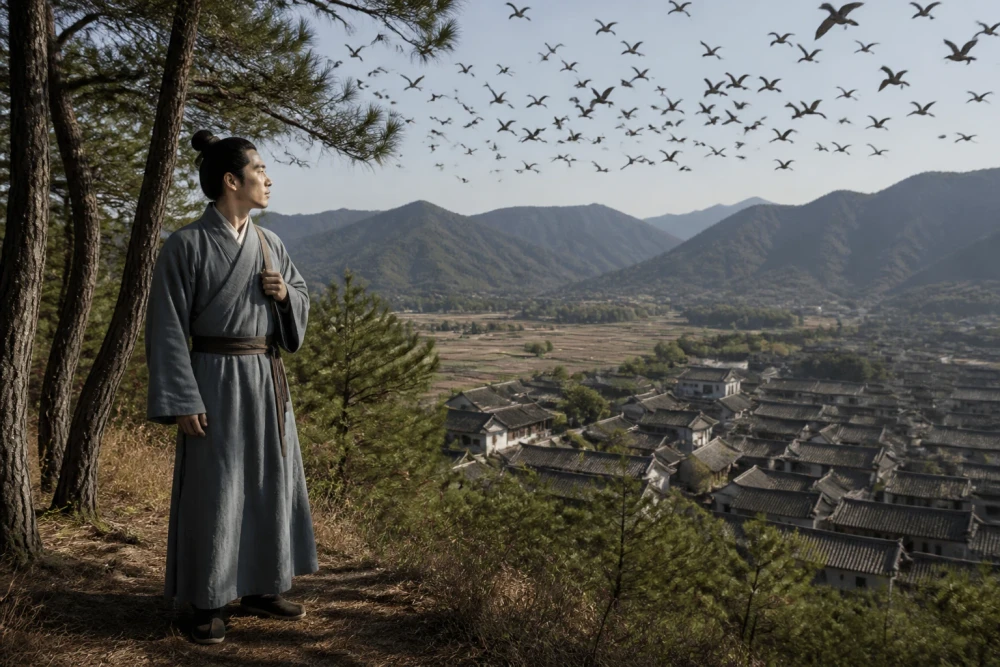
Disasters can arrive with little warning. Sometimes, however, signs of danger appear before catastrophe strikes — and survival may depend on whether someone recognizes them and acts in time.
On Aug. 26, 2026, a catastrophic flood swept through Nepal’s Trishuli River valley after an ice-rock avalanche near the Nepal-Tibet border sent water, mud, and debris rushing downstream. At Tribhuvan Trishuli Secondary School in Nuwakot district, principal Rajendra Dawadi was teaching when warnings arrived that floodwaters were rapidly approaching.
About 900 of the school’s 1,643 students were already on campus, while hundreds of others were still traveling to school. After receiving reports that an upstream settlement had been hit, Dawadi decided there was no time to wait.
He ordered the students on campus to evacuate immediately to higher ground and contacted school buses that were still on the road, instructing their drivers to turn back. Some students who had already arrived by bus were sent away again, while others fled uphill on foot. Within minutes, floodwaters reached the school grounds and swept away buildings, including a hostel near the river.

All 1,643 students survived.
Dawadi later explained that the choice had seemed simple: If the warning proved false, the students would lose only a day of classes. If he ignored it and the danger was real, hundreds of lives could be lost. He said that a delay of just 10 minutes could have had devastating consequences.
Modern society has telephones, the internet, satellites, and sophisticated warning systems that allow news of danger to travel quickly. But traditional stories tell of a time when people looked for warnings in the natural world itself.
One such legend comes from Zhaoxin County in Anhui Province.
A warning from the birds
One summer day, a man named Kong Yi was walking outside the county seat. The sky was cloudless, the sun was blazing overhead, and residents went about their business as usual. Nothing suggested danger was near.
As Kong Yi passed a wooded area, however, he heard an unusually loud and chaotic chorus of birds calling from the treetops. To most people, it might have sounded like nothing more than the familiar commotion of birds in a summer forest.
Kong Yi heard something very different.
According to the legend, he could understand the language of birds, and their cries carried an urgent warning: “Zhaoxin County will be flooded! A mountain flood is coming! Run for your lives!”
Kong Yi looked up at the clear blue sky in astonishment. No clouds hung overhead, and no rain fell in sight, yet the birds seemed to cry out in alarm. He concluded that something terrible must have happened upstream in the mountains.
Without delay, he ran to the county magistrate’s office and begged the official to order the townspeople to evacuate to higher ground.
The magistrate was skeptical. Outside, the weather remained clear and peaceful. He wondered whether Kong Yi was merely spreading frightening rumors. Kong Yi nevertheless continued to plead with him, even offering his own life as a guarantee that the warning was genuine.
Convinced by Kong Yi’s sincerity, the magistrate finally decided that it was better to take precautions than to risk ignoring the warning. He ordered county officials to beat drums and sound the alarm, urging residents to leave the town and seek higher ground.

That night, a tremendous flood came roaring down from the mountains. According to the story, days of heavy rain upstream had sent torrents of water, mud, and boulders surging toward Zhaoxin County. Embankments gave way, houses were destroyed, and streets disappeared beneath the water.
But the residents had already reached safety. The legend says that although the town was devastated, the tens of thousands who lived there escaped without losing a life.
How Kong Yi understood the birds
How, then, could an ordinary man understand the birds’ warning?
The legend says Kong Yi was a kindhearted physician. One day, he saw a badly injured wild goose that was about to be slaughtered. Seeing tears in the bird’s eyes, he took pity on it and paid to save its life.
Kong Yi brought the goose home, treated its wounds, and carefully nursed it back to health. When the bird had recovered and was ready to leave, it plucked one of its own feathers and gave it to him in gratitude.

From that day forward, the story says, Kong Yi gained the extraordinary ability to understand birds’ calls.
Whether taken as a supernatural account or as a traditional tale passed down through generations, the story centers on two acts of compassion and trust. Kong Yi first showed mercy to a helpless creature; later, when danger approached, the gift he received in return let him warn others. The magistrate, in turn, chose not to dismiss a warning simply because the danger could not yet be seen.
Centuries later, the circumstances in Nepal were very different, but the lesson was strikingly similar: When signs of disaster appear, recognizing them is only the first step. Lives may depend on having the courage to act before it is too late.
Source: Qiwen’s Street Talk
Translated by Chua BC
Follow us on X, Facebook, or Pinterest
