
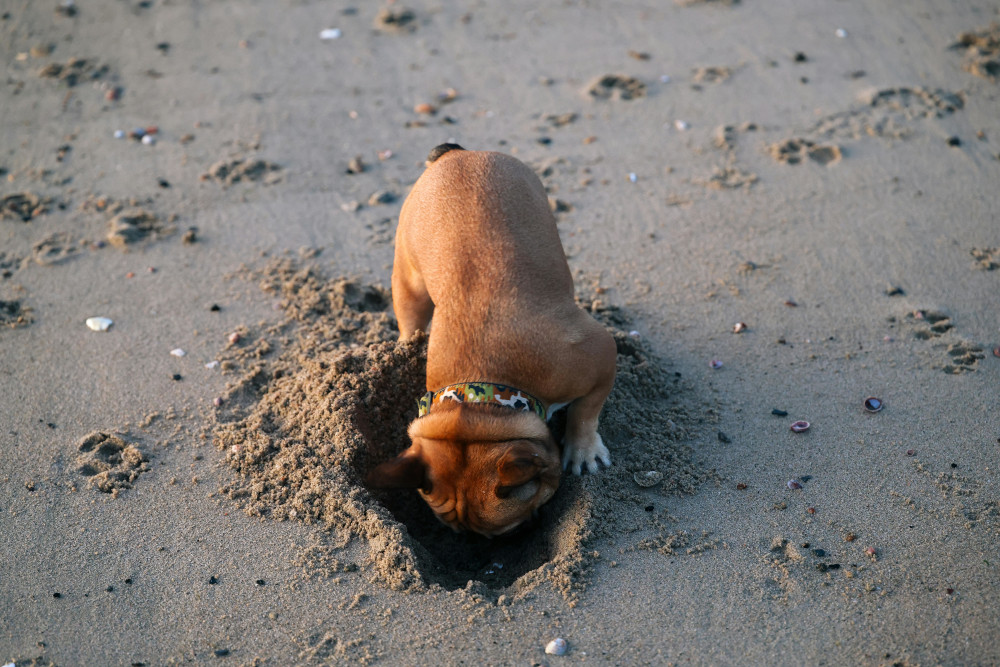
Have you ever seen a dog focused on nuzzling their expensive treat under a blanket, behind a couch cushion, or into a freshly dug hole in the backyard? You might think they are behaving like a paranoid doomsday prepper, but they aren’t stockpiling their food due to anxiety about an impending disaster.
Instead, they’re revealing how their evolutionary past still shapes modern behaviors. This forward-thinking strategy offers us a unique window into how we can help them live well.
Why do dogs cache food, treats, and toys?
You might have heard of “caching,” the scientific term for storing food in hidden places for later use. This behavior is widespread across the animal kingdom, from squirrels to crows and wolves.
Caching behavior generally falls into one of two categories.
One is known as larder hoarding — think of a squirrel stashing nuts in just one or two places to draw from as they get through a long winter.
The other is known as scatter hoarding. It is where animals make smaller caches of surplus food in many different locations, reducing the chance of losing everything to a competitor or going hungry in lean seasons. It’s mostly seen in wild canids such as foxes and wolves.
This behavior in modern dogs is an instinctual remnant. It reflects the competitive feeding patterns of their ancestors, who lived by hunting, for whom securing food was unpredictable, but crucial for survival.
Dogs appear to rely on a combination of scent and observational spatial memory to remember where they have cached special items, such as food, treats, and toys.
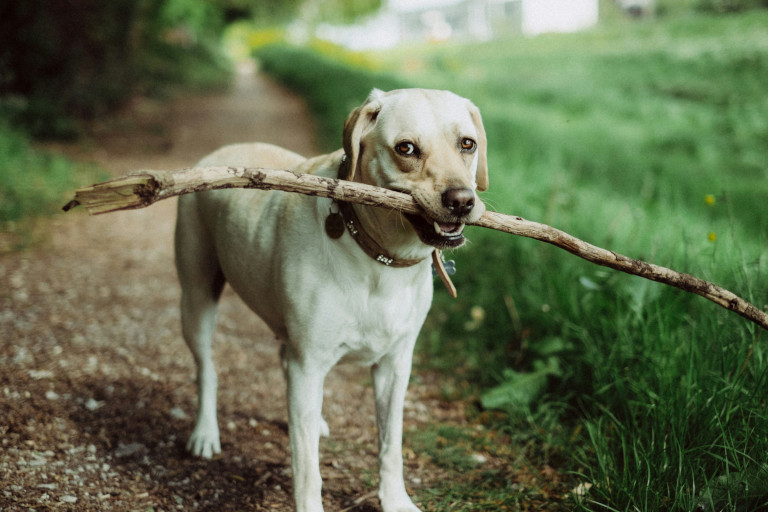
Is my dog worried I won’t feed it next week?
When we see today’s household dogs taking their toys to quiet places to hide them, nosing blankets to cover treats, or digging a hole for a bone in the backyard, they aren’t consciously worried that they won’t be fed again.
This behavior is driven by an inherited survival mechanism. It shouldn’t be considered evidence that they anticipate being hungry in the future.
However, dogs who have experienced food scarcity or stress, such as displaced animals that have been stray, may cache more as a coping mechanism shaped by that experience.
It might also be more commonly seen in breeds that were selected for their hunting-type behaviors, such as terriers and hounds.
Is this behavior a problem?
If you’re finding that caching is a problem behavior in your home, it’s worth considering the underlying reason.
Our dogs’ behavior is how they communicate with us, and behavior we perceive as problematic (such as barking, digging, and jumping up) is often just normal behavior that doesn’t suit us in that moment.
When we invite dogs into our homes to live with us, we need to provide suitable outlets for their natural behaviors. These include daily physical activity, social connections they enjoy, and regular mental stimulation.
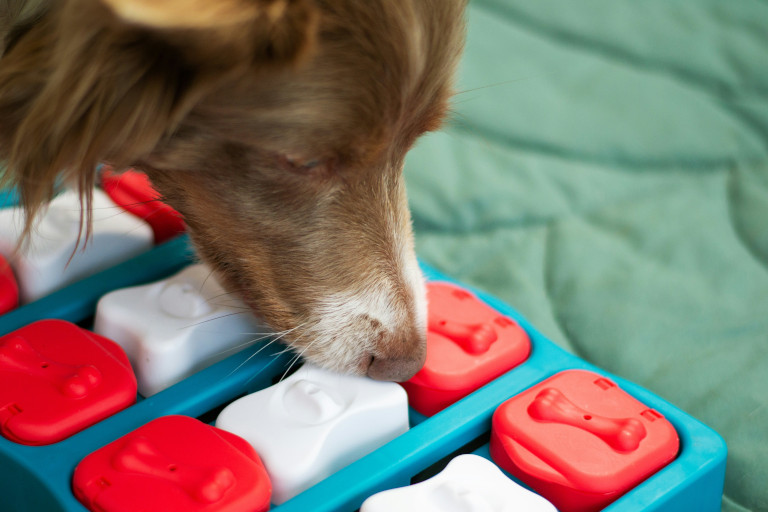
Snuffle mats and slow feeding interactive puzzle toys can be a terrific way to provide them with foraging-based behavioral interaction. These let you hide your dog’s food or treats in folds of fabric, compartments, or textured surfaces, so they then need to actively “problem-solve” to get at their goal.
This can keep dogs happily engaged, reducing boredom and anxiety. It might also help to satiate the same natural behavior itch that drives them to dig in the backyard.
If you are experiencing problems with dogs growling or defending their food (a behavior known as resource guarding) from other dogs or people in the home, you might need to explore strategies to keep everyone safe.
This could include making sure there are more toys or chews available than there are dogs in the environment to reduce any perceived competition. It could also mean giving multiple dogs their own areas to eat, separated by a physical barrier (for example, a door or a toddler gate).
If you’re concerned about your dog’s caching behaviors, consult your local vet or ask them to connect you to a professional with suitable animal behavior expertise.
Next time you see your dog carefully stashing that special item, you can relax, knowing they aren’t worried about an impending apocalypse or protesting against your choice of treat flavor. They are engaging in normal, natural behavior that speaks to their wild past.
Mia Cobb, Research Fellow, Animal Welfare Science Centre, The University of Melbourne
This article is republished from The Conversation under a Creative Commons license. Read the original article.
Follow us on X, Facebook, or Pinterest
