
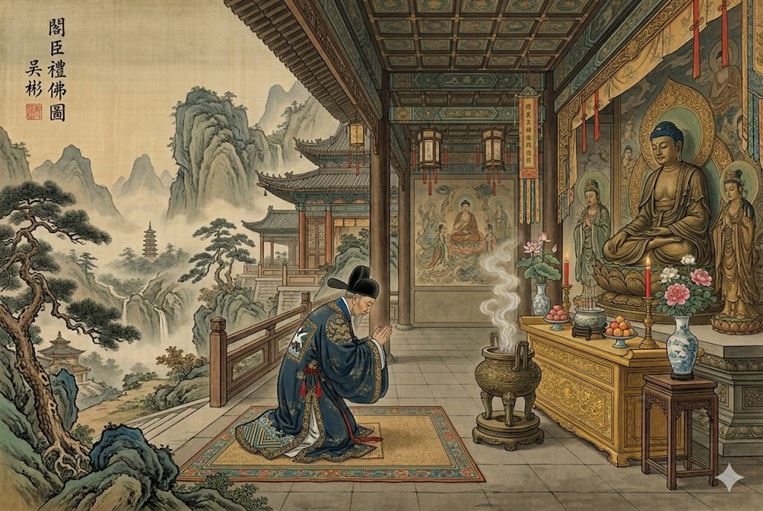
The story of the case-solving official
In imperial China, the role of a county magistrate was vastly different from that of a modern judge or police chief. Known affectionately as the “Father and Mother Official” (fumu guan), a magistrate was solely responsible for administration, tax collection, and the execution of justice within their jurisdiction. When heinous crimes occurred, the magistrate faced immense pressure from both his bureaucratic superiors and the local populace to restore order.
During the Ming Dynasty (1368-1644), a period characterized by vibrant literary traditions and a deep cultural fascination with justice, tales of exceptionally clever magistrates became a staple of popular folklore. These stories often highlighted a unique intersection between sharp human intelligence and cosmic intervention, illustrating the widespread belief that Heaven would always aid a righteous official in exposing the truth.
One of the most celebrated figures of this tradition during the Ming Dynasty was Ma Yingxiang, whose legendary exploits were recorded in imperial notebooks.
His devout nature helped him solve cases
While Ma Yingxiang served as magistrate of She County (in southeastern Anhui Province), a murder occurred within the prefecture. The case remained unsolved for a long time, and the killer could not be apprehended. His superiors handed this thorny case over to Ma Yingxiang.
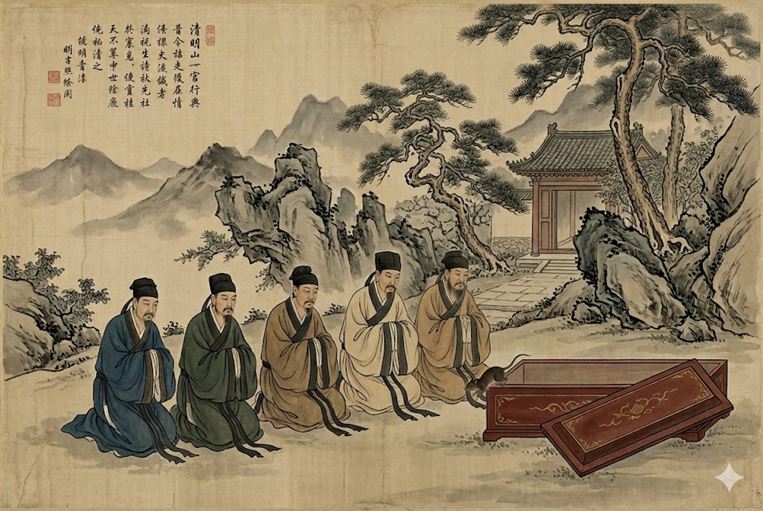
Ma Yingxiang was a devout believer. He first observed a period of fasting and abstinence, then went to a temple to pay his respects. There he prayed earnestly, saying: “If the divine permits me to know the truth, please send rain to reveal it to me!’
That night, heavy rain indeed fell from the sky. Ma Yingxiang knew that the divine would reveal the truth to him and help him solve the case. The next day, Ma Yingxiang ordered the suspects involved in the case to kneel one by one on one side of the hall while the coffin containing the deceased was placed on the other side. He then instructed the officers to remove the coffin’s lid.
As Ma Yingxiang was about to speak, intending to persuade the murderer to confess voluntarily, the coffin was opened. A rat scurried out and darted straight under the clothes of a suspect kneeling nearby, then vanished.
A sudden insight struck Ma Yingxiang. He immediately pointed at the man and declared: “This is a sign from the gods, you are the murderer!” The man’s face turned pale instantly. After a round of interrogation, the man quickly confessed and was brought to justice.
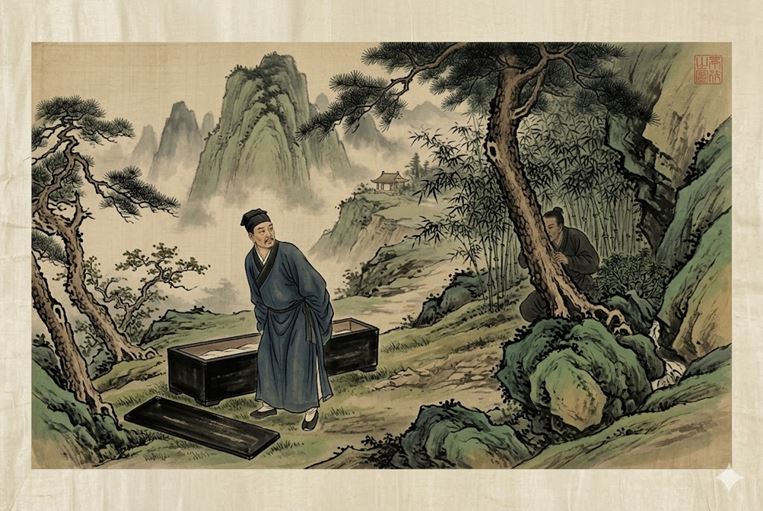
On another occasion, a man was murdered on the outskirts of town. Ma Yingxiang ordered the body to be moved inside the county gates. He announced to the public: “This man has not yet breathed his last. The public is permitted to view him freely, and his family is invited to claim him.”
Shortly afterward, a man arrived at the county office. He stood to one side, sighing deeply for a long time. When he saw no one was watching, he seized the opportunity to step forward, grab the victim by the throat, and squeeze with all his might.
Actually, Ma Yingxiang had men stationed in hiding to secretly observe the area. Upon witnessing the man’s actions, the constables immediately reported it. Upon learning of the situation, Ma Yingxiang promptly dispatched men to arrest the man. It turned out that the man had committed the murder for financial gain. Fearing the victim might not be dead and could expose the truth, he had returned to strangle him to be certain of the man’s death.
From then on, everyone in the county spoke of Ma Yingxiang’s ability to solve cases as if guided by divine inspiration and ingenious strategies. Ma Yingxiang, who had always been devout and possessed great insight, naturally came up with extraordinary ideas and received divine assistance.
Historical commentary in modern times
This fascinating account is drawn from Zhu Guozhen’s Yongzhuang Sketch, a renowned Ming Dynasty compilation of historical anecdotes, scholar-bureaucrat notes, and strange occurrences. When reviewed through a modern lens, the text reveals a brilliant combination of traditional spirituality and sophisticated criminal psychology.
In the first case, Ma Yingxiang expertly managed the suspect’s profound spiritual anxieties. With his answered request to the Divine for rain and his public staging of the coffin’s opening, he created a high-pressure environment charged with supernatural dread.
When the rat unexpectedly appeared, a lesser investigator might have dismissed it as a mere nuisance. Ma Yingxiang, however, possessed the rapid wits to instantly claim it as an omen from Heaven, shattering the guilty suspect’s psychological defenses and forcing a swift confession.
The second case demonstrates a masterful sting operation that predates modern forensic psychology by centuries. Ma Yingxiang recognized that a criminal driven by financial greed would be inherently paranoid about being caught. By generating false rumors that the victim was still breathing, he laid a perfect psychological trap. The killer’s own fear compelled him to return to the scene of the crime, effectively convicting himself in front of hidden eyewitnesses.
Ultimately, the text serves as a powerful moral parable. While the local populace attributed Ma Yingxiang’s genius entirely to “divine assistance,” the narrative adds weight to the magistrate’s genuine human insight, demonstrating that wisdom lies in understanding the complexity of the human heart.
Translated by Audrey Wang
Follow us on X, Facebook, or Pinterest
