
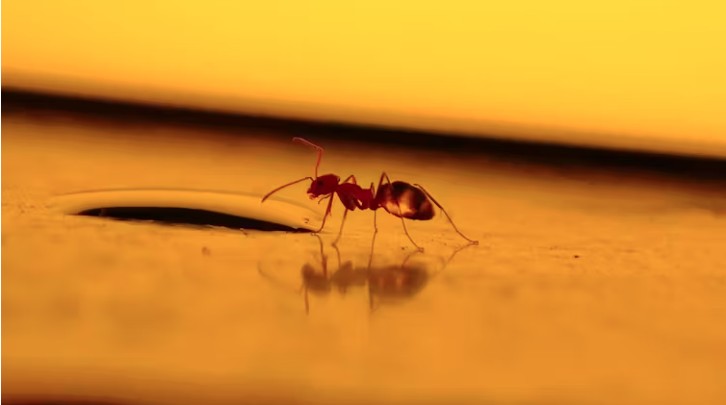
We’ve all been there: just as you’re about to fall asleep, you notice a huntsman spider on the ceiling. Or you walk into your kitchen and find a long trail of ants snaking into your pantry.
Given there are an estimated 10 quintillion individual insects alive on Earth at any one time, it’s no surprise they sometimes find their way into our homes. In fact, the average Australian shares their home with around 100 different species of insects and spiders.
But the reality is, most of these tiny housemates won’t hurt us, and you really don’t need to kill them. In fact, many perform helpful jobs such as catching flies and mosquitoes, or tidying up crumbs.
So, what can you do instead?
Starting with spiders
Remember: many spiders in your home are harmless.
Common spider housemates include:
- huntsman spiders (Sparassidae sp)
- black and brown house spiders (Badumna sp) and
- daddy long-legs spiders (Pholcus phalangioides).
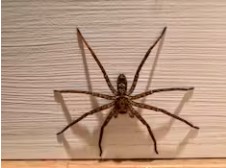
They’re big and speedy, but huntsmen are gentle giants that rarely bite, and their venom can’t hurt humans. They are naturally timid animals that will usually try to avoid us, big, scary humans.
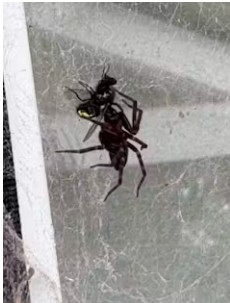
Black and brown house spiders live in messy webs, often on screen doors or in corners. They are sometimes mistaken for funnel-web spiders, and while their venom can cause unpleasant symptoms such as nausea and swelling, they are generally timid and rarely bite.
Daddy long-legs spiders are the source of an urban legend claiming they are the most venomous spider in Australia, but have jaws too weak to break human skin. This is false; there’s no evidence these lovely spiders have venom capable of harming a human.
There have been no confirmed deaths from a spider bite in Australia in nearly 50 years, partly due to the introduction of effective antivenom and partly because most spiders are very reluctant to bite.
In fact, you are far more likely to be killed by a dog, cow, or kangaroo than by a spider.
Even redbacks are shy and non-aggressive and will often play dead rather than bite; most bites occur when the spider is accidentally squeezed, such as when moving a pot plant or putting on a shoe. Although their venom can make you unwell, no one has died from a redback bite since antivenom was introduced in 1956.
While a bite from a Sydney funnel web spider (Atrax robustus) should always be treated as a medical emergency, effective antivenom treatments mean no one has died from a funnel-web bite since 1981.
What about ants and flies?
Most ants in the house are harmless. They are likely scavenging for food, looking for water, or passing through on their way to somewhere else.
Having said that, sometimes it’s hard to figure out what they’re doing. I have a trail of ants that runs up my shower wall – I have no idea what they are doing or why they are there. They’re just part of the family now.
Some people worry that insects can spread disease. Yes, cockroaches, ants, and flies can transfer bacteria from one surface to another, but this is rarely a problem in our homes, since a single fly landing is unlikely to transfer enough bacteria to cause issues. Our homes also typically don’t have rotting food or feces lying around where insects can come into contact with them and spread germs elsewhere.
What should I do about them?
In many cases, you don’t have to do anything; the bug or spider in your house is likely harmless and won’t cause problems.
And growing evidence suggests that at least some insects, including crickets, can experience pain or pain-like states.
While scientists still debate exactly what insects experience, it’s increasingly clear that insects and spiders are far more behaviourally and neurologically complex than once assumed.
Is it really worth causing suffering to an animal that has done nothing wrong other than share your space?
Instead, simply capture the animal in a container and slide a piece of cardboard or plastic beneath it before releasing it outside.
If you live with a phobia, perhaps you could ask a friend or neighbor to do it for you.
To make your home less attractive to insects and spiders, you can:
- Cover food sources, including pet food
- Clean up any spilled foods, crumbs, or food residues
- Store loose food in sealed containers to prevent pantry moths and grain beetles
- Make sure your bin seals properly when closed
- Ensure your windows have well-fitting fly screens.
Only if everything else fails — or if the spider or insect is genuinely dangerous, which is rare — should lethal control such as pesticides or squishing be considered.
Remember: household insecticides are not necessarily harmless. Some studies have linked insecticide exposure to a range of health concerns (particularly in children).
Learning to live with them
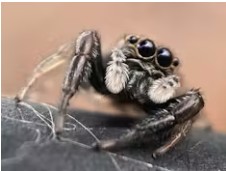
The minibeasts in your home are fascinating to watch and can provide a source of entertainment and education.
Kids (and adults!) can learn a lot about nature, ecology, and science from watching insects and spiders at home. In fact, keeping and observing an insect has even been used as a successful form of therapy for children.
It’s OK to be scared of insects and spiders, but perhaps we should approach it the same way we approach fear of dogs or other furry animals: not through killing but by acknowledging the fear and working towards managing it.
Tanya Latty, Associate Professor in Entomology, University of Sydney
This article is republished from The Conversation under a Creative Commons license. Read the original article.
Follow us on X, Facebook, or Pinterest
