
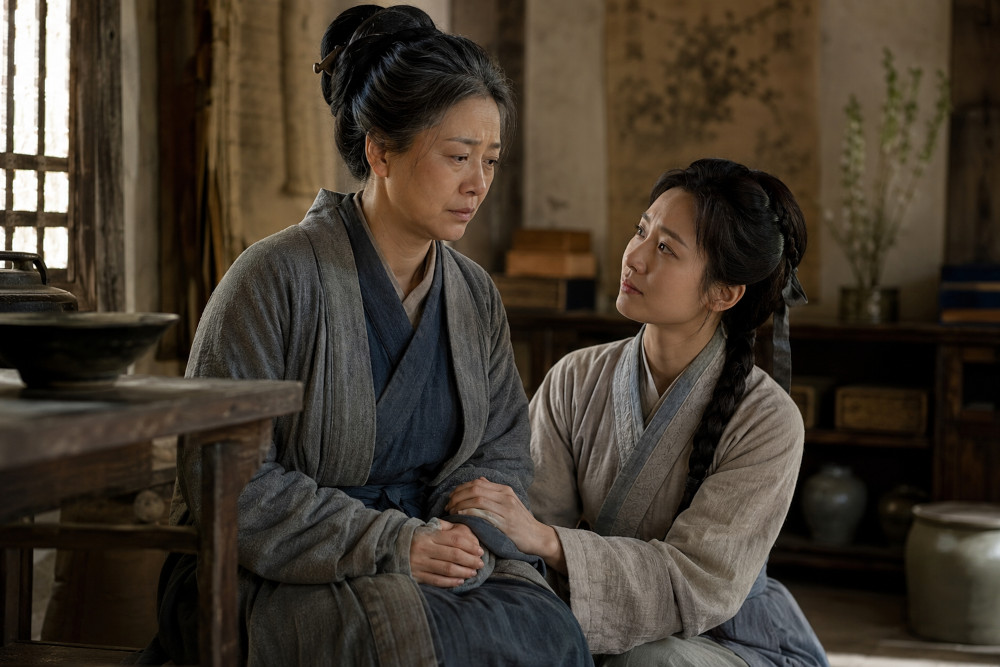
During the Song Dynasty (960-1279), a woman surnamed Zhang lived in Luojiang, in what is now the Deyang area of Sichuan Province. She was the daughter of a scholar, and her widowed mother, Madam Yang, had remained in her husband’s household and was known locally for her chastity and good character.
One day, Zhang and her mother attended a relative’s wedding together with Yong Yi, a servant who looked after the family’s storehouse. Yong Yi left the celebration early. Madam Yang returned home not long afterward and discovered that he had been murdered inside the storehouse.
The authorities were unable to identify the killer and soon turned their suspicions toward the mother and daughter.
Zhang Wenrao, an official responsible for judicial affairs in the Chengdufu Circuit, suspected without evidence that Madam Yang had been having an illicit affair with Yong Yi. He theorized that a dispute had arisen between them and that she had killed Yong Yi to silence him.
The accusation ran contrary to Madam Yang’s reputation in the community, but Zhang Wenrao nevertheless pursued his theory.
Tortured for a confession
The case was transferred to Shiquan Jun, a military administrative district headquartered in Shiquan County, in the area of present-day Beichuan County.
Madam Yang repeatedly denied the accusation. She said that since becoming a widow, she had shared a room with her daughter and had never had an illicit relationship.
Unable to obtain the confession they wanted, the investigators arrested Zhang as well and tried to force her to testify that her mother had been involved with Yong Yi.
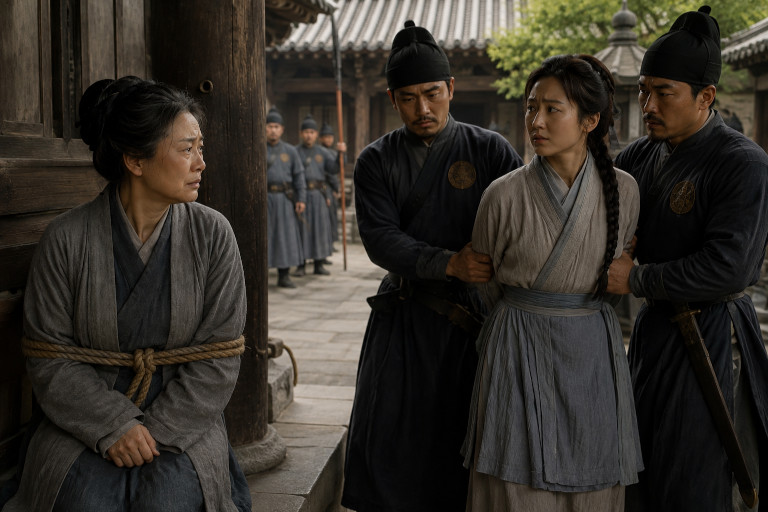
When she refused, the officials separated the two women and subjected them to torture.
Madam Yang was bound inside a pit while blazing fires were placed around her. She was exposed repeatedly to scorching heat and doused with water, losing consciousness and reviving several times. Her daughter was also subjected to severe torture.
Still, neither woman would confess to a crime she had not committed.
Eventually, Zhang became so weak that she knew she was near death. She asked a prison guard for one final meeting with her mother. Moved by compassion, the guard granted her request.
“Mother, you have always been known for your purity and chastity,” Zhang told her. “Who could have imagined that you would suffer such humiliation? Better to die under torture than falsely confess to a crime. I am going to die today, and when I do, I will appeal our injustice to Heaven!”
After speaking these words, Zhang died.
Strange phenomena followed her death
According to the account preserved in the official History of Song, extraordinary events followed.
For three consecutive days, earthquakes shook Shiquan County, accompanied by rumbling sounds like thunder. Snow fell, and roof tiles were shaken from many homes. The people were terrified.
A local official named Li Zhining came to believe that some grave injustice might lie behind the strange phenomena. Dressed in his full official robes, he respectfully prayed to Heaven for guidance.
Soon afterward, while somewhere between sleep and wakefulness, Li saw an ape fall from above.
The vision startled him awake. At first, he ordered people to look for the animal. Then he realized what he had seen was not an ordinary event, but a vision.
He wondered whether it contained a clue.
In Chinese, the word for ape, yuan (猿), sounds the same as the surname Yuan (袁).
“Could the murderer be someone surnamed Yuan?” Li wondered.
He reviewed the case records, and one of his subordinates mentioned a man named Yuan Da, who regularly delivered food to the Zhang household.
They immediately arrested and questioned Yuan Da.
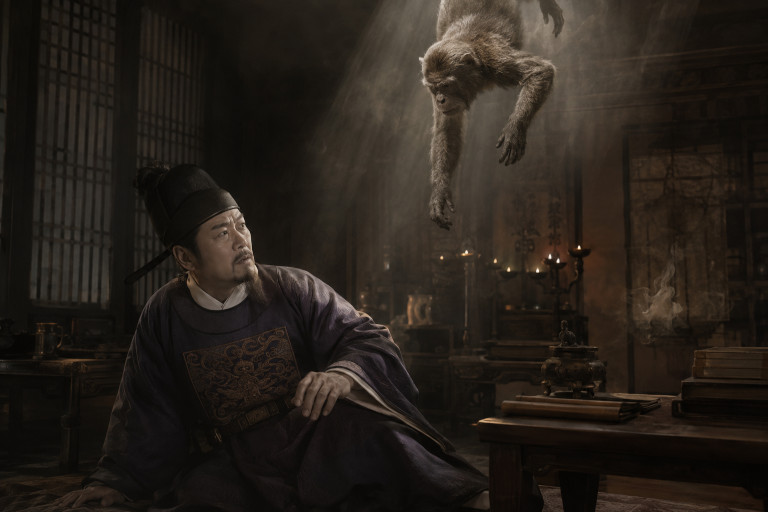
His expression changed when he was confronted about the murder.
“I have felt guilty for a long time,” he said. “I am willing to pay for a life with my own.”
He then confessed.
Yuan Da said that he had entered the storehouse intending to steal valuables. Before he could leave, Yong Yi unexpectedly returned and caught him in the act. Afraid of being exposed, Yuan killed him.
The truth had finally come to light.
Madam Yang was released and allowed to return home, but her daughter had died only days earlier. The place where the mother and daughter had lived was later called Xiaogan Fang, meaning roughly “the ward of filial piety that moves Heaven,” in remembrance of what had happened.
An injustice recorded in official history
What makes the account particularly notable is that it was not preserved merely as a later folktale or in the private notes of an individual writer. It appears in the “Biographies of Exemplary Women” in the official History of Song.
The historical record preserves not only the wrongful accusation and eventual confession of the true murderer, but also the earthquakes, snow, strange sounds, and Li Zhining’s vision following Zhang’s death.
Traditional Chinese thought held that Heaven and the human world were not entirely separate. The principle known as tian ren gan ying — the interaction or correspondence between Heaven and humanity — held that great virtue or grave wrongdoing in the human world could evoke a response from Heaven.
Seen from this perspective, the strange phenomena in Shiquan County were no coincidence.
Madam Yang and her daughter endured terrible suffering rather than save themselves through a false confession. Zhang died still determined to carry their grievance before Heaven. Soon afterward, extraordinary signs appeared; a mysterious clue led officials to the real murderer, and her mother was cleared of the crime.
For those who believe that divine beings watch over human affairs, the story stands as testimony that injustice may be concealed from people for a time, but it cannot necessarily be concealed from Heaven.
Translated by Chua BC
Follow us on X, Facebook, or Pinterest
