
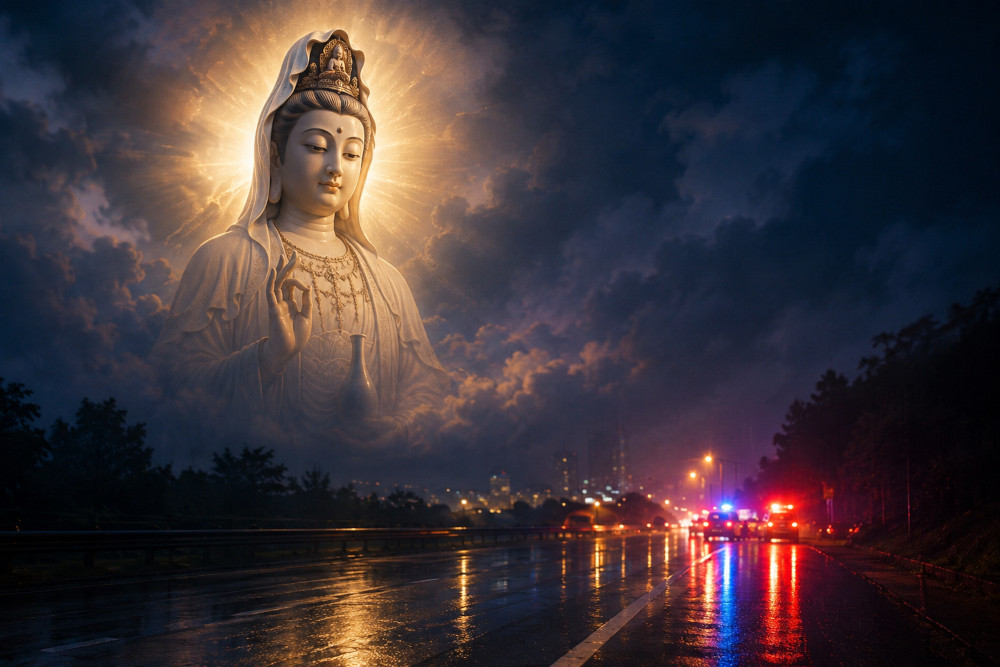
Do you believe that karma really exists?
In July 2026, 24-year-old Chinese social media influencer Jiang Xiaorou was seriously injured in a traffic accident. After spending several weeks in intensive care, she died from her injuries in August.
Before the accident, however, Jiang had done something highly controversial: She took a hammer and, in front of the camera, smashed a statue of Guanyin, the Bodhisattva of Compassion. She said she wanted to prove that “there are no gods in this world at all.”
After smashing the statue, she looked into the camera and said: “Go ahead and keep following me. Let’s see how long I can stay alive. If something really happens to me one day, you can come eat at my funeral feast, okay?”
She had also once spoken of herself getting into a car accident. Now, those words seem eerily prophetic.
Was it simply an accident, or does a cause-and-effect relationship exist beyond what we can see?
From ‘fighting superstition’ to smashing a Guanyin statue
Jiang built her following by creating content centered on “fighting superstition,” paranormal exploration, and visits to abandoned places. She began by exploring deserted buildings before moving on to challenge various supernatural legends. Her content became increasingly daring, and in a relatively short time, she amassed 1.28 million followers.
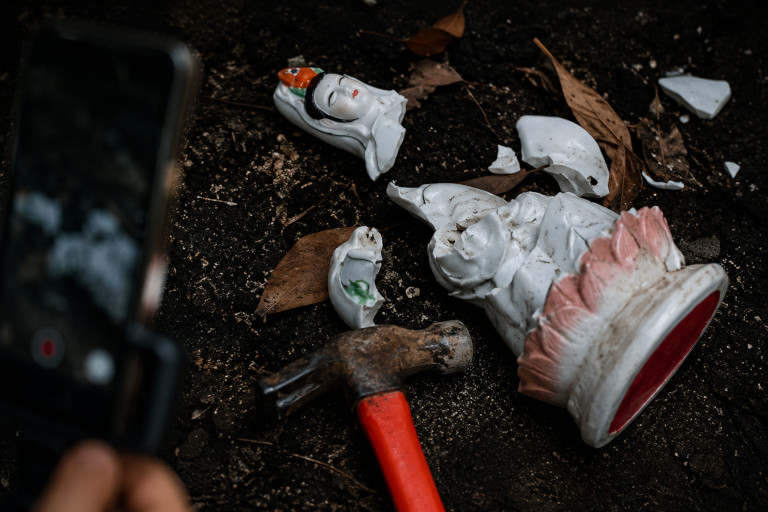
One of the most controversial scenes in her videos showed her shouting profanities while smashing a statue of the Bodhisattva Guanyin with a hammer.
One netizen commented:
“There are some things in this world that you don’t have to believe in, but you should still show respect. Some things may sound like superstition, yet even science cannot explain them. Especially for people like us who grew up in rural areas, there are many things we have heard about or even witnessed ourselves.”
The person continued:
“Who can say for certain whether there is a soul after a person dies, or whether there is another realm existing alongside the human world? Who can say whether people have past lives, this life, and future lives, or whether there really is a cycle of rebirth through the six realms? It is truly difficult to say. If you believe, perhaps it exists; but even if you don’t believe, that doesn’t necessarily mean it does not.”
Why have people traditionally believed in Heaven’s law?
For millennia, belief in a higher moral order has been deeply rooted in Chinese tradition. The principle that “good deeds are rewarded with good, while evil deeds bring retribution” has long been part of Chinese culture.
Why did people believe in such a moral law?
In traditional Chinese thought, human beings are not the masters of the world. They are only one part of everything that exists between Heaven and Earth. For this reason, people in ancient times revered the gods, Heaven, Earth, and their ancestors.
They understood that many things lay beyond human comprehension. That awareness of what they did not know naturally gave rise to humility, awe, and reverence.
During the Cultural Revolution, a strange incident reportedly occurred at Beijing’s Yonghe Temple. Inside the temple stood an 18-meter-tall wooden statue of Maitreya Buddha. According to an elderly lama at the temple, three Red Guards once came there intending to destroy the statue.
The first swung an axe but struck his own leg. The second raised his axe and swung, but missed the statue and fell from a great height, losing consciousness. After witnessing what had happened to the other two, the third man became so frightened that his legs gave way and he could no longer lift his axe.
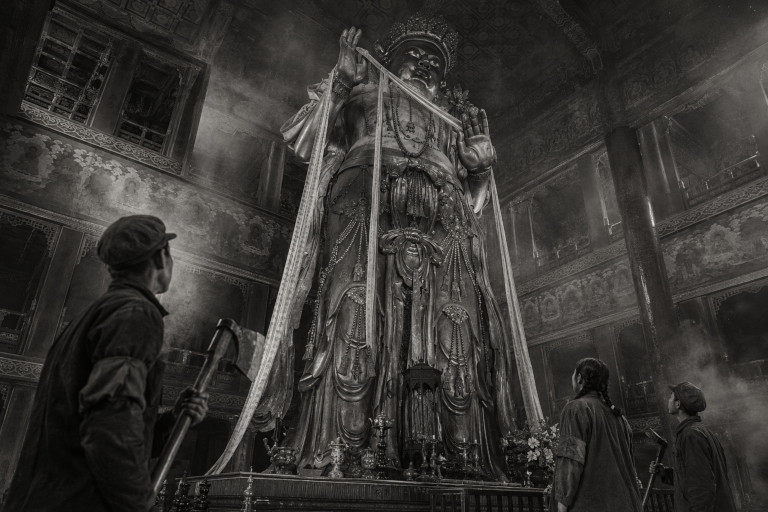
The story of what happened to the three men spread widely, and from then on, people said no one dared to destroy the statue.
Under Communist rule: The loss of traditional culture and faith
After the Chinese Communist Party came to power, traditional Chinese culture and folk beliefs came under sustained attack. From the campaign to “Destroy the Four Olds” to the Cultural Revolution and decades of state-promoted atheism, traditional beliefs were systematically suppressed.
Over time, “not believing in gods” ceased to be merely an individual choice and gradually became a worldview instilled in generations of people.
The danger of such a worldview is that when people believe no power or moral authority stands above humanity, they may begin to think: “As long as the law cannot stop me, I can do whatever I want.”
Under such circumstances, some people, driven by personal gain and the pursuit of political advancement, have even been willing to sacrifice their lives and become cannon fodder for the Communist Party.
According to accounts published by Minghui.org, Pan Shi, the former head of Liucheng Police Station in Chaoyang County, Liaoning Province, aggressively persecuted Falun Gong practitioners for years. Despite repeated warnings, the Communist Party promoted him as an “advanced model.”
He reportedly declared: “I am not afraid of retribution. I will beat them and arrest them [Falun Gong practitioners]. I will follow the Communist Party to the end.”
Less than two months after making those statements, Pan, who had reportedly been in good health, suddenly died on his 41st birthday.
Why doesn’t Buddhist compassion erase the consequences?
Why would Heaven’s moral law not tolerate the desecration of another person’s faith?
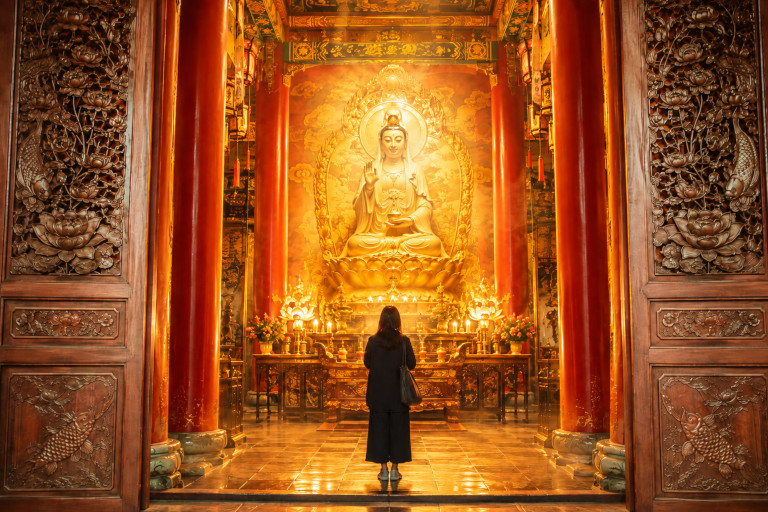
An article published on Minghui.org titled “Die from Harming Buddhas, Live by Revering Buddhas” addresses this question.
Some people ask: Buddhism teaches compassion and tolerance, so why are those who destroy people’s faith or persecute spiritual practitioners not simply forgiven? Does this mean the Buddha is narrow-minded?
From the perspective of traditional faith, the answer is no.
The Buddha’s teachings reflect the universe’s truth and order. The universe has principles and boundaries. Persecuting spiritual practitioners or deliberately defaming what is sacred crosses the fundamental boundary between good and evil.
Compassion does not mean that consequences disappear or that good and evil become indistinguishable. On the contrary, warning people not to cross such boundaries can itself be an act of compassion, because ultimately each person must bear responsibility for his or her own actions.
Consider an analogy: Suppose a child deliberately assaults the parents who gave him life and raised him. No matter how loving or forgiving his mother may be, her compassion does not mean that the law should ignore his actions or exempt him from the consequences of what he has done.
In the same way, people may commit evil on Earth while Heaven’s law weighs their actions. What we call “retribution” is simply the operation of a moral law of the universe that cannot be violated without consequence.
Recognizing those boundaries, and refusing to cross them, is therefore not merely about respecting others. It is also about being responsible for oneself.
Better to believe it exists than to assume it does not
Modern science has not established the existence of gods through its own methods. Neither has it disproved them. For questions that lie beyond the reach of present scientific knowledge, many people may have to admit: We do not know everything.
And precisely because we do not know everything, there is reason for humility and reverence.
The traditional saying, “It is better to believe that it exists than to believe that it does not,” reflects this humility toward a world containing realities that human beings may not yet understand.
You may choose not to believe, but disbelief does not mean that you possess the whole truth. You may question another person’s beliefs, but there is no need to deliberately trample on what others regard as sacred merely to prove yourself right.
There are still too many things in this world that modern science cannot explain.
True wisdom is not believing that we already know everything.
It is having the humility to recognize that there are many things in this world we still do not know.
Translated by Joseph Wu
Follow us on X, Facebook, or Pinterest
