
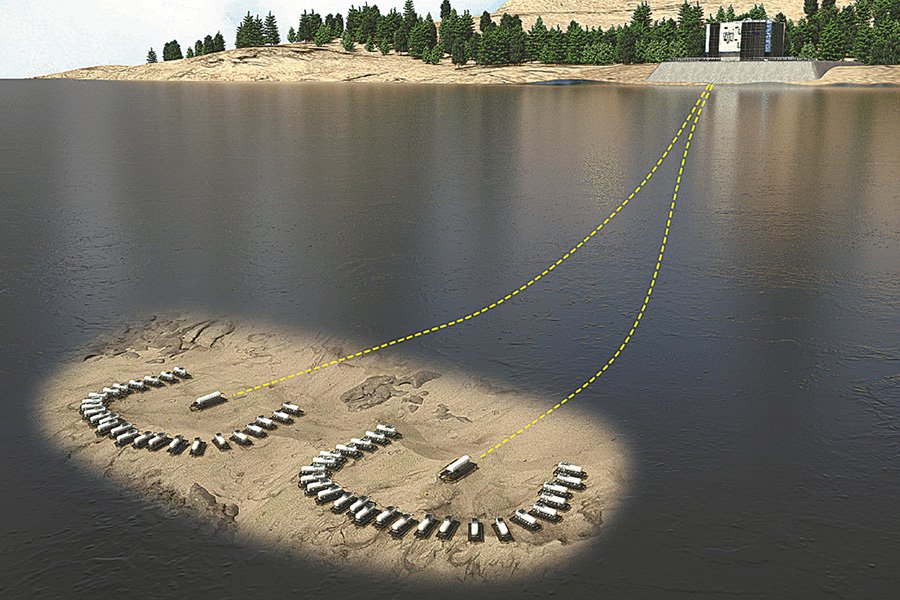
Imagine relaxing on a quiet beach in Hainan, China. Just 30 meters below the gentle waves, a 1,300-ton steel pod with thousands of servers hums quietly. No air-conditioning towers clutter the skyline, no diesel chillers rumble in the background — yet the photos you snap upload in a flash, your AI travel planner answers instantly, and the sea breeze stays blissfully clean.
Welcome to the underwater data center age, where the ocean becomes the coolant, protective shell, and high-speed express lane for tomorrow’s cloud-powered lifestyle. The world’s first commercial-scale subsea server farm off Hainan Island has just gone live, and its ripple effects — from greener cities to smoother gaming marathons — are already lapping at our daily routines.
Why underwater data centers are suddenly making waves
The global demand for cloud computing power is exploding — AI chatbots, 4K streaming, and edge analytics are gobbling up compute cycles almost as fast as hyperscalers can install them. Land-based data halls struggle with two stubborn constraints: cooling and real estate. A single hyperscale campus can swallow as much electricity as 80,000 homes and still vent gigawatts of heat into the city air. Enter the ocean, a natural heat sink covering 71 percent of the planet.
Engineers tap a constant 4-25°C thermal reservoir by dunking servers into sealed, pressure-balanced capsules while freeing up valuable coastal land for housing, parks, or tourism. The concept leapt from science fiction to pilot in 2015 when Microsoft submerged its first Project Natick prototype; it proved eight times more reliable than an identical land rig and kindled a worldwide race to commercialize subsea computing.
As cooling becomes the business model, the underwater data center concept transforms how and where cloud capacity can be deployed. Geography-agnostic modules mean cloud infrastructure can sprout wherever fiber meets shore, opening new possibilities for urban planning and digital lifestyles.
Inside China’s subsea superhub: a tour beneath the South China Sea
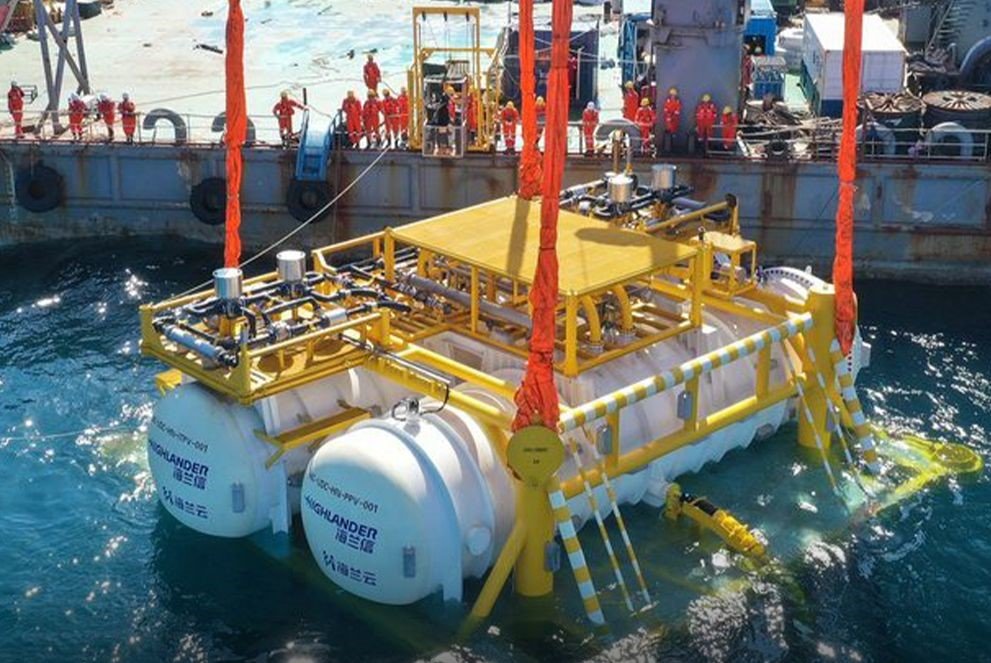
Building on these innovations, China’s Hainan Underwater Data Centre is the world’s first to move from proof-of-concept to live customer workloads. Each cylindrical pod — roughly the length of a city bus and the weight of 1,000 cars — houses densely stacked GPU blades, networking gear, and an onboard liquid-exchange loop.
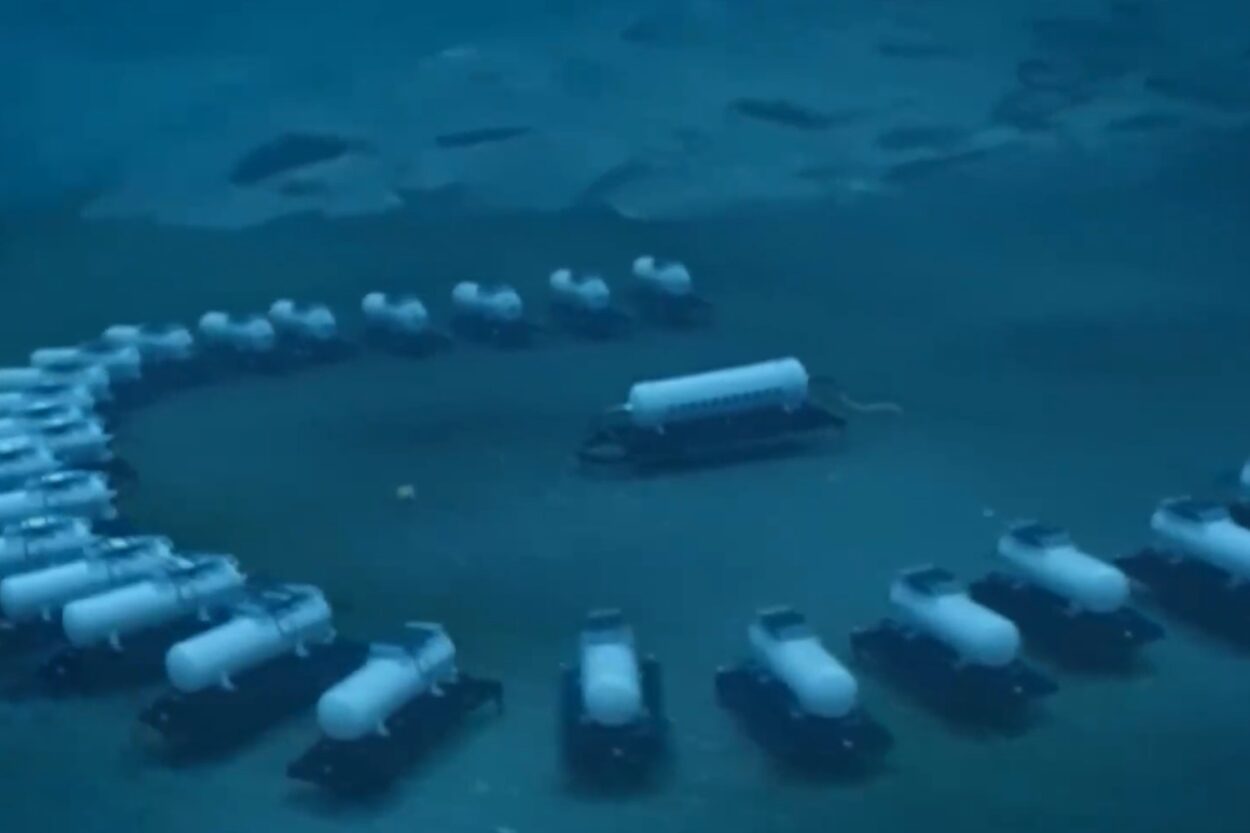
Shore stations feed power and fiber through armored umbilicals; real-time telemetry lets engineers on land monitor temperatures, vibration, and humidity without ever cracking a hatch. One capsule already matches the crunching power of about 60,000 conventional PCs, able to classify 4 million HD images in half a minute. With 100 capsules planned by 2027, the total computing will rival a regional hyperscale campus with zero visible footprint on top.
This modular “sea brick” approach allows for Lego-style scaling — drop, plug, compute — shrinking build cycles from years to weeks. The flexibility and speed of deployment set the stage for a new era in cloud infrastructure, seamlessly integrating with the next wave of digital services.
Liquid cooling, lower bills: how the ocean slashes energy waste
Transitioning from modularity to sustainability, the underwater data center’s most revolutionary feature is its use of seawater for cooling. Conventional data-hall chillers guzzle electricity, water, and chemical refrigerants; even state-of-the-art direct-to-chip liquid loops must ultimately dump heat to ambient air. Seawater flips that script.
At Hainan, passive exchange manifolds wick warmth into the surrounding current, trimming HVAC loads by 40-60 percent and saving 122 million kWh once the full 100-pod grid is online — the annual demand of roughly 113,000 German households. Fresh-water use plummets too: 105,000 tons a year, enough to supply a midsize city. Energy metrics like Power-Usage-Effectiveness (PUE) drop below 1.15, beating many “green” land facilities. Pairing subsea pods with offshore wind or tidal turbines lets electrons travel only meters from generator to server, slashing transmission losses.
This synergy between energy efficiency and renewable integration benefits operators and investors and contributes to cleaner air and a healthier environment for local residents.
Lessons from Microsoft’s Project Natick and what China does differently
The journey to this point has been shaped by earlier experiments, most notably Microsoft’s Project Natick. Between 2018 and 2020, Microsoft ran 855 servers 36 meters below Scotland; only six failed — 0.7 versus 5.9 percent on land — thanks to an oxygen-free nitrogen atmosphere and the absence of clumsy human hands. However, when AI demand skyrocketed, the company shelved Natick in 2024, citing the challenge of swapping hardware fast enough to keep up with silicon refresh cycles.
China’s design team studied Natick’s playbook. Still, it made three key changes: a hot-swap mindset with quick-disconnect risers for rapid maintenance, adaptation to warmer South China Sea temperatures with phase-change materials, and a commercial focus from day one, targeting real customer service-level agreements in gaming, fintech, and AI inference. This approach demonstrates how early movers taught the world how to do it, but China shows how to scale it.
Lifestyle ripple effects: streaming, gaming, and smart-home bliss
The impact of the underwater data center extends far beyond technical innovation — it is reshaping everyday life. Most of Earth’s population lives within 200 km of an ocean coast.
Placing compute closer to people chops milliseconds off round-trip latency, which is a game-changer for digital experiences:
- Buffer-free binge nights: 4K HDR streams stabilize even during prime-time surges.
- Esports dominance: Competitive gamers in Southeast Asia shave 15-20 ms, turning losses into clutch wins.
- AI copilots on tap: Voice assistants crunch prompts locally, so your kitchen recipe bot adjusts temperatures before you can say “al dente.”
- Smart-city services: Traffic cams feed footage to subsea GPUs, pushing real-time congestion alerts to commuter apps.
Shenzhen Hi-Cloud has already inked pilot contracts with ride-hailing firms and VR content studios, promising sub-20-ms processing loops for edge inference. The result is a cooler sea and a cooler user experience — speed, stability, and richer digital experiences without blowing your household energy budget.
Eco-impact on coastal communities and marine life
As these technological advances ripple through society, concerns about environmental impact arise. Critics worry about hot plumes frying coral or electromagnetic noise confusing fish. So far, field probes show minimal disturbance: vented water is only 3-5°C warmer than ambient and disperses within tens of meters.
Capsules double as artificial reefs; barnacles and seaweed cling to the steel skins much as they do to breakwaters, boosting local biomass. When Typhoon “Terry” slammed Hainan in 2023, the submerged pods shrugged off 200 km/h winds, keeping cloud services online while some land centers went dark. On shore, freed-up land — 68,000 m², nearly ten soccer pitches — unlocks new parks and housing rather than yet another concrete server shed. Done carefully, subsea data farming can add biodiversity and coastal resilience while subtracting urban blight, creating a harmonious balance between technology and nature.
Future horizons: 100 modules, AI at scale, and the blueprint for ocean tech cities
The underwater data center is poised to become the foundation for entire ocean-tech ecosystems. By 2027, the Hainan grid will surge past 24 MW and line up alongside offshore wind arrays.
The vision extends well beyond storage and compute:
- Edge AI superpods: Training regional language models for tourism chatbots without shipping petabytes to inner-China megacenters.
- Marine research co-location: University labs will piggy-back sensors on the power/fiber umbilicals, streaming real-time ocean-chemistry data.
- Floating solar canopies: Photovoltaic rafts feed DC to pods by direct-current bus, trimming conversion losses.
- Plug-and-play city kits: Other coastal provinces and ASEAN neighbors have scoped feasibility studies, eyeing subsea clusters as “digital free-trade zones” hedged against on-shore land scarcity and climate-driven flooding.
Underwater data hubs could seed entire ocean-tech ecosystems, spanning clean power, aquaculture, and resilient coastal cloud infrastructure.
Key takeaways and an optimistic outlook
Cooling re-imagined: Oceans transform waste heat into free thermal sinks, slashing operational expenses and CO₂ emissions. This innovation not only reduces data centers’ environmental footprint but also sets a new benchmark for sustainable technology infrastructure. The underwater data center model proves that green tech can be practical and profitable, offering a win-win for business and the planet.
Scalable modularity: From Microsoft Natick’s single tube to Hainan’s ambitious 100-pod mega-cluster, the blueprint now exists for mass adoption. The modular approach means that cities and companies can rapidly scale up their digital infrastructure without the lengthy construction timelines or sprawling land requirements of traditional data centers. This flexibility is crucial as demand for cloud computing and AI services surges worldwide.
Lifestyle uplift: Cleaner skylines, cheaper data plans, and faster AI everywhere — subsea servers quietly enrich everyday life. The benefits ripple outward: Urban areas enjoy less noise and pollution, consumers experience more responsive digital services, and local economies gain new opportunities for innovation and growth. As underwater data centers become more common, they promise to make high-speed, low-latency computing a standard feature of coastal living.
Looking ahead, regulation, marine-life stewardship, and rapid hardware refresh cycles will shape the pace of rollouts. Policymakers and engineers must work together to ensure that subsea data centers are deployed responsibly, with careful monitoring of their ecological impact and ongoing innovation in maintenance and upgrade strategies. Yet the genie is out of the bottle — or rather, in the bottle under the sea. Cities that embrace underwater data centers can reap quieter streets, greener grids, and digital experiences that feel as fluid as the waves above them.
A new chapter for technology and tradition
The underwater data center is more than a marvel of engineering; it is a testament to humanity’s ability to harmonize technological progress with the natural world. In the spirit of traditional Chinese culture, which values balance, harmony, and the wise use of resources, this innovation embodies the universal principles of truthfulness, compassion, and forbearance. By respecting the ocean’s rhythms and responsibly leveraging its gifts, we can create a future where technology uplifts society and the environment.
As we stand on the threshold of this new era, the underwater data center invites us to imagine cities where digital and natural worlds coexist in mutual benefit. It is a vision that honors the past, embraces the present, and looks boldly toward a sustainable, interconnected future.
Follow us on X, Facebook, or Pinterest
