

The cultural shift where the language of the boardroom — ROI, KPIs, and market value — has invaded the sanctuary of the living room. It’s an exhausting way to live, isn’t it? To feel like you are only as lovable as your last “contribution.” A reflection on the difference between being useful and being honored strikes at the heart of why so many people feel lonely, even when they are in a marriage or relationship.
In this age of breakneck speed, we have grown used to placing everything on a scale. Street chatter and online hot takes are filled with a harsh refrain: “All human relationships are essentially value exchanges.”
The commodity view: ‘Merger and acquisition’
We audit our partners annually. If the “emotional dividends” or “financial projections” dip, we consider liquidating the asset. This leads to a constant, low-grade anxiety that if we falter, we will be replaced. And so marriage is dismantled into a cold equation: Men are expected to provide material value; women, emotional value. As if the moment you can no longer add weight to the scale, you lose your right to exist — fair game for “optimization,” perfectly disposable. This way of thinking reminds me of an old saying: “All things have spirit.”
An object that has been used for years — even chipped, faded, or no longer useful — is often hard to throw away. Why? Because time has warmed it. Because we have poured our feelings into it. If we treat objects this tenderly, how can human beings deserve less? Yet modern hearts are growing harder by the day. When the person beside you falls ill, loses a job, or is simply exhausted — when they can no longer produce so-called “value” — they are suddenly seen as a burden.
This way of turning people into objects has left many women feeling anxious, even while playing the role of the “virtuous wife and loving mother,” as though failing to fight their way into the marketplace of exchangeable value means they are worth nothing. This isn’t clarity. It’s a lack of humanity. In the marketplace of value, those roles are often dismissed because they don’t produce a “receipt.” But in the realm of grace, those roles are the glue of civilization.
What makes us human is precisely that we are not commodities. Objects exist to be useful; people exist to be honored. Between human beings, what truly matters is integrity, gratitude, loyalty, and the simple goodness of saying: “Even if you have nothing left, I will still treat you as I always have.”

The grace view: Marriage as a ‘covenant’
Our ancestors left us many treasures of wisdom, but few are more moving than this line: “One day, as husband and wife create a hundred days of grace; a hundred days as husband and wife run as deep as the sea (恩情).” It’s the idea that the history we build together creates a “moral capital” that outweighs any temporary loss of “value.”
Among billions of people, why did you and I end up sharing the same boat, the same pillow? That is not a coincidence — it is a bond refined over lifetimes. Marriage is not a balanced business negotiation; it is a pact of mutual survival, a vow to weather life and death together. The way of husband and wife is thus the way of life itself. The ultimate lesson is not to polish oneself into a “high-value asset,” but to strip away labels and learn to love a living soul.
True love is born of “not having the heart to abandon.” Not having the heart to see you suffer. Not having the heart to turn away when you are weak. Unconditional tolerance, support without cost-benefit analysis — this deep sense of grace and obligation is the true foundation of marriage. Between spouses, affection has no price, and grace outweighs gold. Only by guarding this moral ground can we cultivate warmth and wholeness in an otherwise chilly world.
Yet today’s public discourse is steeped in extreme utilitarianism: “If you have no value, you have no right to be loved.” Marriage is stripped bare and redefined as pure exchange. Men must supply material rations; women must supply emotional nourishment. Once either side “cuts off supply,” the other feels justified in stopping losses and walking away without a backward glance.
This idea spreads like a virus, filling modern relationships with suspicion and fear. It has also caused countless women to hear the words “virtuous wife and loving mother” not as praise, but as a sentence of worthlessness. This road leads only to emotional frostbite. If everything is about value, then how are people different from objects? Objects exist to be used, yes — but humans are the spirit of all things. Human dignity, emotion, and connection cannot be evaluated by Key Performance Indicators (KPIs).
By stripping away labels and “KPIs,” we give our partners room to be human, including being messy, tired, and “useless” sometimes. That is where true intimacy lives. Look up at the sun above us and the earth beneath our feet. What “emotional value” does humanity provide the sun? What “material contribution” do we offer the earth?
There is something beautiful about the analogy of the sun and the earth. In a world obsessed with self-optimization, the concept of unconditional giving feels almost radical. The “Grace” model — the “Ancient” way, tends to weather the storm better than the “Value” model. By our own modern logic, we are utterly worthless — perhaps even guilty beyond redemption. If value exchange ruled the cosmos, the sun would have gone dark long ago, and the earth would have shaken us off like dust. But it hasn’t. Heaven has the virtue of nurturing life. All things are sustained. That is grace. That is compassion.
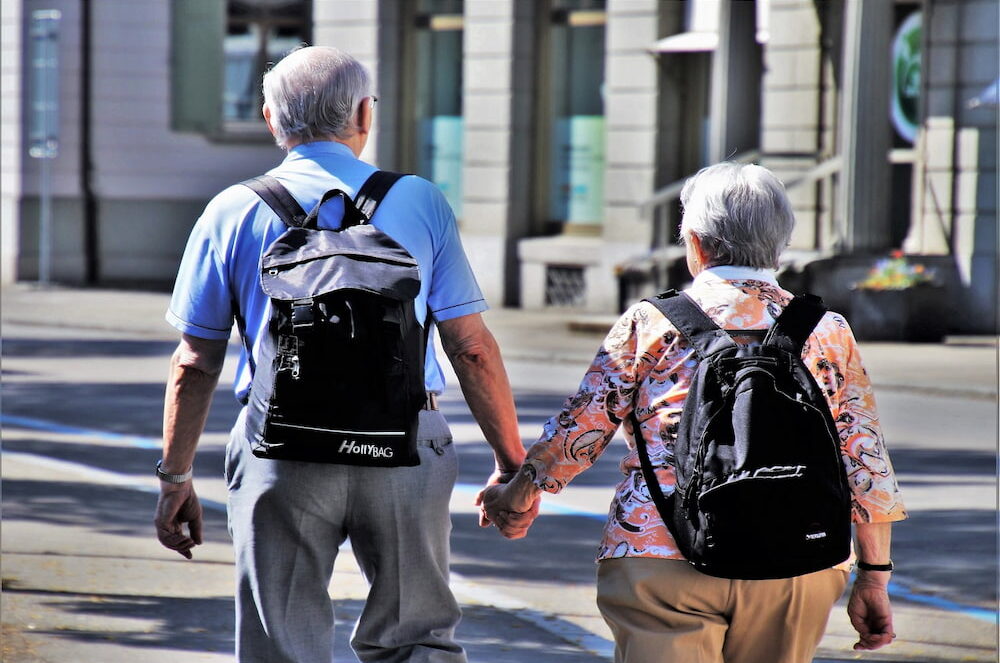
The deepest power of life has never been exchange — it is unconditional giving. Our ancestors understood this long ago. They rarely spoke the light word “love,” but often spoke the heavier, steadier word “marital grace.” One day, a husband and wife create a hundred days of grace. This sentence weighs more than a hundred words: “I love you.” A bond forged over lifetimes is not something you pick off a shelf — it is fate tying two lives together. So what is grace? Grace is affection stripped of calculation.
Grace is remembering old kindness when beauty fades, when illness comes, when usefulness disappears — and still choosing to stay, to support, to stand guard. Modern people speak endlessly of love, yet sincerity is rare. Ancients rarely said “love,” yet grace was everywhere. I am grateful for your companionship. You are grateful for my tolerance. I do not covet your wealth; you do not covet my beauty. What we cherish is the loyalty of sharing storms together.
The meaning of life is not how many bargaining chips you hold, but whether you can return to the truth of a living being. To be husband and wife is to be partners who trust each other with their lives. Cold calculation chills the pillow beside you. To honor grace and uphold integrity — that is the true nobility of being human.
Translated by Kary Liu and edited by Helen London
Follow us on X, Facebook, or Pinterest
