
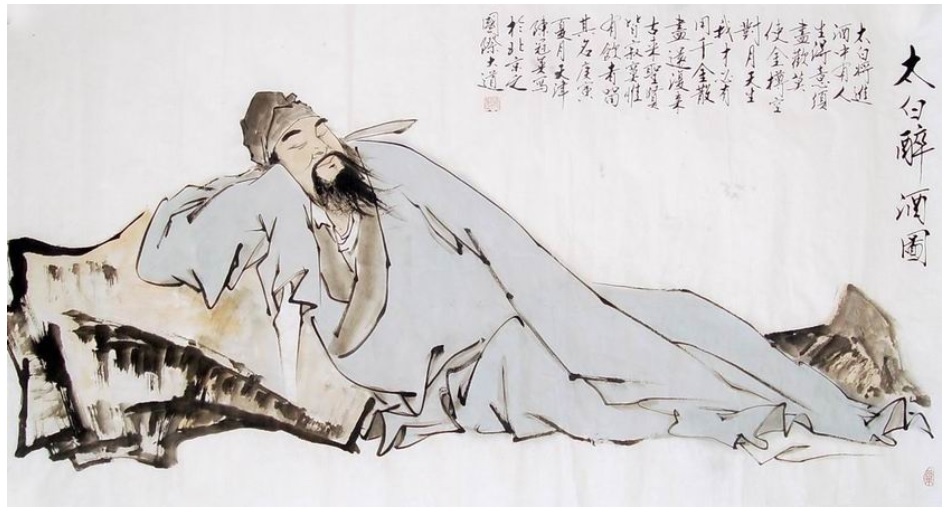
Wang Lun (722-762) was immortalized in history through a poem about him. Historical records contain no writings by him, yet the poet became famous for his friendship with Li Bai (701-762). Li Bai’s poem A Gift for Wang Lun — the Poet Immortal portrays Wang Lun’s farewell, expressing the sincere and pure friendship between the two. The poem reads:
I, Li Bai, am about to set sail and depart, when suddenly I hear singing and dancing on the shore. Peach Blossom Pool may be a thousand feet deep, but it is not as deep as Wang Lun’s affection in bidding me farewell.
Who was Wang Lun?
Wang Lun was from Yi County in Shezhou (today’s Huangshan, Anhui). His ancestor Wang Hua was a founding hero of the Tang dynasty, granted the title Duke of Yue, and the Wang clan was a distinguished family in Tang times. Though born into an official family, Wang Lun did not pursue a political career. He only served once as the magistrate of Jing County. Fond of the scenery at Peach Blossom Pool, after leaving office, he settled there with his family, living by the mountains and waters, brewing his own wine, composing poetry with friends, and enjoying a leisurely life far away from worldly strife.
Blessed with a privileged background, Wang Lun received a good education as a child. Intelligent and eager to learn, he read widely and loved poetry and prose, showing literary talent in his youth. By nature, he was openhearted and enjoyed making friends, maintaining close ties with scholars and poets.
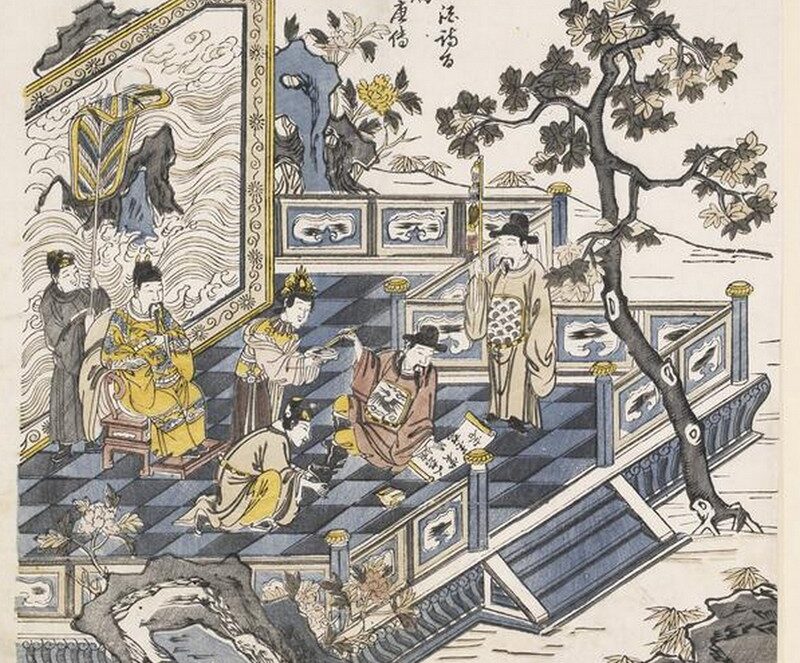
Wang Lun greatly admired Li Bai
In the spring of 755, Li Bai traveled from Jinling to Dangtu to seek refuge with his uncle Li Yangbing. In his poem Presented to My Uncle, Magistrate of Dangtu, Yangbing, he lamented: “To give a little requires much; a dipper of water cannot drench a great whale,” showing that he was living in poverty at the time. Wang Lun was delighted to hear of Li Bai’s arrival and wrote to invite him to his home.
Wang Lun knew that he had never met Li Bai before, and Li Bai was proud and aloof, caring so little that even the emperor was beneath his notice. He reckoned that an ordinary invitation would not be taken seriously, so he cleverly wrote in his letter: “Do you enjoy traveling, sir? Here, there are ten miles of peach blossoms. Do you enjoy drinking, sir? Here, there are ten thousand taverns.”
Li Bai, fond of wine, enchanted by beautiful scenery, and eager to befriend like-minded individuals, was moved by Wang Lun’s warm and tempting invitation, and so he gladly went. When Li Bai met Wang Lun, Wang was overjoyed and offered fine wine and delicious food, treating him with great hospitality. Yet Li Bai did not see the ten miles of peach blossoms or the ten thousand taverns he had imagined, and could not help but ask.
Unexpectedly, Wang Lun laughed and explained: “The peach blossoms refer to the pool ten miles away, not actual peach blossoms stretching ten miles. The ten thousand refers to the innkeeper’s surname Wan, not ten thousand taverns.” Li Bai was momentarily stunned, then burst into hearty laughter, touched by Wang Lun’s humor and sincerity.
Li Bai was 20 years older than Wang Lun. Beyond their shared love of drinking and composing poetry, they also shared similar temperaments. Li Bai, proud of his talent, disdained officialdom, preferred carefree travel, found joy in nature, and longed for a paradise beyond the mundane world. He was generous in friendship, once giving 300,000 in gold to help a friend. These traits were strikingly similar to those of Wang Lun. With such kindred spirits, the two became close friends at first meeting, despite the age difference.
It was springtime, with gentle breezes, blooming peach and plum blossoms, clear waters, and green peaks reflected in the pool. The scenery at Peach Blossom Pool was breathtaking. Li Bai, carefree, and Wang Lun, genuine, wandered together, enjoying the spring sights, drinking wine, and discussing poetry. The joy of the moment made Li Bai’s visit truly worthwhile.
But all feasts must end. After several days, Li Bai had to leave. Wang Lun’s warmth was more than a few cups of wine — he held a farewell banquet, gifting Li Bai 8 fine horses, 10 bolts of official brocade, and 2 jars of good wine. Such generosity was akin to timely assistance in Li Bai’s difficult circumstances.

As Li Bai boarded the boat, he suddenly heard singing from the shore. Looking up, he saw Wang Lun with his family and villagers performing a farewell dance. “The Treading Song” was a popular folk dance in the Tang Dynasty, in which dozens of people stamped the ground to maintain the rhythm while singing and dancing together. It was a unique farewell ceremony, with heartfelt emotion carried in the songs. One can imagine Li Bai’s feelings at that moment. He immediately picked up his brush and wrote the famous poem A Gift for Wang Lun. Their pure friendship thus became a celebrated story in literary history.
Yet a few years later, in autumn, when Li Bai returned to Jing County, the waters of Peach Blossom Pool were still clear, but his dear friend Wang Lun was gone; he had passed away. Grieving deeply, Li Bai went to Wang Lun’s grave, inscribed the tombstone, and wrote Visiting the Wang Family Estate, expressing his profound remembrance. Though Wang Lun left no poems in history, Li Bai’s tribute to Wang Lun made him eternally renowned, shining brightly through the ages. Perhaps this was Li Bai’s gift in return for Wang Lun.
Translated by Cecilia and edited by Helen London
Follow us on X, Facebook, or Pinterest
