

Long ago in India, society was sharply divided. Wealth and status were distributed unevenly, and people were ranked in rigid hierarchies — noble and base, high and low. The gulf between these groups was immense. At the very bottom stood the Śūdra caste: the poorest of the poor, often despised and ignored. Many survived as servants or slaves, compelled to perform the hardest, most unpleasant labor under harsh conditions.
The humble life of Niti
In the city of Śrāvastī, one man from this caste was named Nīti. His work was the most loathed of all: he carried buckets of human waste through the narrow streets. Yet despite the lowliness of his task, his heart remained untainted. Honest, gentle, and quiet, he spoke little — perhaps because life had taught him that silence was safer than words. One day, while in deep meditation, the Buddha saw Nīti. He perceived that the man’s heavy karmic burden had nearly been exhausted — the time had come for him to leave the sea of suffering.
So the Buddha set out with Ānanda and walked through the streets, stopping at the entrance of a narrow alley. At that very moment, Nīti emerged, carrying a full bucket of filth. Seeing the Buddha’s radiant presence, his heart leapt in panic. “I am low and unclean,” he thought. “How dare I stand before a Holy One?” He tried to step aside, to turn away, even to vanish — but the alley was too narrow.

There was nowhere to go. In his flustered haste, the bucket cracked. Filth poured over him from head to toe. Mortified and trembling, he lowered his gaze, unable to meet the Buddha’s eyes. The Buddha approached gently and spoke: “Nīti, would you be willing to leave household life? Would you like to cross beyond this sea of suffering?” Overwhelmed with shame, Nīti replied: “The Buddha is noble and revered. Your disciples are princes and dignitaries. I am of the lowest birth. How could I compare? What merit could I possibly have to become a monastic and escape suffering?”
The Buddha answered: “The Dharma is like pure water — it washes away all defilement. Whatever is cleansed by pure water becomes fresh again. The Dharma is like a blazing fire — it burns away impurities. Whatever is touched by sacred flame is made pure. The Dharma is perfectly equal. It makes no distinction between rich and poor, or between high and low. Whoever sincerely seeks freedom from suffering and practices diligently may enter the path.”
These words entered Nīti’s heart like rain after a long drought. He followed the Buddha to Jetavana Monastery, shaved his head, and embraced monastic life. Practicing with diligence, he soon attained the fruit of Sotāpanna. Through listening to teachings and meditating in stillness, his wisdom gradually unfolded. He did not merely understand the Buddha’s words — he lived them. Before long, he attained Arhatship. The man who had once carried refuse now carried awakening.
The burden of pride, the liberation of humility
When Nīti was first ordained, his transformation sparked outrage among the worldly-minded. “How can someone of such low birth receive offerings from the people?” they protested. The more they dwelled on it, the angrier they became, until they finally appealed to King Pasenadi, urging him to forbid the Buddha from accepting such a disciple.
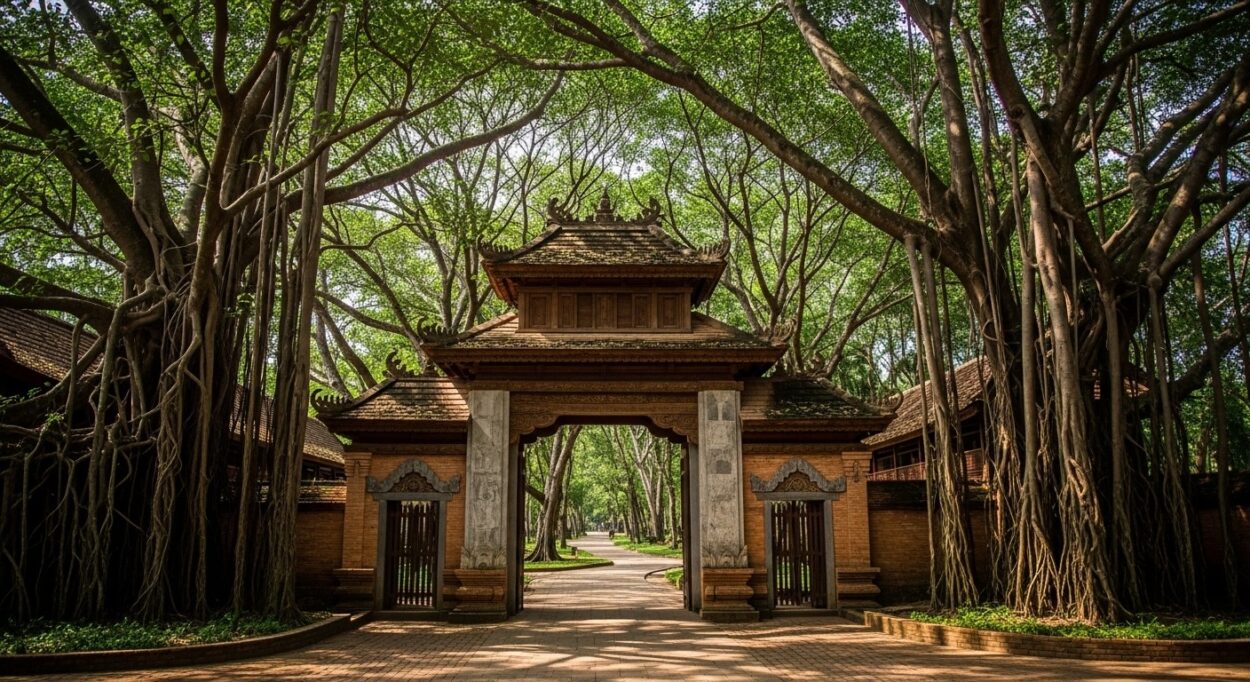
Determined to understand, King Pasenadi rode to Jetavana Monastery. Arriving at the gate, he dismounted and walked through a grove of trees, where he saw a monk of dignified bearing seated upon a large stone. The king said politely: “I wish to see the Buddha. Would you kindly announce me?” The monk agreed — and then, before the king’s eyes, vanished into the solid stone. Moments later, he reappeared and said: “The Blessed One invites Your Majesty to enter.”
Astonished, the king marveled: entering stone without door or seam, coming and going freely — such spiritual power was indeed rare. After bowing before the Buddha, he asked: “World-Honored One, the monk who announced me displayed extraordinary abilities. May I know his name?” The Buddha smiled. “King Pasenadi, you came today to ask why I ordained one whom you consider lowly. I teach without discrimination — rich or poor, high or humble. The monk you just saw is Nīti. He has realized Arhatship. The one you witnessed was he.” The king was filled with shame.
Nīti’s karma
The Buddha continued: “In this world, one’s present poverty or nobility arises from past karma. A person who is kind, humble, respectful of elders, protective of the young, and cultivates virtue will be born into favorable conditions. But one who is cruel, arrogant, and reckless will fall into lowly circumstances.” The king then asked: “Why was Nīti born so low?”
The Buddha replied: “In the distant past, after Kāśyapa Buddha entered Nirvāṇa, there was a monk among a sangha of one hundred thousand who was proud and domineering. He treated others arrogantly, made others do his work, slept in while others cleaned his room, and showed no respect for elders. Because of this karma, for the next 500 years, he was reborn many times, performing the lowest and most unpleasant labor for others. In this life, his karmic obstacles were finally exhausted. Meeting the Buddha, he was liberated. This too is the fruition of causes long planted when he decided to become a monk and study the Way.”
After hearing this teaching, King Pasenadi praised the Buddha’s virtue and the boundless compassion of the Dharma, which rescues all beings from suffering. And we might pause here ourselves. To belittle others, to oppress them, to wound with careless words — the cost is never truly borne by those we harm. It is borne by us. Five hundred years of carrying waste began with a single root: pride. A little humility, it turns out, is far lighter to carry.
Translated by Katy Liu and edited by Tatiana Denning
Follow us on X, Facebook, or Pinterest
