
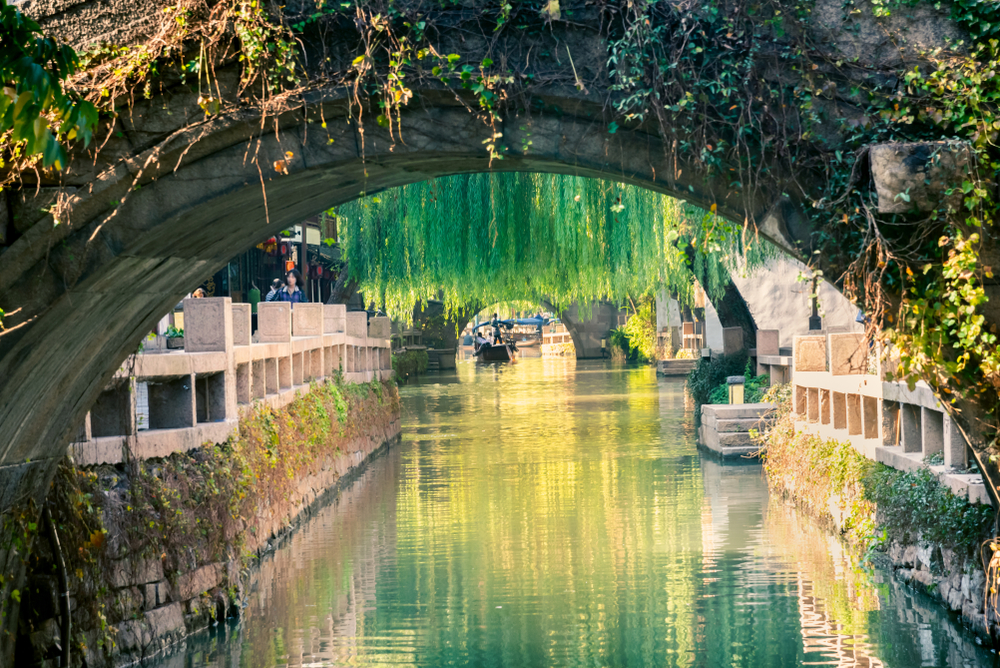
In the spring of 2016, a monumental oil painting titled Zhouzhuang sold at a Hong Kong auction for HK$236 million [US$30 million], setting a record for modern and contemporary Chinese oil paintings.
The work was created by Wu Guanzhong, one of China’s best-known modern artists. In the painting, Zhouzhuang’s whitewashed walls appear as bright as snow, while rows of dark-tiled roofs stretch across the canvas. Touches of green and yellow bring movement and warmth to the scene, capturing the misty atmosphere of a Jiangnan water town.
The sale once again drew international attention to this 900-year-old settlement on the Taihu Plain.
Yet long before Wu interpreted Zhouzhuang through his distinctive use of lines, shapes, and colors, another painter had already introduced the ancient town to the wider world with an unusual “key.”
The painting was Memories of My Hometown.
The artist was Chen Yifei.
A bridge that became a key
The story begins in the spring of 1984.
At the time, there was no direct road connecting Kunshan to Zhouzhuang. Visitors could reach the town only by taking a small wooden boat through its network of waterways.
Among the passengers on one such journey was Chen Yifei, a young artist who had recently returned from studying in the United States.
He was immediately struck by what he saw.
“What an extraordinary place,” he said. “It seems removed from ordinary life, yet it is filled with ordinary life.”
The narrow boat did not have enough room for Chen to set up his heavy easel, so he took photographs instead. Moss-covered stone bridges, houses built along the water, reflections in the canals, and cooking smoke rising through the mist all found their way onto his rolls of film.
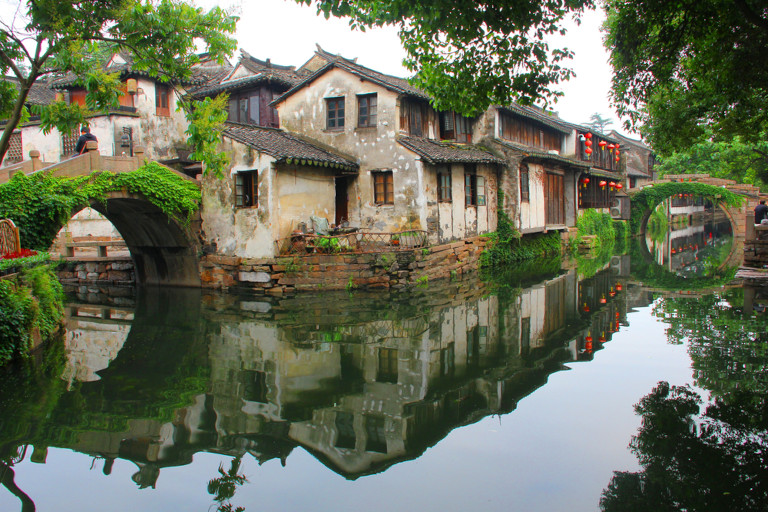
When he returned to his studio in New York, one image stood out.
Near the center of Zhouzhuang were two small stone bridges positioned at right angles to each other. Together, they resembled an old-fashioned key, and local residents called them the Key Bridge. They later became widely known as the Twin Bridges.
Using the photograph as his reference, Chen painted the scene in a classical realist style and titled the work Memories of My Hometown.
In October 1984, the painting was exhibited at Hammer Galleries in New York alongside dozens of Chen’s other works depicting the water towns of Jiangnan. The quiet canals, subdued colors, and sense of solitude appealed strongly to Western audiences.
The following year, Memories of My Hometown was selected for a United Nations first-day cover issued in New York, Geneva, and Vienna.
A little-known town in southern China had suddenly gained an international audience. The stone bridges in Chen’s painting became a symbolic key that opened a view of traditional Chinese beauty to the West.
Chen stood out at the time for portraying Chinese water towns through Western classical realism. His paintings offered Western viewers something both unfamiliar and recognizable. In Zhouzhuang’s waterways and bridges, they could see echoes of Venice.
Chen probably never imagined that the bridges he painted would help change the town’s future.
When he died in 2005, more than 1,000 Zhouzhuang residents gathered at the Twin Bridges and lit candles in his memory. They wanted to honor the artist who had introduced their hometown to the world.
A memorial called Yifei House now stands nearby. Above its entrance are four Chinese characters written by Chen himself: “I Love Zhouzhuang.”
A town born from kindness
Although paintings brought Zhouzhuang international recognition, the town’s history began centuries earlier.
Located in the southwestern corner of Kunshan, Zhouzhuang is surrounded by lakes and crossed by a network of canals. The waterways divide the town into an orderly grid, while houses stand directly along the riverbanks.
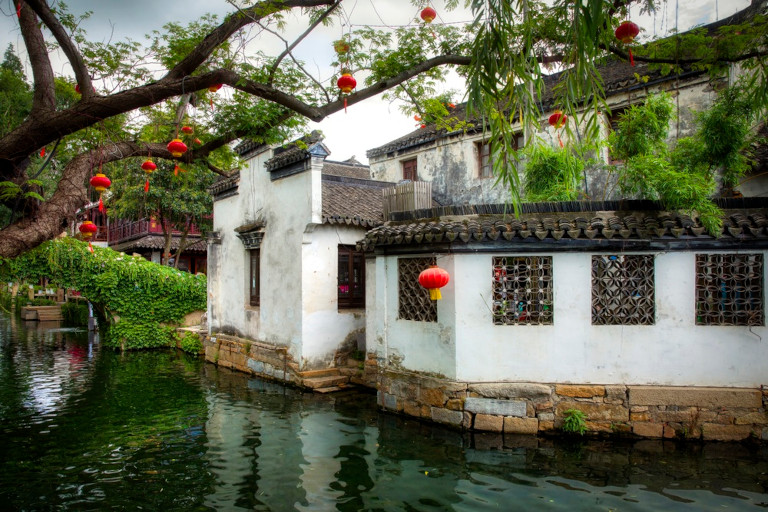
An old local record summarized life there in one sentence:
“Even the shortest journey requires a boat.”
Fourteen stone bridges dating from the Yuan, Ming, and Qing dynasties remain in the town, and more than 60 percent of its traditional residences date from the Ming and Qing periods.
Among the ancient water towns of Jiangnan, Zhouzhuang has preserved an unusually complete combination of canals, bridges, streets, and historic homes. It is often called “China’s No. 1 Water Town.”
Its beginnings, however, were modest.
In 1086, during the Northern Song Dynasty, a local official surnamed Zhou established an estate in the area. He later donated his residence and a large portion of his land for the construction of Quanfu Temple beside the water.
The residents remembered his generosity and named the settlement after him.
Zhouzhuang means “Zhou’s Village.”
A charitable act by a local official gave the town a name that would eventually become known throughout China and beyond.
The rise and fall of China’s richest man
If generosity gave Zhouzhuang its name, commerce brought it prosperity.
The man most closely associated with the town’s rise was Shen Wansan, a merchant remembered as one of the richest men of the early Ming Dynasty.
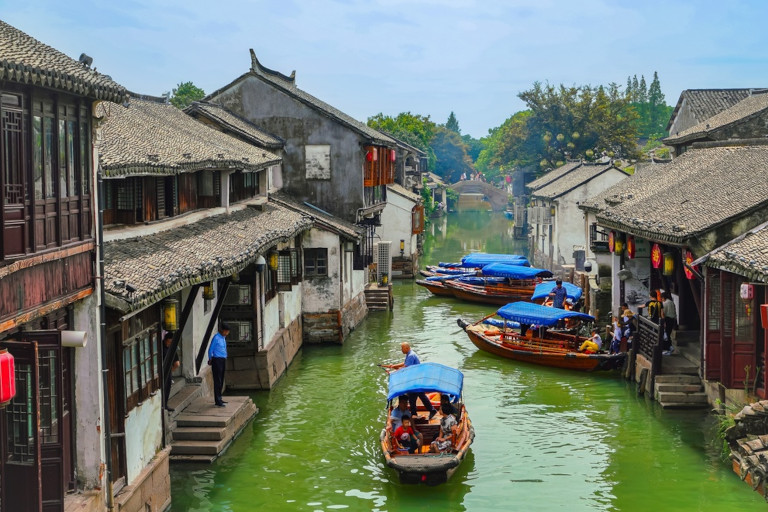
According to local records, Shen accumulated much of his fortune through overseas trade. Zhouzhuang’s waterways provided merchants with access to major transportation routes, enabling Shen to ship silk, grain, porcelain, and other goods to distant markets.
Over time, his wealth became the subject of legend.
One popular story claimed that Shen owned a magical “treasure bowl.” Place a silver ingot inside it, the story said, and the bowl would soon overflow with gold.
A golden treasure bowl is still displayed in the Shen family residence, where visitors touch it in hopes of attracting good fortune.
But extraordinary wealth could also attract danger.
The Shen family was reportedly connected to Zhang Shicheng, who controlled Suzhou and was one of Zhu Yuanzhang’s last major rivals before the founding of the Ming Dynasty. After Zhu defeated his opponents and became emperor, wealthy Jiangnan families that had supported Zhang were regarded with suspicion.
One of the best-known stories about Shen concerns the construction of Nanjing’s city walls. Shen reportedly offered to finance part of the work and then proposed rewarding the imperial troops himself.
Emperor Zhu Yuanzhang was furious.
How could an ordinary subject presume to reward the emperor’s army?
According to the story, Empress Ma persuaded the emperor not to execute Shen. His life was spared, but he was exiled to Yunnan. Other members of the Shen family were later implicated in political cases, and the family suffered further exiles and financial losses.
Not every detail of Shen’s life can be established with certainty. Nevertheless, the story of his rise and fall endured as a warning: wealth should not be flaunted without restraint, and prosperity cannot be trusted to last forever.
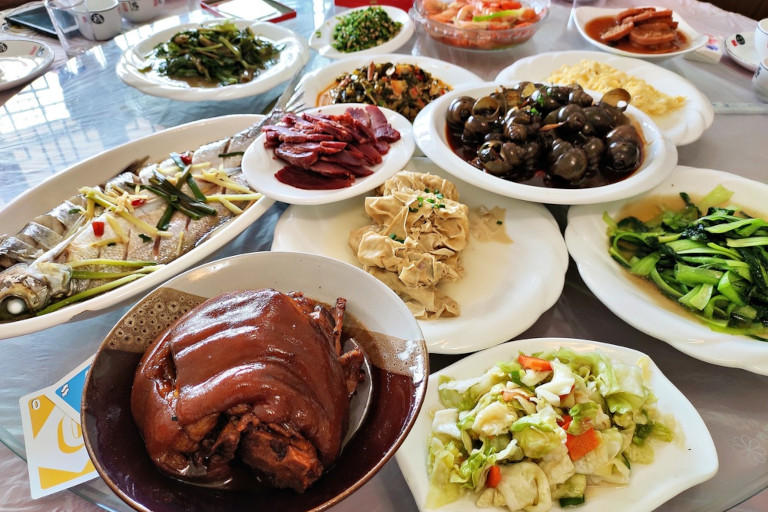
Today, Shen Wansan’s name survives not in treasure vaults but in local foods such as Wansan Pork Knuckle and Wansan Cakes.
Two ways to live
Zhouzhuang’s commercial prosperity faded, and its richest merchant was sent into exile, but the town’s stone buildings and bridges remained.
Its grandest residence is Shen Hall. It was not built by Shen Wansan himself but by his descendant Shen Benren during the Qianlong period of the Qing Dynasty.
The complex contains seven courtyards, five gate towers, and more than 100 rooms. Covered passages and upper-level corridors connect its front and rear buildings, forming a continuous structure known as a “galloping-horse building.”
The mansion reflects the Shen family’s long history of loss, survival, recovery, and renewal. Centuries after members of the family were exiled, their descendants were still able to build one of Zhouzhuang’s most impressive residences.
Beside Shen Hall stands Zhang Hall, Zhouzhuang’s only surviving residential building from the Ming Dynasty.
Its most unusual feature is the Ruojing River, which passes directly beneath part of the house. A couplet displayed inside describes the arrangement:
“Sedan chairs enter through the gate; boats pass through the house.”
People walk through the rooms while water flows beneath them. The building reflects the way people in Jiangnan adapted to their environment through compromise and coexistence with nature.
Zhouzhuang was not only a town of merchants. It was also associated with scholars, writers, and people who chose a quieter life.
The Western Jin Dynasty writer Zhang Han once lived near the town’s South Lake. While serving in a high-ranking government position far from home, he began to long for the wild rice shoots, water shield soup, and perch of Jiangnan.
He concluded that rank and recognition could not replace personal contentment. He resigned from office and returned home.
His story gave rise to the Chinese expression “longing for water shield and perch,” which came to symbolize homesickness and the desire to leave official life behind in favor of a life more consistent with one’s own wishes.
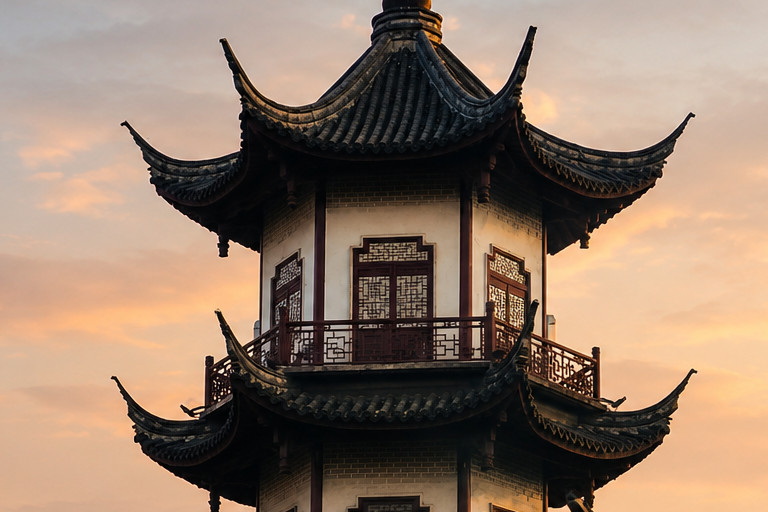
Later writers also visited Zhouzhuang. They gathered at the town’s Misty Tower to discuss literature, drink wine, and compose poems, some of which were preserved in the Misty Tower Collection.
The contrast is striking.
Shen Wansan pursued wealth until he stood at the height of commercial success, only to lose his position and freedom.
Zhang Han willingly abandoned rank and prestige for the familiar food and peaceful surroundings of his hometown.
The same waterways sustained two very different ways of life, leaving later generations to decide for themselves which path carried greater value.
The town remains
Two major artists helped bring Zhouzhuang to the world’s attention.
Wu Guanzhong established its place in modern Chinese art, while Chen Yifei’s Twin Bridges introduced many Western viewers to the restrained beauty of a traditional Jiangnan water town.
Yet paintings remain separate from the place they depict. Wealth changes hands, reputations rise and fade, and visitors eventually return home.
When the auction rooms fall silent, the tour boats leave the docks, and the evening crowds disappear, Zhouzhuang remains.
Stone bridges still arch across its canals.
The river continues to flow between the houses.
Lanterns glow beneath the eaves of riverside homes.
Under the mist and rain of Jiangnan, the town appears much as it might have nine centuries ago, when an official surnamed Zhou built a temple beside the water.
Perhaps Zhouzhuang’s deepest appeal lies in that sense of continuity. Wealth, fame, and works of art may pass from one generation to another, but the bridges, waterways, homes, and ordinary routines along the canals continue to preserve the character of the town.
Translated by Katy Liu
Follow us on X, Facebook, or Pinterest
