
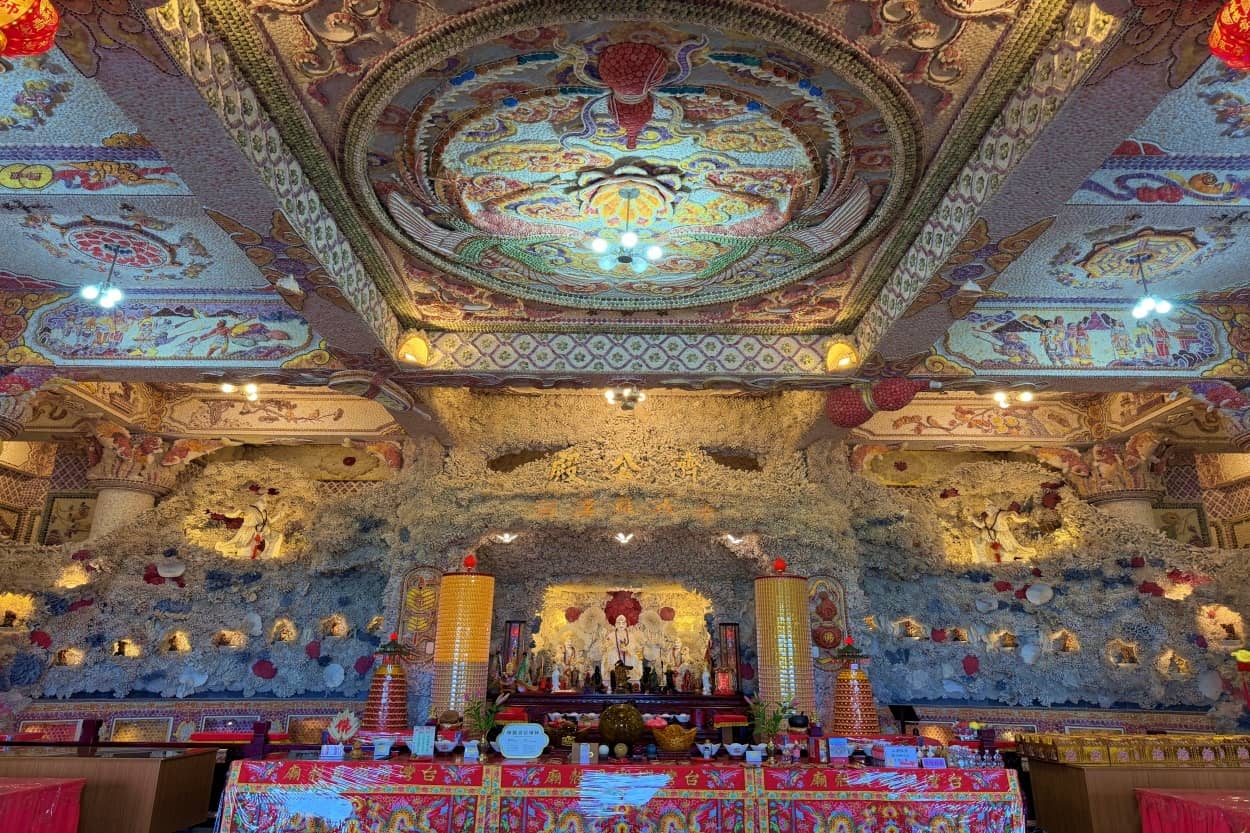
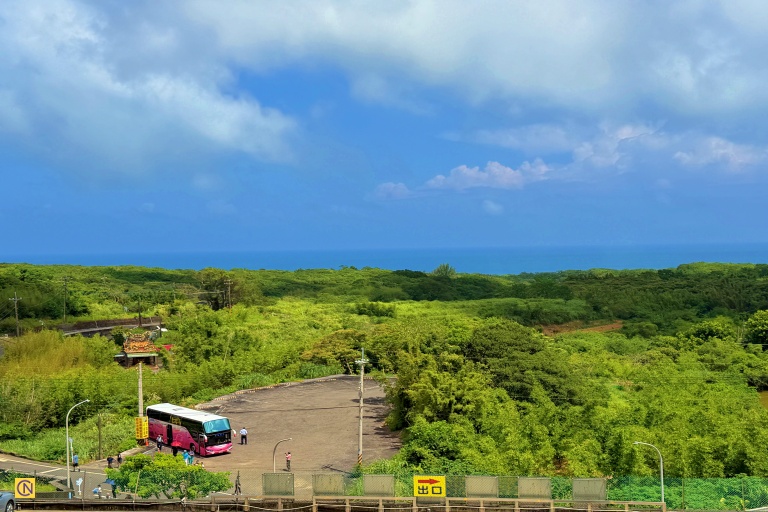
Perched on a hillside overlooking the sea in Shimen District, New Taipei City, the Taiwan Coral Shell Temple is one of Taiwan’s most unusual religious and cultural landmarks. Surrounded by mountains and facing the ocean, the temple combines traditional religious architecture with countless natural corals, seashells, and colorful marine treasures from around the world.
Dedicated primarily to Jigong, a beloved and unconventional Buddhist figure in Chinese folk religion, the temple looks unlike an ordinary Taiwanese temple. Its walls, columns, gates, and sculptures are richly decorated with seashells and corals, creating the extraordinary impression of entering a mythical underwater palace.
A temple inspired by faith and a vision
The story of the temple began with a deeply spiritual vision. According to the temple’s account, Xie Rong-shou, then chairman of the New Taipei City Taoist Association, was inspired to build a temple after his deputy, Tuo Chun-ming, experienced a dream associated with Jigong Buddha.
During a winter visit to the area, Xie reportedly walked 108 steps from his vehicle and looked toward the midday sun. Deeply moved by the experience, he resolved to build a temple at the site.
Planning began in 2004, followed by a formal application in 2005. After years of fundraising, planning, and construction, the temple obtained its legal occupancy permit in 2012. More than a decade of effort eventually brought the project to completion. Jigong was formally enshrined in 2023, while the temple’s renowned Hall of the Eighteen Arhats was also consecrated that year. The temple officially opened to the public in 2024.
A sanctuary of gods and sacred sculptures
Jigong is the principal deity enshrined in the main hall, alongside Mazu, the Goddess of the Sea. Other important deities include Guan Yu, the Five Gods of Wealth, and Guanyin, the Bodhisattva of Compassion.
Several of the statues are carved from precious white jade sourced from the border region between Yunnan, China, and Myanmar. Their refined craftsmanship provides a striking contrast to the colorful marine decorations surrounding them.
As visitors move deeper into the tunnel, they encounter statues of Jigong, Guanyin, the Eighteen Arhats, and the 12 animals of the Chinese zodiac. Religious figures, mythical creatures, and marine life are brought together in a highly imaginative environment.
Thousands of shells transform the temple into an underwater palace
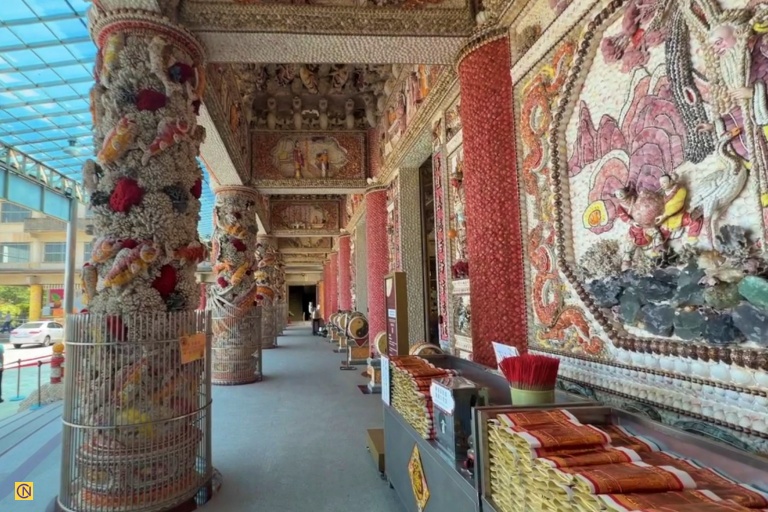
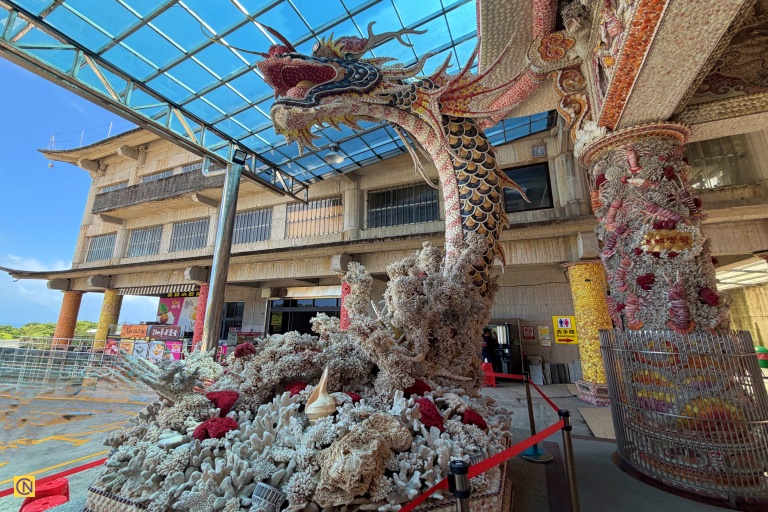
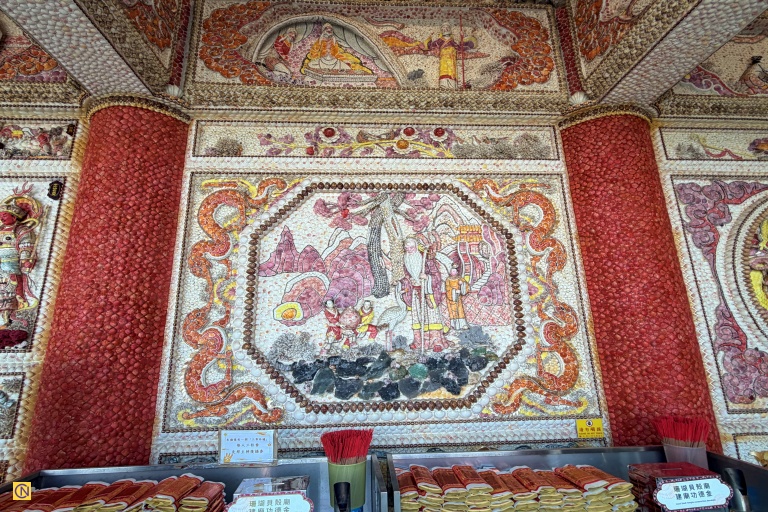
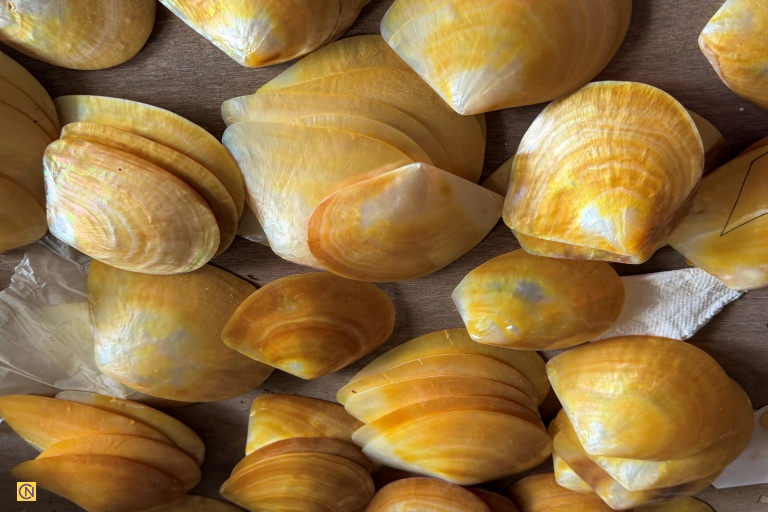
The temple’s defining feature is its extraordinary use of natural marine materials. Countless corals, seashells, rare shells, and colorful scallop shells are incorporated into the walls, pillars, gates, mythical creatures, and decorative artwork.
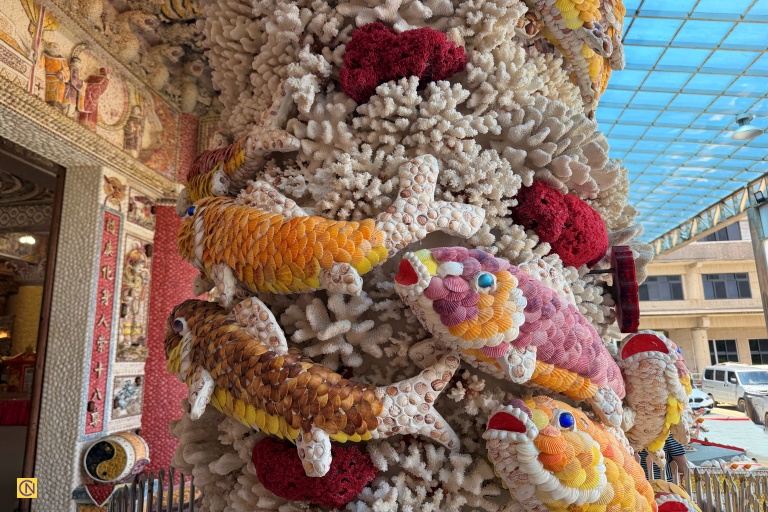
The materials are said to have come from Taiwan and from places including Indonesia, the Philippines, Réunion Island, the Caribbean, Chile, and Argentina. Together, they represent marine treasures associated with the Pacific, Indian, and Atlantic oceans.
Instead of the stone lions commonly seen at the entrance of traditional Chinese temples, the Coral Shell Temple features a pair of mythical Ao Dragon guardians, with dragon heads and fish-like bodies. Besides, visitors can also find unusual dragon and lobster columns covered with coral and seashell decorations. The result is an extraordinary fusion of traditional Chinese religious imagery and global marine art.
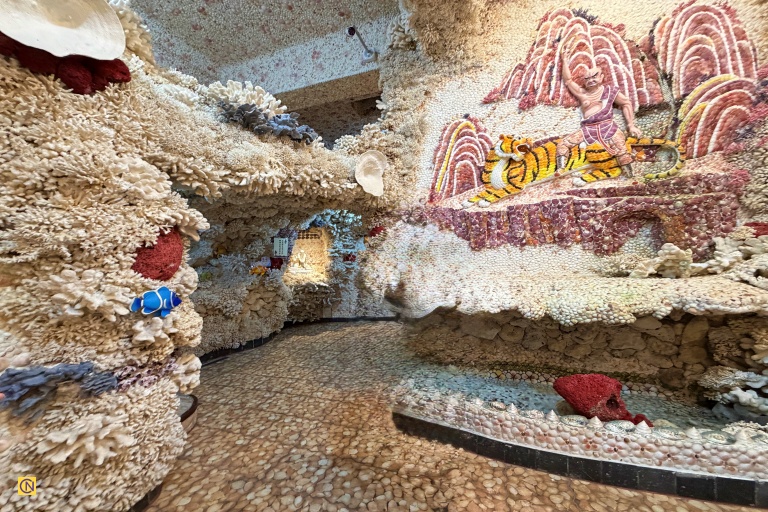
The Tunnel of the Eighteen Arhats: A journey beneath the sea
One of the temple’s most fascinating attractions is the Tunnel of the Eighteen Arhats, where coral and shells create an immersive underwater-world atmosphere.
The tunnel is filled not only with Buddhist figures and traditional religious imagery, but also with playful representations of marine and Arctic animals, including clownfish, crabs, walruses, manatees, polar bears, and beluga whales.
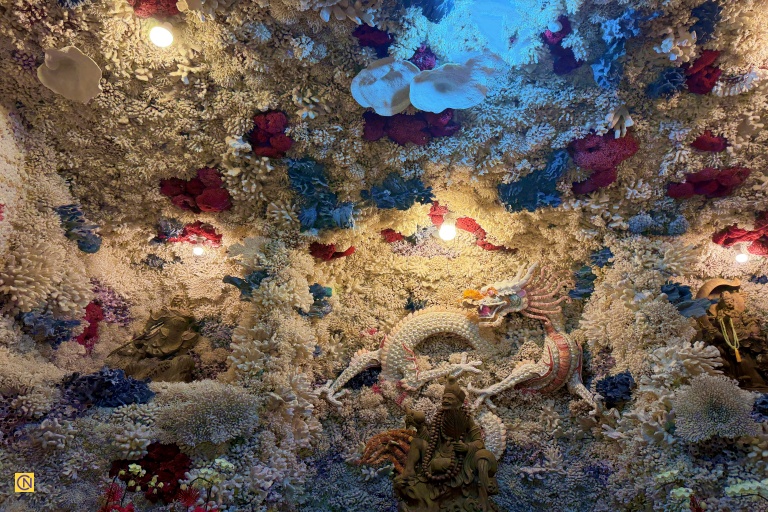
This imaginative combination makes the temple particularly appealing to visitors of different ages and cultural backgrounds. For first-time international visitors, exploring the temple can feel less like simply entering a place of worship and more like embarking on a journey through an extraordinary underwater fantasy world.
The legend of Jigong and the Dragon Palace
The temple’s strong association with the sea is also connected with legends surrounding Jigong. According to local folklore, Jigong once visited the legendary underwater Dragon Palace. These stories helped inspire the temple’s distinctive use of coral and shells.
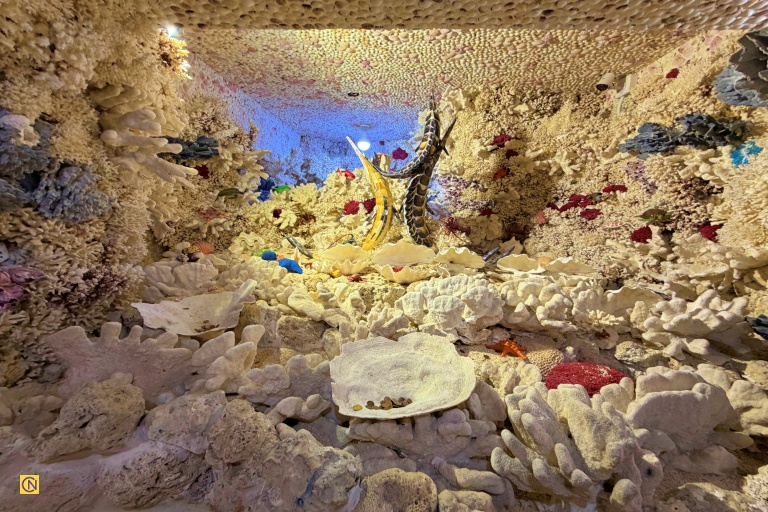
Traditional accounts also associate Jigong with five symbolic treasures: his clothing, shoes, fan, gourd, and a string of 108 Buddhist prayer beads.
The temple further gives coral a symbolic meaning. In Taiwanese, the word for coral sounds similar to an expression meaning “carrying blessings.” For worshippers, therefore, coral is more than an ornamental material—it represents good fortune, blessings, and protection.
A cultural bridge between Taiwan and the world
The Taiwan Coral Shell Temple represents much more than a place of worship. It is an unusual cultural creation, where folk religion, architecture, craftsmanship, marine culture, and visual art come together.
By incorporating natural marine materials from around the world into a distinctly East Asian religious setting, the temple offers visitors a fascinating perspective on Taiwan’s folk traditions and its creative approach to cultural expression.
For international travelers, the temple offers an opportunity to discover a side of Taiwan beyond its better-known mountains, night markets, and modern cities. Here, religion becomes architecture, architecture becomes art, and the ocean becomes part of a sacred cultural landscape.
As the temple continues to welcome worshippers and visitors from Taiwan and abroad, it hopes to further connect religion, culture, and tourism, introducing the beauty of Taiwanese folk culture to a global audience.
The Taiwan Coral Shell Temple is ultimately a place where faith meets imagination, traditional Eastern culture meets global marine treasures, and a temple becomes a living work of art—an extraordinary “underwater palace” on Taiwan’s northern coast.
Follow us on X, Facebook, or Pinterest
