
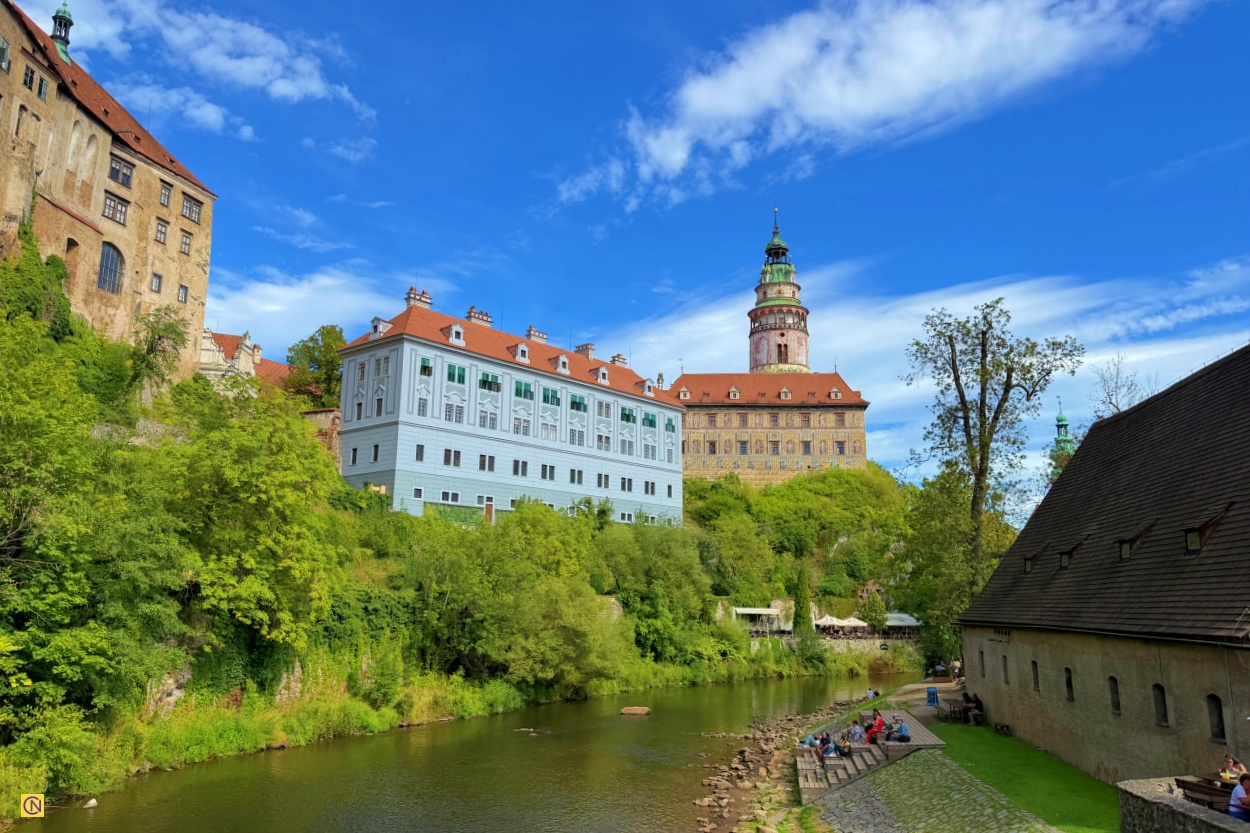
With its enchanting medieval architecture, rich artistic heritage, and picturesque riverside scenery, Český Krumlov is one of Czechia’s most captivating historic towns in the South Bohemian Region. Taiwanese travelers fondly call it “CK Town,” and it unfolds along the Vltava River’s winding curves. Red-tiled rooftops, pale-colored buildings, and historic church spires create a fairytale-like panorama.
The town dates back to the 13th century, when it grew along an important trade route. In 1992, UNESCO inscribed its historic center on the World Heritage List for its remarkably preserved medieval urban character.
Noble families and the town’s rise
The Vítkovci family founded Český Krumlov Castle in the 13th century and initially associated it with the family. In 1302, the powerful Rožmberk family took control of the estate. Over nearly three centuries, they helped transform the town into an important center of economic, cultural, and artistic life in Bohemia.
In the centuries that followed, the estate passed through the hands of the Habsburgs, the Eggenberg family, and the Schwarzenberg family. Each era left its own architectural and artistic legacy, creating a remarkable blend of Gothic, Renaissance, and Baroque styles that still define the town today.
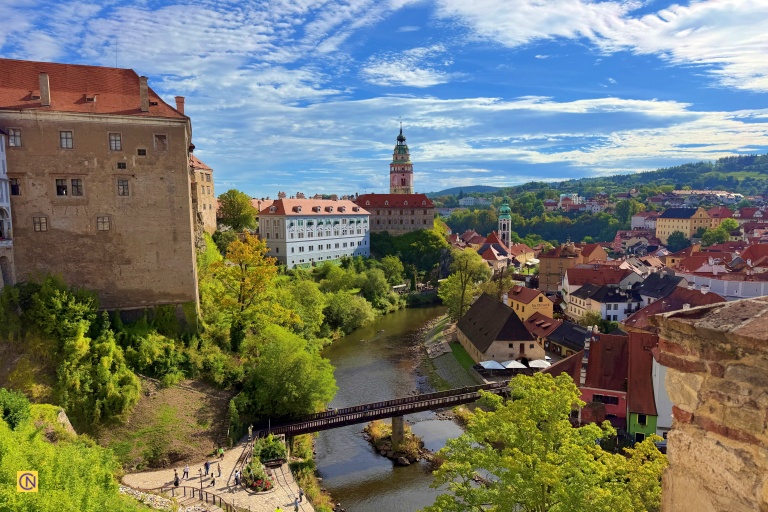
Český Krumlov Castle and the Painted Tower
Perched on a rocky promontory above the Vltava River, Český Krumlov Castle is Czechia’s second-largest castle complex, after Prague Castle. The expansive complex contains more than 40 buildings and palaces arranged around five courtyards, reflecting centuries of architectural development.
One of its most recognizable landmarks is the towering Painted Tower, distinguished by its vivid colors and elaborate decorative details. The castle’s third and fourth courtyards also feature remarkable Renaissance murals. Some decorations employ trompe-l’œil techniques, using perspective, shading, and carefully painted patterns to create the illusion of three-dimensional stonework, columns, and sculptural details.
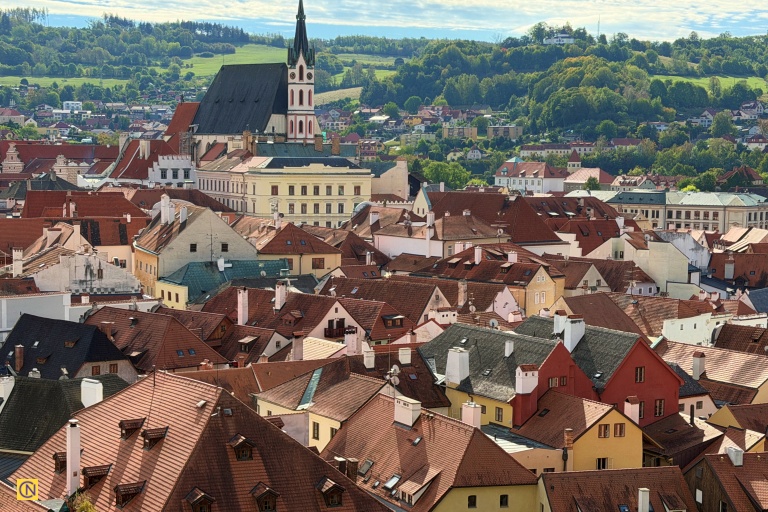
From the tower’s viewing gallery, visitors can enjoy sweeping views of the red-roofed old town, the winding river, and the distant spire of St. Vitus Church.
Cloak Bridge: Architectural grandeur and Taiwan’s support
The Cloak Bridge is one of Český Krumlov Castle’s most iconic landmarks. Supported by massive stone pillars, this impressive three-tiered structure spans the castle moat and connects the fourth and fifth courtyards. Its majestic arches and imposing design reflect the ingenuity of historic castle architecture.
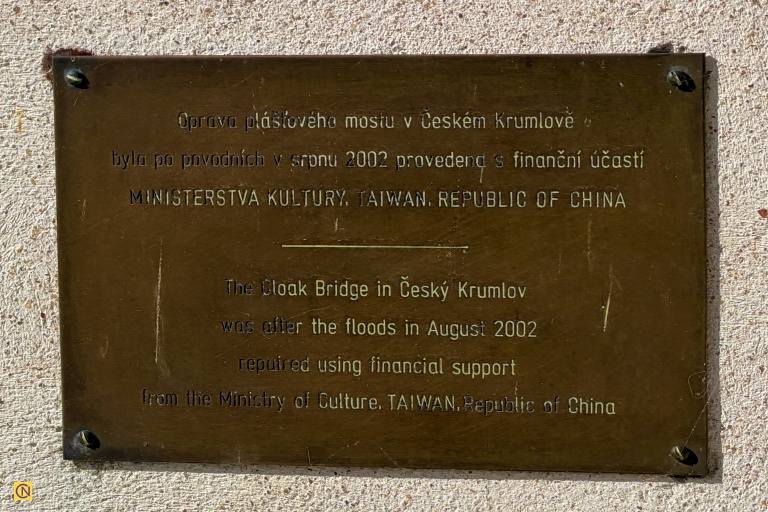
Beyond its architectural splendor, the bridge also commemorates a meaningful connection between Taiwan and Czechia. In August 2002, severe floods struck parts of Czechia, including Český Krumlov. After the disaster, Taiwan’s Ministry of Culture, Republic of China (Taiwan) provided financial support for the bridge’s restoration. A commemorative plaque on the bridge records this contribution, noting that the Cloak Bridge was repaired after the August 2002 floods with financial assistance from Taiwan’s Ministry of Culture. The plaque serves not only as a record of the restoration but also as a symbol of Taiwan’s support for international cultural heritage preservation and the friendship between the two places.
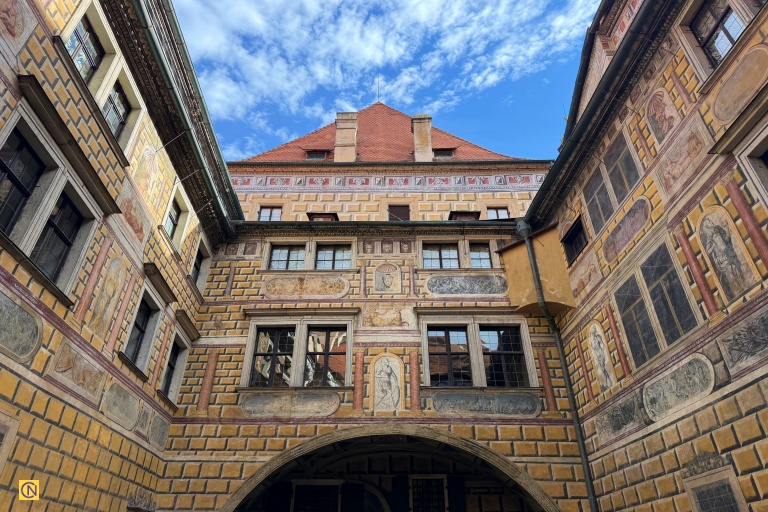
From the bridge, visitors can admire the Vltava River winding around the old town, with red-tiled rooftops, historic streets, and the spire of St. Vitus Church forming a picturesque panorama. Viewed from below, the bridge’s soaring arches and massive stone supports are equally impressive. More than a passageway within the castle complex, the Cloak Bridge stands as a cultural landmark that brings together architectural beauty, historical memory, and a lasting bond with Taiwan.
The Old Town Square and Latrán Street
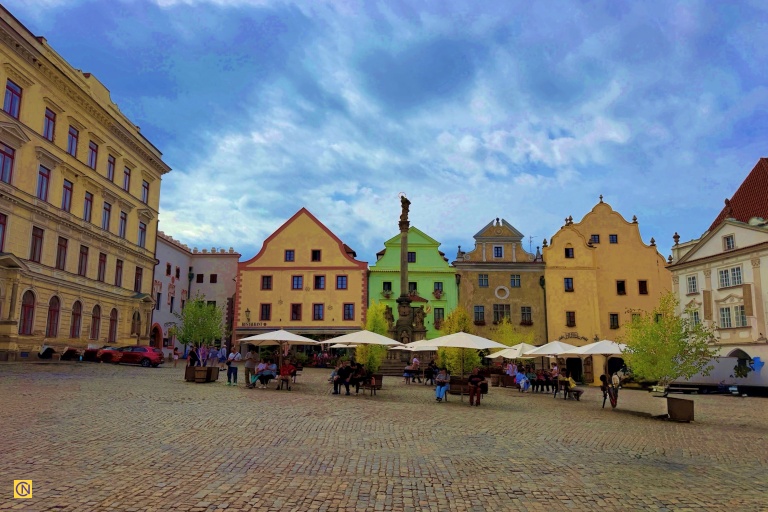
Leaving the castle behind, visitors can wander along cobblestone lanes into the enchanting old town. Náměstí Svornosti, or the main town square, is one of its central landmarks. Colorful historic buildings surround the square, featuring elegant Renaissance gables and decorative façades. At its center stands the Plague Column, commemorating the town’s devastating epidemics.
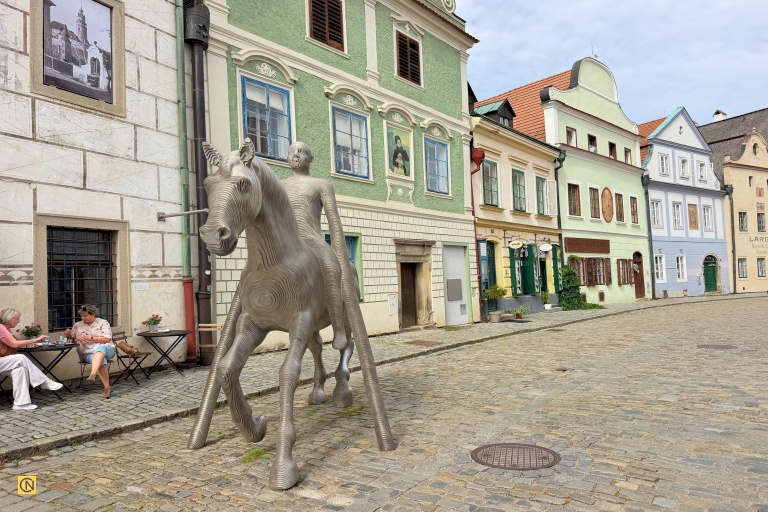
The nearby Renaissance-style Town Hall adds to the square’s architectural charm. Further north, Latrán Street is lined with historic houses, independent shops, cafés, and restaurants. Together, they create a lively atmosphere where centuries-old architecture meets everyday local life.
Barber Bridge and riverside scenery
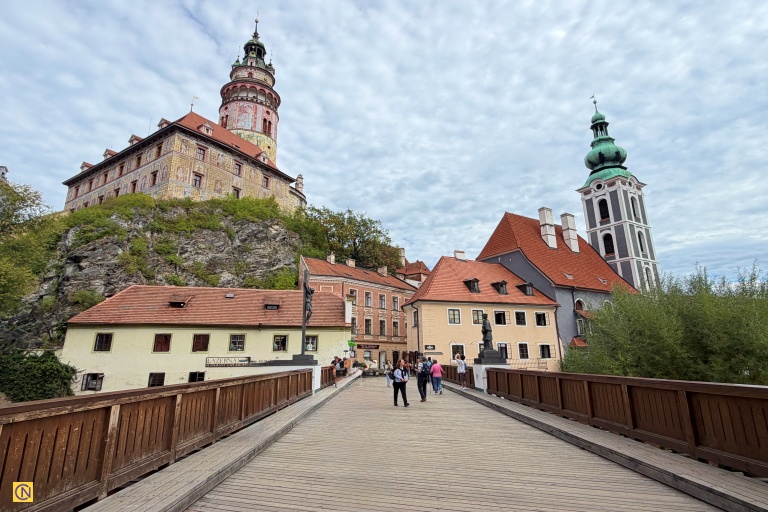
Lazebnický, most commonly known as Barber Bridge, connects the castle area, Latrán Street, and the old town. From the bridge, visitors can watch boats glide along the Vltava River while enjoying picturesque views of the castle and surrounding church towers.
The river is more than a scenic backdrop; its winding course defines the town’s distinctive layout and contributes to its romantic atmosphere. Whether admiring the river bends from a bridge or strolling along the waterfront, visitors can appreciate the harmonious relationship between the natural landscape and historic architecture.
Art, culture, and timeless charm
Beyond its castle and medieval streets, Český Krumlov has a rich artistic and cultural heritage. The town has a notable connection to Austrian Expressionist painter Egon Schiele, whose family ties and time here helped establish its artistic reputation. Museums, galleries, concerts, and traditional festivals offer visitors additional ways to explore its cultural life.
Wandering through cobblestone lanes, admiring painted façades, or pausing by the river reveals Český Krumlov’s enduring charm. With its historic architecture, majestic castle, and tranquil riverside scenery, this Bohemian gem invites travelers to step into a living fairytale where the past remains beautifully present.
Follow us on X, Facebook, or Pinterest
