

Fools may speak endlessly of dreams, but those who can truly discern the meaning hidden within them may yet become sages.
Perhaps dreams can reveal what is difficult to see while we are awake: how easily we become absorbed in what seems real, important, and lasting.
This thought raises a profound question: What does it truly mean to attain the state of “emptiness of the four elements” while living in this world? In Buddhist thought, the “four elements” — earth, water, fire, and air — represent the physical body and material existence. To see them as “empty” is to recognize that they are impermanent, constantly changing, and cannot be permanently possessed.
Must one be born deep in the mountains, far removed from the dust and distractions of ordinary life, untouched by worldly desires, in order to attain this state? Or is the greater challenge to remain in the midst of society — to experience its joys and sorrows, encounter the countless faces of humanity, yet enter the world without becoming trapped by it, and leave it without being disturbed by either storm or sunshine?
After all, cutting oneself off from society can certainly reduce opportunities to develop attachments. But if one never encounters temptation, hardship, conflict, or the countless desires of the human world, how can one know whether the heart has truly become free of them? Such cultivation is like a fortress that has never faced a storm: its walls may appear strong, but their true strength remains unknown until they are tested.
Perhaps true freedom belongs to those who have possessed something — and then had the courage to let it go.
Worldly attachments often distract us from spiritual awakening
But human life is short, and many days are already gone.
If we spend our few decades pursuing everything the world has to offer and only later learning to relinquish it, we may not awaken until we are already old and weary, with little time left to cultivate ourselves. The cost would be rather high.
As the ancient Chinese saying goes: “My life has its limits, but knowledge has none.” So how can we use the finite time in this life to gain genuine insight into an infinite Way?
Two remarkable tales centered on dreams, The Pillow Book and The Governor of Nanke, seem to offer an answer. Through the strange boundary between waking and dreaming, they invite us to see life from another perspective — and perhaps discover how to live fully in this world without becoming bound by it.
In The Pillow Book and The Governor of Nanke, dreams unfold with such vividness that the dreamers experience what seems like an entire lifetime in only a few hours.
In The Pillow Book, Lu Sheng, frustrated in his pursuit of fame and official honors, encounters the Taoist Lü Weng. After resting his head on Lü Weng’s blue porcelain pillow, he falls asleep and enters a mysterious dream.
Within the dream, Lu Sheng marries a beautiful woman, accumulates great wealth, rises rapidly through the ranks, becomes a general and minister, and enjoys all the splendor and prestige that worldly life can offer. By ordinary standards, he reaches the very summit of happiness.

Temporal illusions challenge our perceptions of everyday reality
Yet his fortunes rise and fall in spectacular turns. When his life is threatened, he looks back with regret on the simple life he once had — wearing coarse clothing and riding a little blue horse — and realizes how much he took for granted.
In The Governor of Nanke, Chun Yufen, a man passionate about wine, loses his position because of his drinking. While sick from alcohol, he enters a dreamlike world in which he marries a beautiful woman, gains great wealth and prestige, rises through the ranks, and eventually becomes governor of the kingdom of Huai’an.
He becomes so absorbed in this world that he comes to regard it as his true home. When the king eventually orders him to return home and visit his relatives, Chun Yufen is astonished to realize he has forgotten the road he came by.
But his splendid life does not last. His closest friends die, followed by his beloved wife. Eventually, even the king distances himself from him, and his fortunes turn against him.
Material accomplishments vanish when our mortal lives conclude
The two stories unfold in remarkably similar ways. Lu Sheng enjoys every conceivable worldly luxury, yet in the end he must still face death and leave everything behind. Chun Yufen, too, discovers that wealth, beauty, power, territory, and status cannot protect anyone from loss.
In the end, the things people struggle for so endlessly prove far less substantial than they seemed.
Lu Sheng’s magnificent lifetime disappears like a dream within a small porcelain pillow. Chun Yufen’s vast kingdom turns out to be nothing more than a colony of ants beneath an old locust tree.
When Lu Sheng finally awakens, he understands. He bows gratefully to Lü Weng and lets go of his attachment to worldly success and failure, to honor and disgrace.
Within a dream, the soul can experience the full range of the human world without the physical body necessarily suffering the consequences. When the dream ends, might that awakening not be a kind of rebirth?
Perhaps there is no quicker way to awaken a person than through a dream.
Ancient parables encourage us to reflect on existence
Once we see clearly that so much of worldly life revolves around little more than wealth, pleasure, desire, and status — things we cannot bring with us when we are born and cannot take with us when we die — perhaps it becomes easier to put them down and begin again with a lighter heart.
These two extraordinary tales later gave rise to the famous expressions “The Yellow Millet Dream” and “A Nanke Dream,” which have been passed down through the centuries. In this sense, the dreams became a kind of sentinel for generations of readers — a reminder to pause, reflect, and examine our own hearts again and again.
Yet if we look more closely, another question arises. Lu Sheng and Chun Yufen’s dream experiences are astonishingly detailed and lifelike. Their fortunes rise and fall, their relationships unfold, and even the smallest details of their lives seem real.
Yet compared with the decades they experience in their dreams, the time their physical bodies spend sleeping is no more than the blink of an eye. If so, wouldn’t their entire dream lives flash by like a movie played at incredible speed? And if everything happened in an instant, how could such experiences possibly feel real? How could they awaken someone lost in life’s maze?
Buddhism speaks of “three thousand great worlds within a single grain of sand.” So what lies on the other side of the porcelain pillow? And what exists beyond the tiny opening of the ants’ nest? Could it be another world altogether?
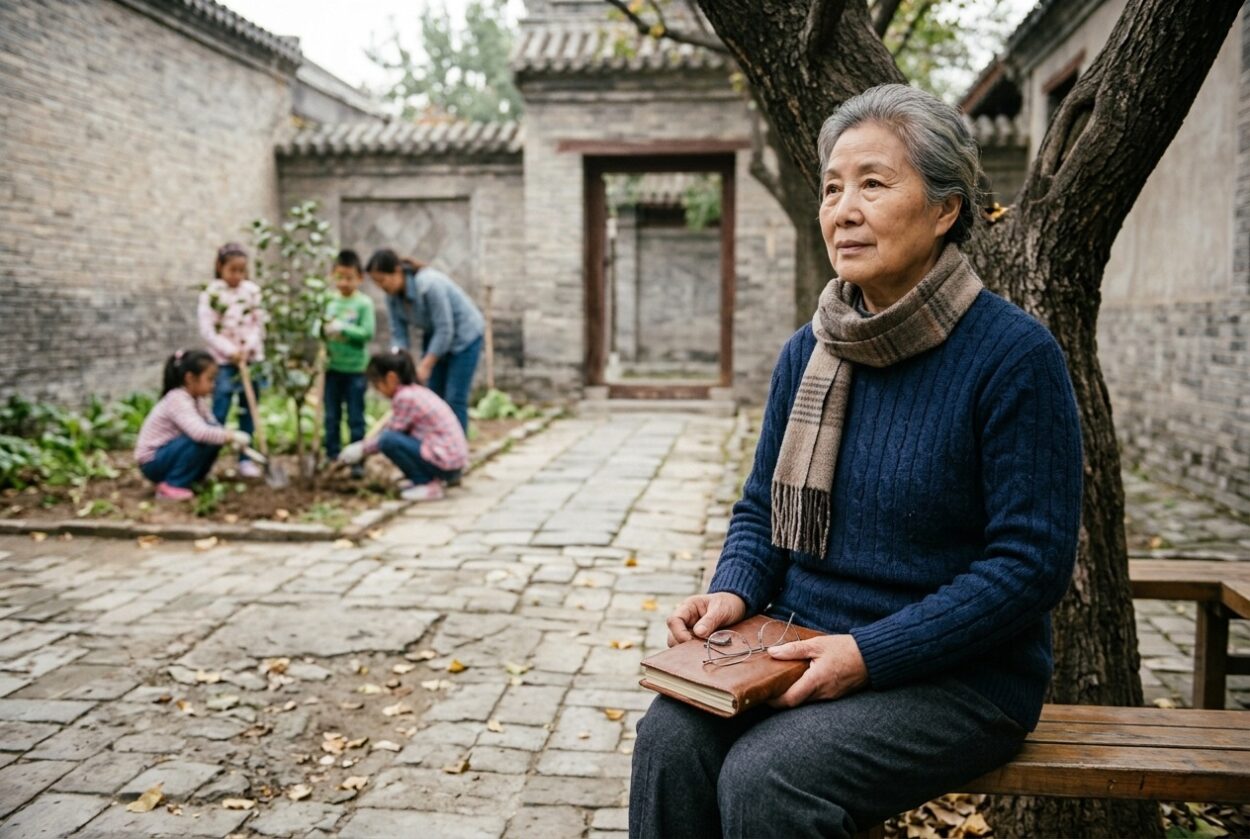
Spiritual growth relies on discovering what genuinely endures
Perhaps that world, too, has its own social order and its own laws of existence, unfolding according to its own rhythms and patterns of time. Perhaps Lu Sheng and Chun Yufen truly experienced decades there. It may simply be that time does not flow at the same speed in different worlds. As the old saying goes: “One day in heaven may be a thousand years on earth.”
Perhaps the two worlds merely exist in different fields of time — one moving swiftly, the other slowly — while both are equally real within their own realm. And perhaps that is the deeper mystery these two dreams leave us with. What if the distinction between dream and reality is not as simple as we imagine? What if what we call reality is only one plane of existence, while what we call a dream is sometimes a doorway through which we glimpse something beyond it?
Perhaps the point is not for us to decide whether what we experienced was merely a dream. Perhaps the point is to ask ourselves: If this lifetime, too, is temporary, how should we live it?
We spend so much of our lives pursuing what fades — wealth, beauty, recognition, possessions, and the desire to get ahead of others. We cling to them as though they will last forever, yet one day we must awaken from this life just as surely as Lu Sheng and Chun Yufen awakened from their dreams.
When that time comes, what will remain? Perhaps it will not be the wealth we accumulated, the recognition we received, or the things we struggled so hard to possess. Perhaps what remains is what we cultivated within us — the goodness we practiced, the kindness we gave, the people we helped, and the wisdom we gained along the way.
Maybe that’s why these ancient dreams have endured for centuries. They do not merely ask whether life is a dream. They ask a far more important question: If one day, we awaken from this life and look back upon it as a dream, what will we wish we had done differently? Will we have spent our days chasing what fades, or will we have recognized what was truly worthy of our time and our hearts?
Perhaps the greatest awakening doesn’t wait for us at the end. Perhaps it is learning, while we are still living this life, to see what truly matters.
Translated by Katy Liuand reviewed by Tatiana Denning
Follow us on X, Facebook, or Pinterest
