
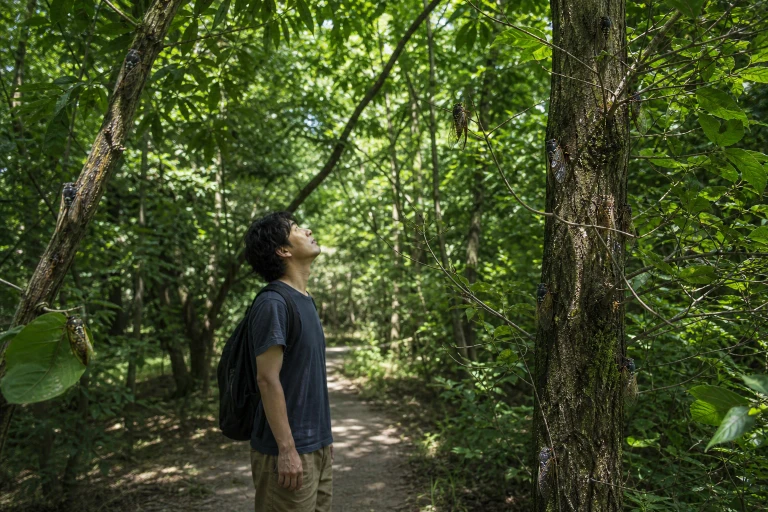
One sound stands out unmistakably in a Japanese summer: that of the cicada. When you hear cicadas singing, you are struck by the sheer power of their sound. One can’t help wondering: how could something so small produce such an astonishing song? In Japanese, this sound is called semi-shigure (蝉時雨, せみしぐれ), literally “cicada shower.” With this simple expression, the sound takes shape, and midsummer becomes something you can even hear. Sometimes, when passing through the woods in a park, especially in the morning, the cicadas seem to sing with every ounce of strength they have. I used to wonder if they had simply slept well the night before and awakened full of energy, ready to sing with all their might. Only later did I learn that I had completely misunderstood their song.
The sound of the cicada
In traditional Japanese literature, shigure (時雨) referred to a brief shower in late autumn or early winter. It could arrive suddenly and disappear just as quickly. People in earlier times paid close attention to such changes in nature, recognizing them as signs of the changing seasons and the passage of time. Over time, the sound of cicadas in midsummer came to be compared to shigure. When thousands of cicadas call at once, their voices come from every direction, rising and falling like rain. What begins as individual calls becomes one continuous chorus that seems to fill the surrounding landscape.
From this came the expression semi-shigure (蝉時雨), literally “cicada shower.” The name captures the way the cicadas’ voices seem to fall around you like rain. Japanese haiku masters such as Matsuo Bashō, Yosa Buson, and Kobayashi Issa all wrote about cicadas, reflecting their important place in the traditional appreciation of summer. In Japan, semi-shigure is more than just a natural sound. It is one of the sounds that tells people what season has arrived. When the cicadas begin singing, summer is here. This awareness of the seasons is deeply rooted in traditional East Asian culture. Nature provided familiar signs of the changing year: spring brought cherry blossoms, summer the song of cicadas, autumn the harvest moon, and winter its snow. By noticing these changes, people experienced the passage of time through the natural world.
More than thirty species of cicadas inhabit the Japanese archipelago, and different species appear at different points in the summer. In early summer, the small niinii-zemi are among the first to be heard. As midsummer arrives, abura-zemi and minmin-zemi join the chorus, creating the most magnificent semi-shigure. By late summer, the distinctive call of the tsukutsuku-bōshi begins to sound, as though quietly reminding us that autumn is already approaching. Some Japanese can even tell how far the season has progressed simply by listening to the cicadas.
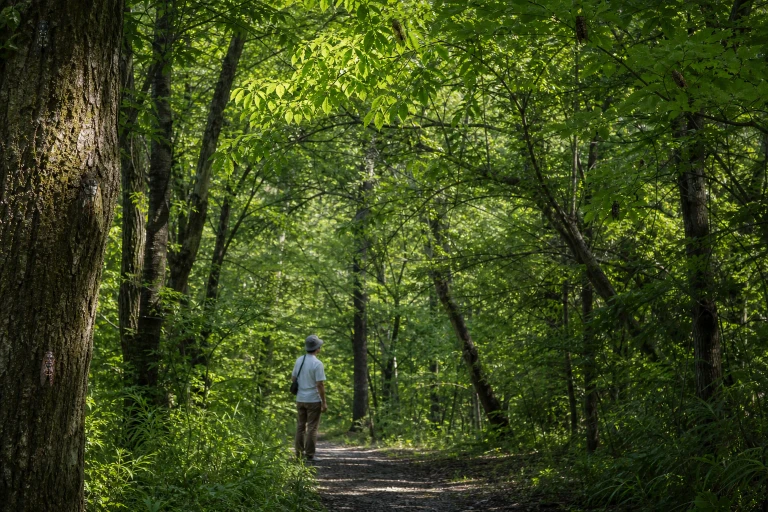
This awareness of nature is deeply rooted in Eastern culture. Rather than seeing themselves as separate from the natural world, ancient people understood human life as part of a larger natural cycle. Spring brings planting, summer brings growth, autumn brings harvest, and winter is a time to store what has been gathered. People watched these changes closely and learned to recognize the signs of each season. Cicadas follow this same natural rhythm. They appear when summer arrives and disappear as it draws to a close. Their song is one of the sounds that tells people exactly where they are in the season.
Impermanence and the cicada’s hidden life
Most people do not realize that behind those deafening cicada calls lies an extraordinarily long life underground. Above ground, a cicada’s life seems remarkably brief, and many people assume that cicadas live for only a few weeks. In fact, that is only their adult stage. After their eggs hatch, the young nymphs burrow into the soil, where they feed on fluids from tree roots and slowly develop. Cicadas spend most of their lives underground.
Common Japanese cicadas generally spend several years underground before emerging as adults. In North America, the famous periodical cicadas spend either 13 or 17 years underground before emerging in enormous numbers. When the time comes, they crawl out of the earth and climb tree trunks. There, they shed their old shells and emerge with soft, pale wings. By the next morning, their calls may fill the woods. After so many years underground, the sound is astonishing. Standing beneath the trees, it’s almost impossible to tell where one voice ends and another begins. Thousands of individual calls blend into a continuous chorus. The sunlight, green leaves, summer heat, and overwhelming sound come together to create a scene that captures the feeling of midsummer.
This close attention to the changing seasons has a deeper philosophical background in Japan. As Buddhism developed in Japan, the idea of impermanence came to influence literature, art, and everyday life. Everything changes: flowers bloom and fade, the full moon eventually wanes, spring gives way to summer, and summer to autumn. People grow older, plants flourish and decay, and each season eventually passes. The cicada offers a particularly vivid example of impermanence. Its song fills the summer air with remarkable intensity, yet it will not last. Knowing the chorus will soon disappear can make us listen more closely while it lasts.
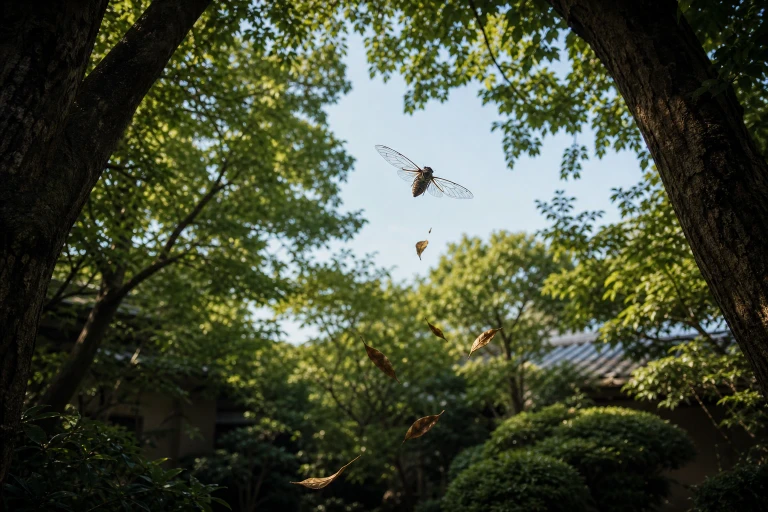
As this awareness of impermanence became intertwined with the Japanese appreciation of the seasons, it also found expression in literature and art. One such expression is mono no aware (物の哀れ), often described as a sensitivity to the passing nature of things. Mono no aware is not sadness, but the feeling that comes from recognizing something’s beauty while knowing it will not last. We can admire a cherry tree in full bloom even as we know the blossoms will soon fall. We can enjoy an autumn moon even as the season passes. A moment shared with someone we love can be precious precisely because we know it cannot remain unchanged forever.
The cicada song of midsummer carries something of this feeling. At the height of summer, the cicadas sing with extraordinary intensity, filling the trees and surrounding landscape with sound. Yet even as the chorus reaches its greatest strength, we know that it will eventually fade. And it does. As midsummer passes, the calls gradually become less frequent. The trees are no longer filled with sound from morning to evening. An occasional cicada call can make the growing quiet even more noticeable. By late summer, the distinctive calls of the tsukutsuku-bōshi become more prominent, signaling that the season is beginning to change. Before long, the cicada chorus disappears from the courtyards and mountain forests.
Like the cicada’s life and the changing seasons, human life has its own seasons. There are times of youth and accomplishment, times of change and uncertainty, meetings and farewells. What seems permanent can change, sometimes much sooner than we expect. Perhaps that’s what makes semi-shigure so moving. At the height of summer, when the cicadas are singing at full force, the season has already begun its gradual turn toward autumn. Their song reminds us that even the most vibrant moments are passing, and that we should appreciate them while they are here.
The cicadas do not resist the passing of their season. They emerge when their time has come, sing with all they have, and eventually fall silent. Perhaps we can learn from that simple rhythm: recognize the season we are in, give ourselves fully to what it asks of us, and appreciate its gifts before it passes into memory.
The silence behind the song
The cicada’s life offers a striking reminder that growth does not always happen in ways we can see. For years, it lives beneath the earth, developing through a process it cannot hurry. Then, when its season arrives, it emerges and takes its place in the world above. Our lives have seasons like this, too. Sometimes we learn, change, heal, gain wisdom, build character, and discover who we are. From the outside, these seasons may not look like much is happening. But within us, something is taking shape.
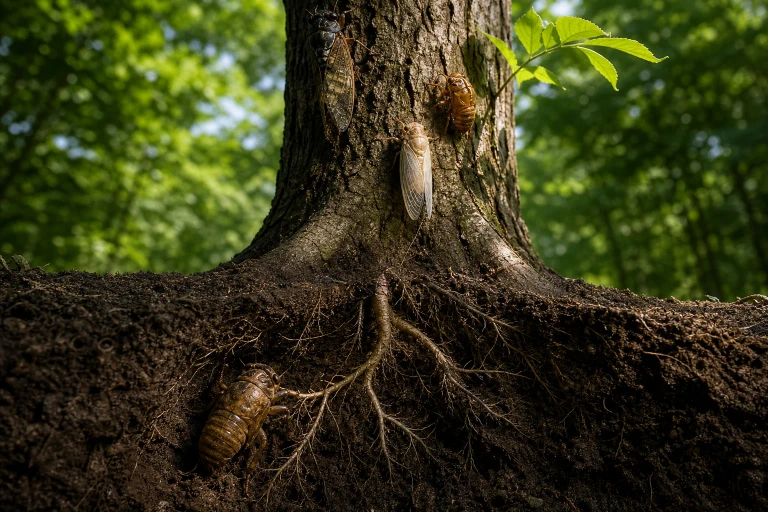
We often think of progress as something we can measure — an accomplishment, a milestone, a finished goal. Yet some of the most important changes in a person’s life cannot be measured that way. They happen gradually, through experience. We become more patient because life has taught us patience. We become wiser because we have lived through things we once did not understand. We become stronger, not because we set out to become strong, but because life gave us something that required strength. Some seasons are meant for becoming.
And becoming is not about waiting for some future version of ourselves to finally arrive. It is the life we are living right now — the lessons we are learning, the choices we are making, the character we are forming. Each season gives us something that the next one will need. The cicada does not spend its years underground wishing it were already summer. It lives the season it has been given. Then, when the time comes, it emerges. Perhaps we can do the same.
We do not have to force every season to look like the one before it or rush toward the one ahead. We can receive something from where we are now. Some seasons are for learning. Some are for growing. Some are for beginning again. And some are meant for becoming. Then one day, we may look back and see that a season we once thought was simply a pause was actually part of the making of our lives. Like the cicada, we emerge from each season carrying something we did not have when we entered it. And perhaps that is one of life’s great gifts: we are never simply passing through the seasons. We are being shaped by them, becoming — little by little — the person we are meant to be.
Translated by Joseph Wu and reviewed by Tatiana Denning
Follow us on X, Facebook, or Pinterest
