
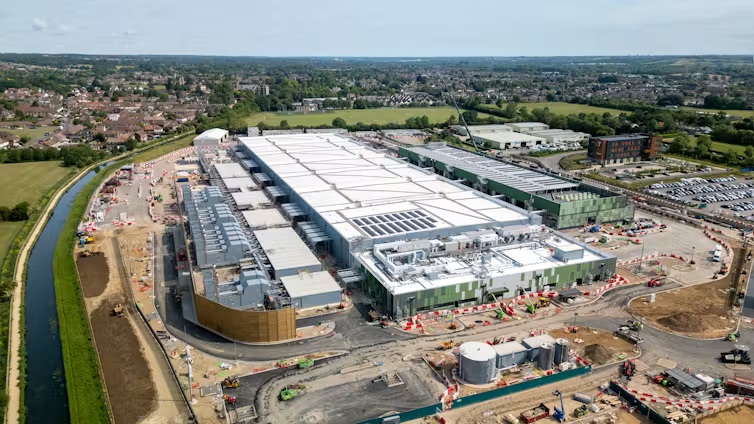
In the United States, areas such as Michigan have been hotspots for residents pushing back against data center construction in their neighborhoods. Now, similar concerns about noise — and potential health impacts — are gaining traction in Australia.
But we currently have very little data to link environmental noise from data centers to health effects. And we also can’t assume the U.S. and Australia impose the same limits on industrial noise.
So, what do we know about the noise these large data storage facilities produce? And is this noise actually bad for our health?
How much noise is safe?
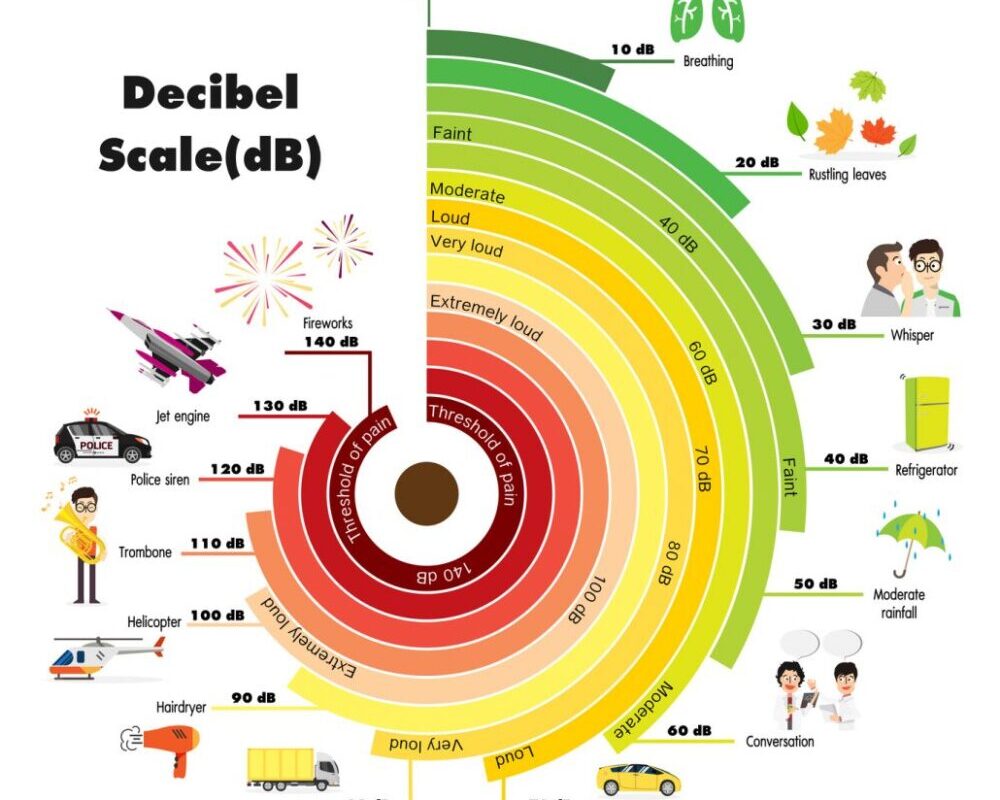
Decibels (dB) are units that measure sound intensity. But when talking about how the human ear actually perceives that sound, we use a weighted scale: dBA.
For context, the sound of leaves rustling is about 30dBA, background music about 60 dBA, and average office noise around 70dBA.
Noises like these, below 70dBA, are generally considered safe for our health even if we are exposed to them in the long term.
But hearing damage can occur at higher levels. For example, in Australia, workers must not be exposed to noise at 85dBA (the sound of a lawnmower or leaf blower) for any longer than eight hours to prevent hearing damage.
According to the World Health Organization (WHO), excessive noise is also linked to conditions such as high blood pressure, heart disease, and sleep disruption.
What noise do data centers produce?
The industrial noise data centers produce is typically described as a low-frequency hum.
Data centers need to continuously manage the heat they generate. This cooling requires large air-handling units (which regulate and circulate air), air-cooled chillers and cooling towers, as well as pumps to circulate water — all of which produce noise.
Data centers also have backup generators. These are used when there is a disruption to the power supply, or for a few minutes of testing during a maintenance check.
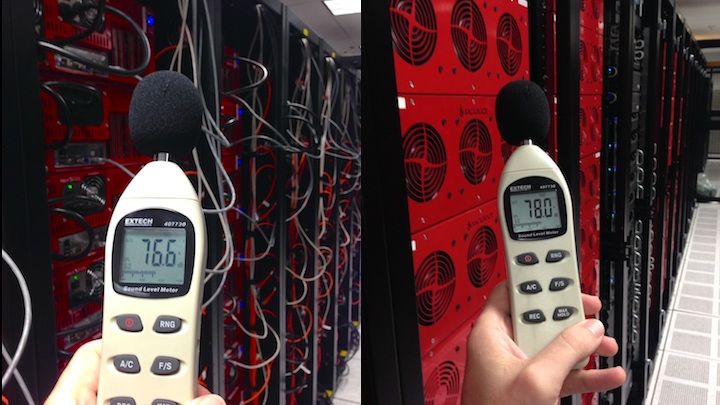
Both the air-handling units and the backup generators can produce noise levels above 85dBA within the facility.
However, this noise is reduced by barriers, distance, and other mitigation measures to meet the compliance noise limits in surrounding areas.
Noise mitigation measures include choosing quieter cooling equipment, careful building design, and use of soundproofing equipment such as acoustic louvers, physical barriers, and silencers.
How is noise regulated?
Like any new industrial building, to gain environmental approval, a company proposing a data center will need to prove the sound won’t exceed noise limits.
These are set by the states and territories and are based on the surrounding land uses.
The company must submit an independent noise assessment that outlines all estimated noise the data center will produce, and the measures it will use to mitigate excessive noise.
A critical requirement is compliance with the nighttime limit. In residential areas in Australia, this is typically 35–40dBA.
These noise limits for residential areas at night are similar to the levels the WHO recommends in its 2018 guidelines for environmental noise in Europe.
The environmental approval process in Australia also provides controls to prevent “creeping background noise.” The aim is to limit the total cumulative noise in the area, based on the way surrounding land is used for residential, commercial and industrial purposes.
This means when a new data center applies for development, its individual noise limit may be adjusted downward if existing noise is already close to the acceptable limit.
This is an important safeguard as it becomes common for multiple data centers to be installed in one area, as in Lane Cove in Sydney.
Noise continues to be contentious
Last month, Victoria’s Environmental Protection Authority (EPA) objected to the construction of a data center for the first time. The EPA cited concerns about the impact noise could have on nearby residents in Campbellfield in Melbourne’s north.
In 2025, an environmental noise impact assessment was submitted for a proposed data center in Hazelmere in Western Australia that would have 64 rooftop chillers and 88 diesel generators.
While noise-mitigation strategies — such as soundproofing, acoustic louvers and silencers — would be required to ensure the noise complied with the 35dBA residential limit, the assessment concluded these would not be difficult to achieve.
However, in May the local council rejected the Hazelmere proposal due to concerns about the potential noise impact on nearby residents and a school, as well as its proximity to the river and Aboriginal cultural sites.
What do we actually know about the health effects?
Evidence about the health effects from any form of environmental noise requires long-term studies with large populations. When it comes to data centers, we simply don’t yet have the research data that identifies any health effects.
But similar concerns have arisen previously about the low-frequency hum from wind farms being built near residential areas. So a comparison could be relevant in the meantime, as their noise level limits are similar.
In 2015, the Australian National Health and Medical Research Council released an independent, systematic review of the available evidence about wind farms and human health. It concluded that, in relation to noise, “there is no direct evidence that exposure to wind farm noise affects physical or mental health.”
While it takes some time for health effects from excess noise to be identified in studies, any new noise source in an area does lead to annoyance in the short term.
Annoyance can lead to stress-related health effects. However, studies have shown that as long as the noise is limited to levels similar to those recommended in the WHO guidance, the annoyance reduces with time.
The bottom line
The noise limits that apply in Australia to data centers are in broad agreement with the WHO guidelines to avoid health effects from environmental noise. To date, we don’t have any contrary evidence that shows the noise from data centers has an impact on health.
This article is republished from The Conversation under a Creative Commons license. Read the original article.
Follow us on X, Facebook, or Pinterest
