
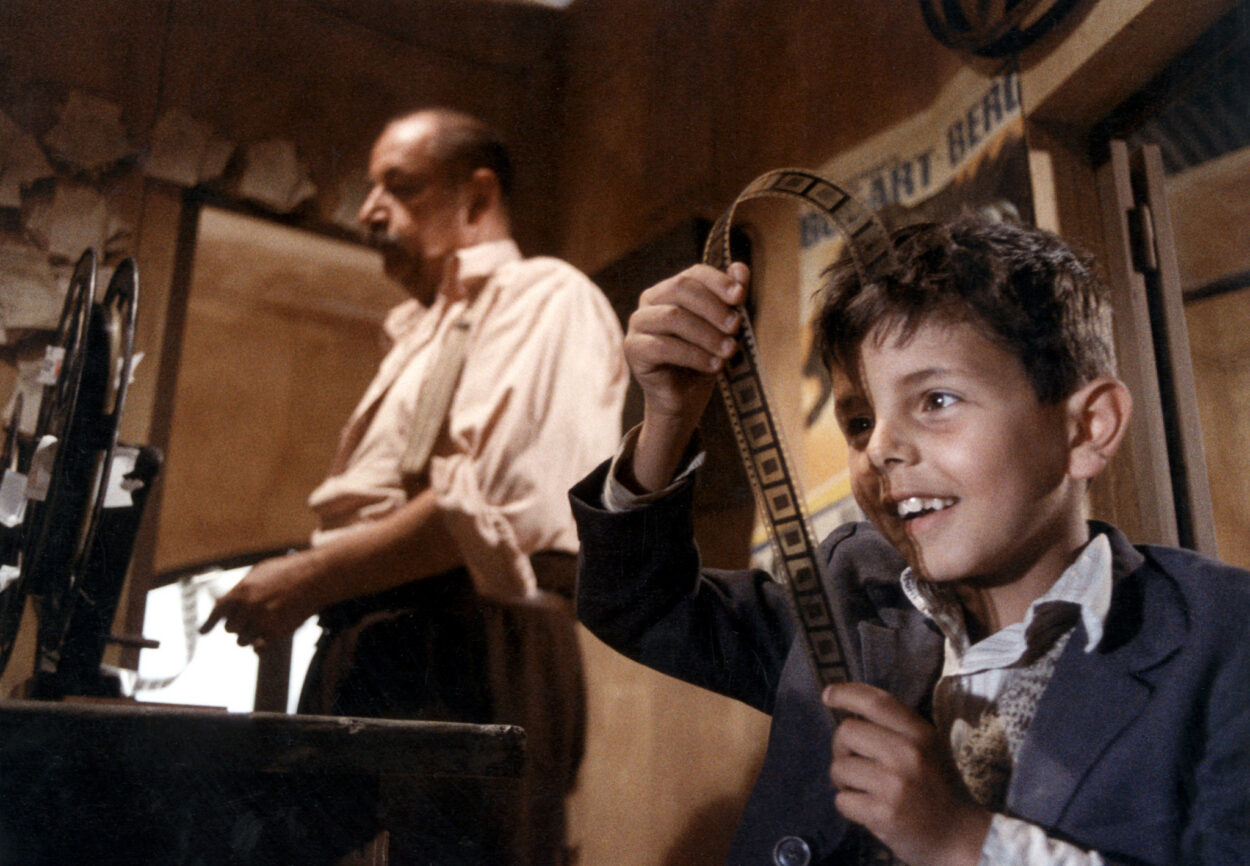
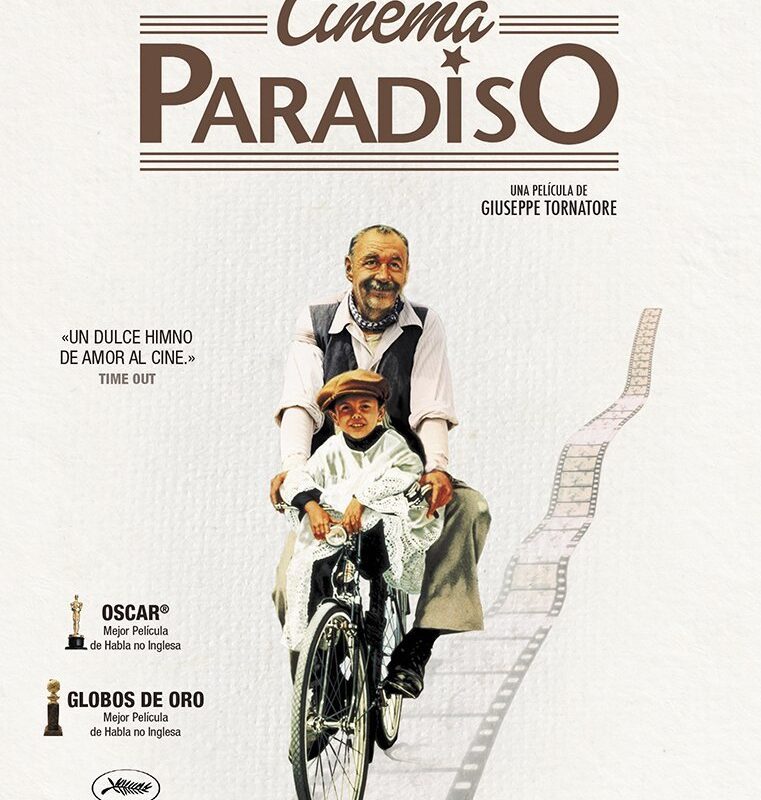
Giuseppe Tornatore’s 1988 masterpiece Cinema Paradiso stands as one of the most celebrated love letters to the silver screen ever captured on celluloid. Set in an impoverished postwar Sicilian village, the narrative follows Salvatore Di Vita — affectionately known as Toto — from a mischievous, movie-obsessed child to an acclaimed film director living in Rome. The film is widely celebrated for its soaring Ennio Morricone score, its affectionate portrayal of golden-age theater culture, and its tender depiction of mentorship between an orphaned boy and a gruff projectionist named Alfredo. Yet beneath this comforting veneer of sentimentality lies a far more complex and melancholic dynamic. Cinema Paradiso is not simply an inspirational tale about pursuing one’s passion against all odds; it is an incisive critique of spiritual censorship, local insularity, class divides, and the emotional costs of leaving one’s heritage behind.
Postwar Giancaldo shelters its residents while quietly smothering their autonomy
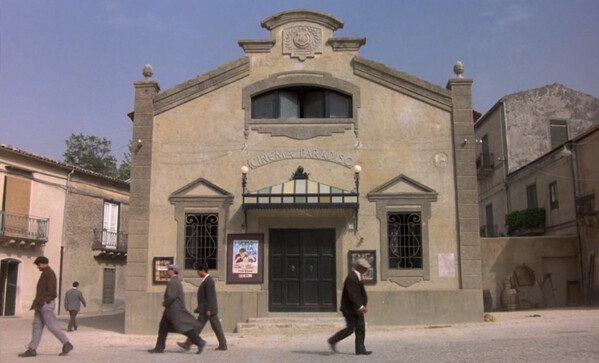
The story centers on Giancaldo, a fictional small town in postwar Sicily. Tornatore paints a vivid picture of rural Italian life during an era marked by economic hardship and technical stagnation. Across the cobblestone streets, children scamper past church towers, and women dry tomato sauce under the blazing Mediterranean sun. In this poverty-stricken environment, the local movie house, the Paradiso, serves as the sole sanctuary for a traumatized populace seeking refuge from daily struggle. Tired laborers assemble on the balcony, children scramble for discarded film strips, and the community gathers in the dark to laugh, cry, and marvel together. For young Toto, whose father was lost on the Eastern Front, the projection booth becomes an escape from his mother’s sharp reprimands and the harsh reality of their fatherless home.
However, this communal sanctuary operates under strict socio-spiritual control. Before showing any film to the public, Father Adelfio, the village priest, sits alone in the empty auditorium to censor the prints. Whenever a romantic kiss or a hint of intimacy appears on screen, the priest rings his bell, signaling Alfredo to stop the projector and splice out the offending frames. This censorship reveals the dark side of Giancaldo’s close-knit identity. While the town offers warmth and familiarity, it relies on a paternalistic authority that views the working class as inherently morally weaklings. By treating citizens as children incapable of handling passion or nuance, the church deprives them of personal responsibility. The villagers are kept in a state of perpetual spiritual dependence, allowed to taste life only through fragmented, heavily sanitized flashes of light on a bedsheet.
Alfredo foresees the future and pushes his apprentice beyond the town limits
The relationship between Toto and Alfredo forms the film’s emotional spine. Initially, the elderly projectionist acts as a stern gatekeeper, scolding Toto when the boy pesters him for film strips and physically driving him away from the projection room. Alfredo understands the grueling, hazardous nature of his work — handling highly flammable nitrate stock in a cramped, oven-like booth — and wishes a better life for the young boy. Only when he recognizes Toto’s irrepressible obsession with cinema does Alfredo relent, bringing the boy into the booth to teach him the delicate arts of splicing, rewinding, and running the projector.
A tragic accident forever shifts the dynamic between master and apprentice. When a nitrate reel catches fire inside the booth, flames quickly engulf the room. While the terrified audience flees into the square, Toto runs against the stampede back into the burning tower, dragging an unconscious Alfredo to safety. Although Alfredo survives, the fire robs him of his sight. This blindness symbolically marks the end of an era in cinema history — the decline of flammable physical film reels and the traditional projectionist’s craft. Blinded but deeply insightful, Alfredo recognizes that technology and society are changing rapidly; television is rising, and the old way of life is fading. He realizes that Toto possesses too much creative energy to be buried alive in a small-town projection booth that will soon become obsolete. Alfredo acts not merely as a master craftsman, but as a father figure determined to push his surrogate son out of a dying world.
The soldier’s departure on the ninety-ninth day reveals the high price of dignity
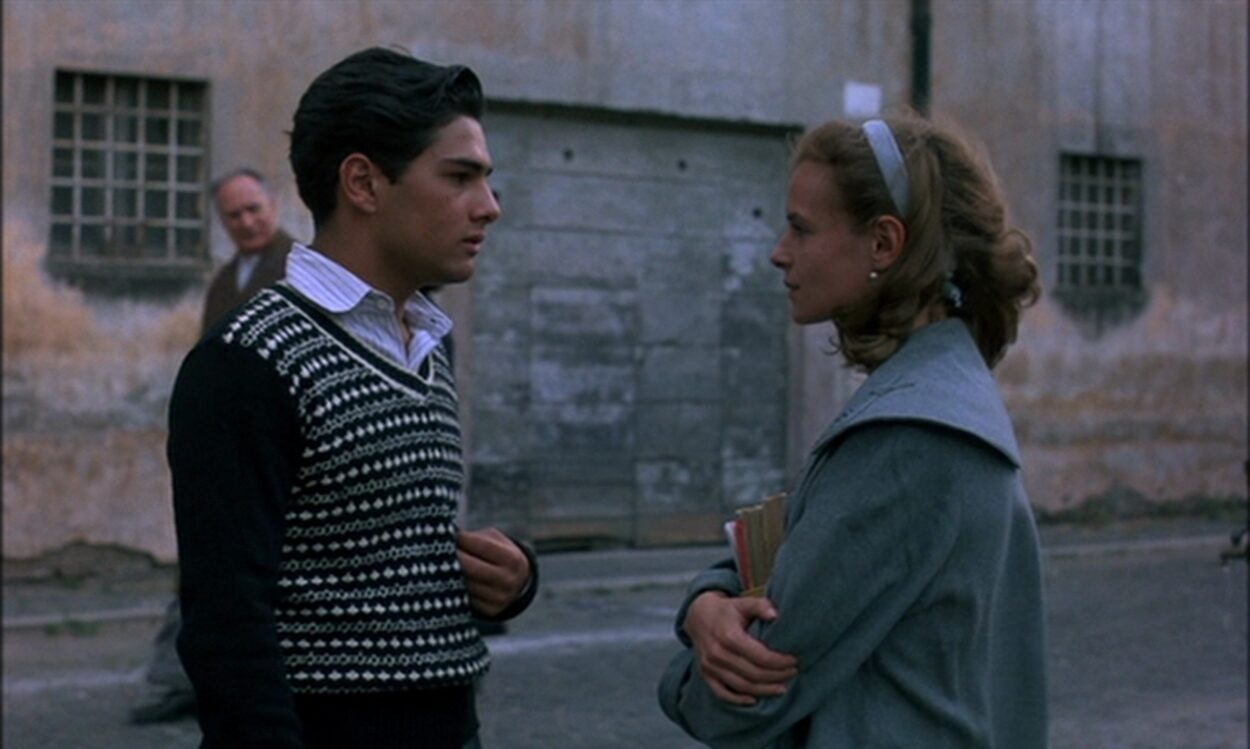
As Toto transitions into adolescence, his life becomes consumed by his passionate romance with Elena, the daughter of a wealthy local banker. Their relationship immediately faces insurmountable social hurdles, as Elena’s aristocratic family fiercely opposes her involvement with a poor projectionist’s assistant. Seeing Toto consumed by longing, Alfredo shares an enigmatic folk parable: A humble soldier fell deeply in love with a beautiful princess. The princess promised to marry him if he stood under her balcony for one hundred consecutive nights, enduring cold, rain, and relentless wind. The soldier waited faithfully through 99 grueling nights, but on the eve of the final day, he stood up, turned around, and walked away forever.
Alfredo leaves Toto to decipher the tale’s meaning on his own. At first glance, the story seems a cruel lesson in frustration, but it carries a profound philosophical truth about self-respect and class boundaries. The princess’s initial condition was an exercise in condescension, forcing the lower-class suitor to prove his devotion through passive suffering. By enduring 99 nights, the soldier unquestionably proved the depth and sincerity of his love. Yet by walking away on the final night, he reclaimed his dignity, refusing to let an elitist authority hold his destiny hostage. Leaving before the deadline spared both him and the princess a relationship built on servitude rather than mutual respect.
Through this allegory, Alfredo gently prepares Toto for the painful realities of social hierarchy and the need to walk away from situations that compromise one’s future. When Elena eventually disappears from Toto’s life under mysterious circumstances, Alfredo delivers his final, unyielding directive: leave Giancaldo, move to Rome, never look back, never give in to nostalgia, and never return until decades have passed. By severing Toto’s ties to his childhood home, Alfredo ensures that his prodigy does not become trapped by lingering regrets, enabling him to transform his passion into artistic mastery on the world stage.
Translated by Eva and reviewed by Maria
Follow us on X, Facebook, or Pinterest
