
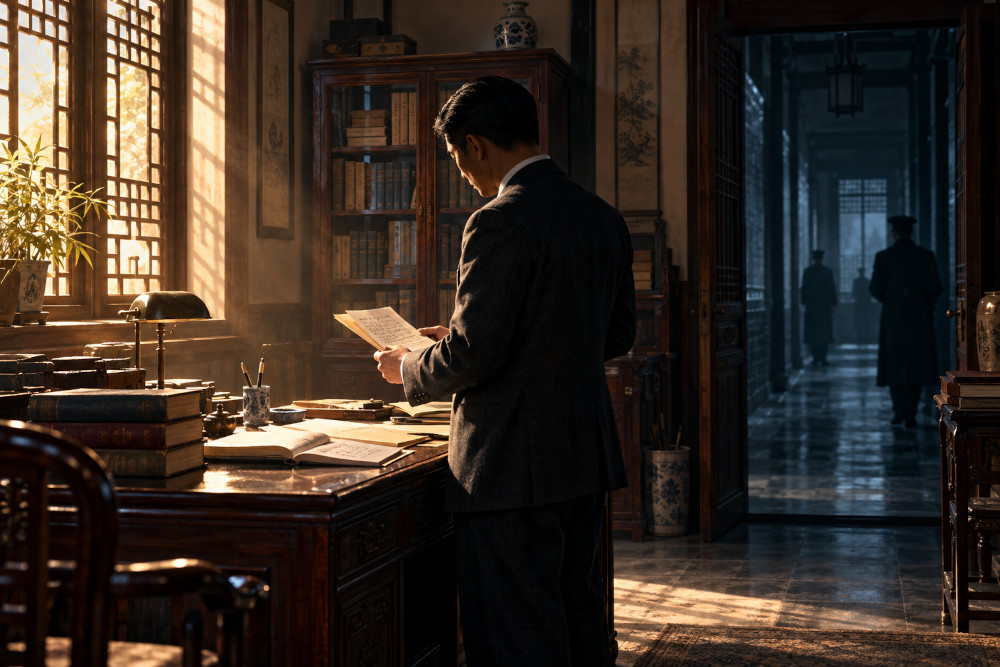
In the spring of 1949, Chinese legal scholar Yang Zhaolong helped secure the release of an estimated 10,000 political prisoners, including members of the Chinese Communist Party (CCP). As acting prosecutor-general under the Nationalist government, he used his position to help free people imprisoned for their political activities.
Yang remained on the mainland after the Communists came to power, hoping his expertise could contribute to China’s legal development. Less than 15 years later, the government he had trusted arrested him as a counterrevolutionary. He would spend 12 years in prison, his wife would die by suicide amid political persecution, and his children would face political condemnation.
The CCP portrays its 1949 victory as liberating China from an oppressive past. Yet its subsequent campaigns persecuted scholars, professionals, and community leaders who had helped modernize the country. Yang’s story, together with those of other prominent intellectuals, reveals the human cost of subordinating law, scholarship, and independent civic life to Party authority.
A legal career built across borders
Born in 1904, Yang studied law in China before pursuing advanced education in the United States. He received a doctorate in law from Harvard University in 1935 and subsequently conducted legal research in Germany. An influential scholar of comparative law, he taught at leading Chinese universities and helped develop legislation and judicial reforms.
Yang served as acting prosecutor-general of the Republic of China’s Supreme Court Prosecutor’s Office and earned international recognition for his scholarship. His work contributed to China’s efforts to establish modern civil, criminal, and procedural laws, associated with the Six Codes, a body of statutes shaped by reforms from the late imperial and Republican periods. He believed that dependable legal institutions could restrain arbitrary power and protect individual rights.
By 1949, as the Nationalist government lost ground in the civil war, Yang had opportunities to leave for Taiwan or pursue an academic career overseas. Instead, he joined an effort to free political prisoners, a decision that helped shape his family’s future.
He helped free prisoners, then became one
Yang’s sister-in-law, Sha Yiyin, was active in the Communist underground in Nanjing. She and other Party representatives urged him to use his official position to secure the release of detained Communists and other political prisoners. According to historical accounts, a Communist representative assured Yang that the coming government would protect his safety and professional standing and value his expertise.
Working with Nationalist officials, Yang helped arrange the release of approximately 10,000 prisoners, far more than the underground organizers had initially requested. His wife, Sha Suoyin, encouraged him to remain in China. The prospect of serving his homeland through legal scholarship outweighed the uncertainties of political change.

Even before establishing the People’s Republic of China, however, the CCP had begun dismantling the legal system Yang had spent his career helping to develop. On February 22, 1949, the Party issued a directive abolishing the Nationalist government’s Six Codes in areas under Communist control. The Party’s new institutions would be governed by its political principles rather than the legal framework Yang had helped build.
Yang continued teaching and briefly led Soochow University’s law school, but the early-1950s restructuring of higher education derailed his career. Instead of training jurists, he taught Russian at Fudan University. His legal expertise offered little protection in a system that placed Party authority above independent judgment.
During the Hundred Flowers Campaign, which began in 1956 and intensified in 1957, Party leaders invited intellectuals to criticize government policies. Yang responded with proposals concerning legislation, accountability, and individual rights. He argued that socialist construction still required functioning laws and questioned the neglect of established legal principles.
When the CCP launched the Anti-Rightist Campaign in June 1957, the opinions officials had solicited became grounds for punishment. Yang was branded an extreme rightist and publicly denounced. Accounts of his persecution describe a drastic salary reduction, eviction from his home, and forced labor that continued until he collapsed and required hospitalization. He had been punished for offering the legal advice he was encouraged to give.
Authorities arrested Yang on counterrevolutionary charges in 1963. After eight years in detention, he received a life sentence in 1971. He was released in 1975, after 12 years in prison.
His family suffered alongside him. His three children were labeled rightists in 1958 and faced discrimination in their education and careers. During the Cultural Revolution, his wife endured harassment and humiliation and died by suicide in October 1966. When Yang emerged from prison, he learned that the woman who had urged him to remain in China was dead.
Yang died in 1979. The following year, authorities overturned the charges against him and restored his reputation. The reversal could not restore his lost years of freedom, his career, or his wife. A man who had helped free thousands of prisoners had himself been imprisoned, and his family had been devastated.
Independent scholars subjected to persecution
Yang’s experience was not an isolated tragedy. Other scholars who had contributed to modern China’s intellectual life also suffered when political campaigns treated independent thought as a threat.
Chen Yinke, a distinguished historian of classical Chinese culture, defended the ideals of an independent spirit and freedom of thought. He resisted pressure to interpret history exclusively through Marxist-Leninist doctrine. His international standing offered some protection for a time, but his writings and political views remained under scrutiny. In 1958, he became a target of organized criticism of his scholarship.
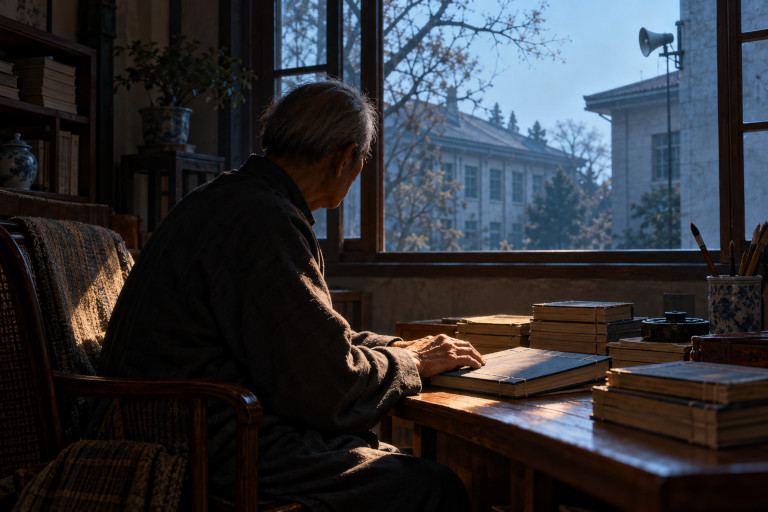
During the Cultural Revolution, that persecution intensified. Chen was already blind, and a fall in 1962 had left him with a broken right leg. Political activists nevertheless subjected the elderly, disabled scholar to denunciations. Accounts of his final years describe loudspeaker broadcasts directed toward his residence, carrying political harassment into his home. He died in 1969 after years of mounting pressure. His scholarly reputation had not secured him the freedom to spend his final years in peace.
Ye Qisun, a pioneering physicist and educator, helped establish modern physics education in China. His students included Chen-Ning Yang and Tsung-Dao Lee, who later shared the Nobel Prize in Physics. Many other leading scientists also benefited from his teaching and guidance.
During the war against Japan, Ye encouraged students to use their scientific skills to support the resistance. One student, Xiong Dazhen, joined Communist-led forces, which later falsely accused him of espionage and executed him. Decades later, the accusation resurfaced as a pretext for persecuting Ye. During the Cultural Revolution, he was detained as a suspected spy and subjected to physical abuse and humiliation. His health deteriorated, and even after his release, restrictions continued. He died in 1977, his final years overshadowed by the regime’s abuse.
These men devoted their abilities to law, history, and science, yet their accomplishments could not protect them from political campaigns. Their experiences show what Party supremacy meant in individual lives: independent judgment invited punishment, professional service offered no security, and families could suffer alongside those branded enemies.
Land reform and the destruction of local independence
The CCP’s assault on independent institutions extended beyond universities and courts. During land reform and the early 1950s campaign to suppress counterrevolutionaries, the Party portrayed confiscation as social justice and encouraged villagers to denounce supposed class enemies. Families were judged by property ownership and social background rather than individual conduct. Public struggle sessions brought humiliation, beatings, imprisonment, and sometimes execution. Political campaigns could seize homes, land, grain, and other possessions.
The promise of equality concealed a profound change in who held power. Party cadres could decide whose property was confiscated, who received it, and who was branded an enemy. Political loyalty could bring advantages, while years of work and savings offered no protection against dispossession. The system rewarded compliance with Party demands rather than consistently respecting ownership or individual responsibility.
Among those targeted were members of the rural gentry, educated and locally influential people who helped sustain community life. Many financed schools, maintained roads and bridges, mediated disputes, and supported charitable work. Political class labels reduced these varied individuals to enemies. Denunciations divided neighbors and damaged the networks through which communities had managed their affairs.

Redistribution did not secure lasting independence for the farmers who received land. Within a few years, collectivization drew private holdings into agricultural cooperatives and placed production under increasingly centralized control. Land reform weakened established local leadership; collectivization further restricted farmers’ control over their livelihoods. Rural communities became more dependent on institutions answerable to the CCP.
The Party called this liberation, but freedom cannot be built on forced dispossession, collective blame, and political obedience. These campaigns did more than redistribute property. They dismantled rural society’s independence and made the Party the final authority over people’s land, work, and lives.
Remembering what the CCP destroyed
Republican-era China endured invasion, civil war, political fragmentation, poverty, and corruption. The Nationalist government also censored critics and suppressed political opponents. These failures helped create the conditions for Communism to gain support. But they cannot justify the persecution, mass suffering, and loss of life inflicted under the government that followed.
Long before the CCP took power, China had produced influential universities, independent scholars, a developing legal profession, competing newspapers, and efforts to improve rural society. Amid immense difficulties, Chinese thinkers debated constitutional government, scientific development, and their country’s future. China’s modernization did not begin with Communist rule; the CCP’s political campaigns attacked many of the people and institutions that had helped lay its foundations.
Yang Zhaolong’s belief in the rule of law, Chen Yinke’s insistence on intellectual independence, and Ye Qisun’s dedication to scientific education represented paths of national development grounded in knowledge and professional responsibility rather than political obedience.
The decades after 1949 instead brought political purges, imprisonment, forced denunciations, and widespread fear. Mao’s Great Leap Forward contributed to a catastrophic famine that killed tens of millions of people. The persecution of scholars was one part of a far larger human tragedy. These disasters were not inevitable steps toward progress; they resulted from political decisions that placed ideology and control above human life.
Remembering Yang, Chen, Ye, and countless others means acknowledging what Communist rule took from China: lives, families, independent institutions, and years of intellectual achievement. Their experiences warn of the consequences when a ruling party demands obedience above conscience and treats individual rights and dignity as expendable.
Translated by Katy Liu
Follow us on X, Facebook, or Pinterest
