
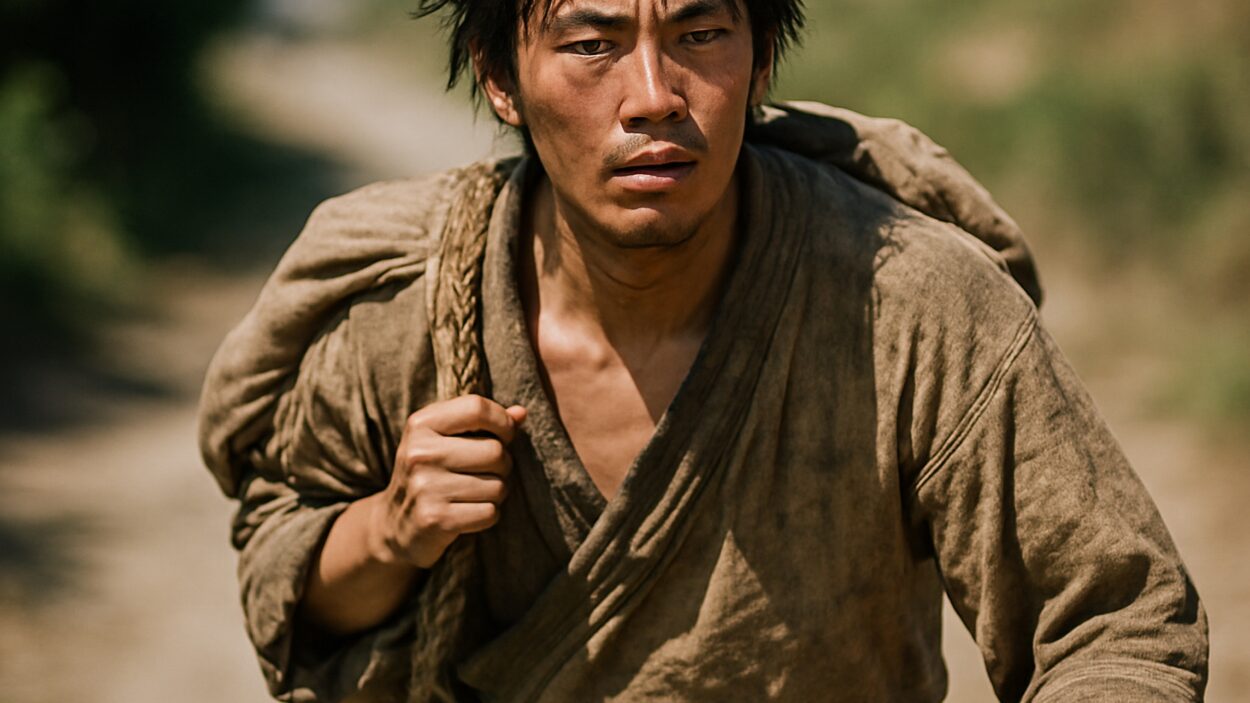
In the late Song Dynasty, a young man named Fan Tang from Jianzhou in Fujian Province — and the future father of the notable official Fan Hong — was born into a life marked by difficulty and hardship. His family was impoverished, and from an early age, he was forced to wander from place to place to survive.
One year, while traveling on foot to the capital to take the imperial examination, he passed through a village in Yuzhang, Jiangxi. Exhausted from the long journey and without a coin to his name, Fan Tang pressed on beneath the scorching noonday sun. Hungry and unfamiliar with the region, he hesitated to ask for help. Though he hadn’t eaten in some time, his dignity as a scholar prevented him from begging.
As he looked around, Fan Tang spotted a nearby monastery and decided to rest at its gate. Just then, inside the temple, a monk was awakening from an afternoon nap, during which he had dreamed of a black dragon coiling around the monastery. Though puzzled by the image, he brushed it aside and stepped outside for a walk.
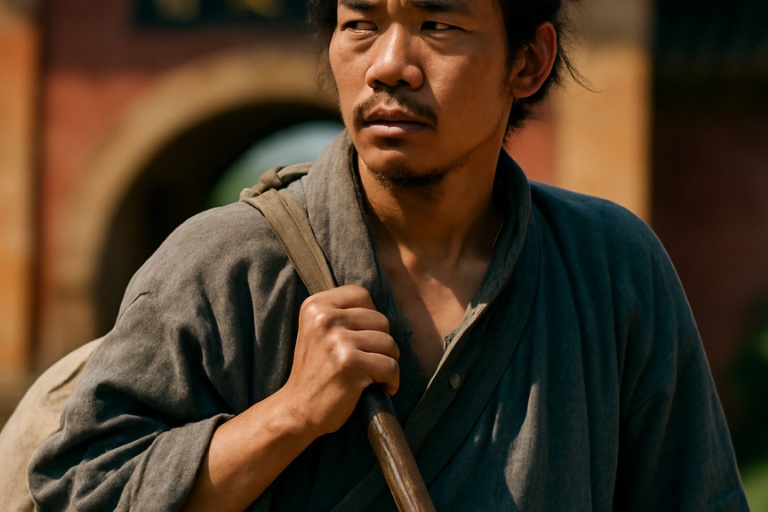
As he approached the entrance, his eyes fell upon the weary young man sitting at the gate. Something in the scholar’s expression — determined yet worn — gave the monk pause. The man’s refined features and dignified bearing stood in stark contrast to his ragged clothing. He didn’t look like a vagabond or a troublemaker.
The monk realized Fan Tang was the black dragon
The monk suddenly recalled his dream. A black dragon — an omen often tied to greatness or rising destiny — had appeared at this very place. Now, here sat this unknown traveler. Could this be a subtle message from Heaven? The monk’s heart stirred with conviction. Perhaps it was his role to help this man. Moved by compassion — an instinctive virtue for one who has renounced the world — the monk warmly invited Fan Tang inside. He prepared a place for him to rest and offered a generous meal.
During their conversation, the monk asked: “Where are you heading, young man?” Fan Tang replied: “I’m on my way to Kaifeng to take the imperial examination, but I’ve run out of money and have no means to continue.” Moved by Fan Tang’s plight, and though he had little, the monk gave him all the money he possessed, packed provisions for the road, and blessed him on his journey.
A kindness remembered
In the sixth year of Emperor Shenzong’s Xining reign (1073 CE), Fan Tang successfully passed the imperial examination and was appointed to a government post in Taiyuan. Two years later, he became an editor at the Imperial Library and took on an administrative role within the Ministry of Justice.
As the old saying goes: “A drop of kindness should be repaid with a spring of gratitude.” Among scholars of the time, stories of profound gratitude — such as Han Xin rewarding a benefactor with gold for a simple meal — were cherished ideals.
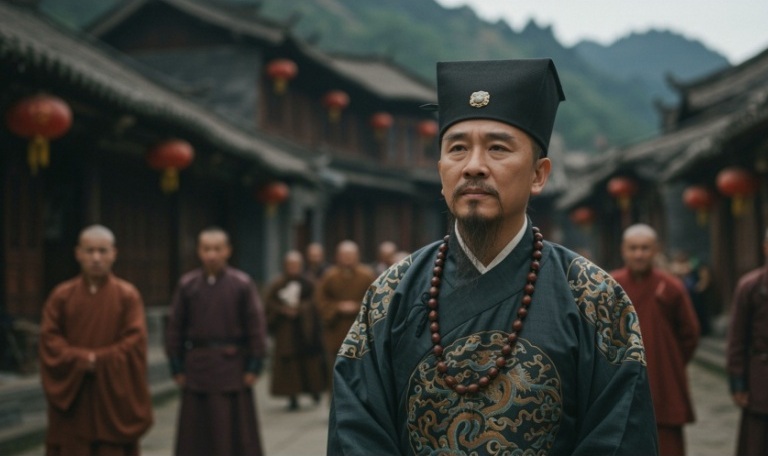
Fan Tang, once a penniless scholar aided by a compassionate monk, never forgot that act of kindness. Though he steadily rose through the ranks, he longed to repay the monk, but had no opportunity to do so. Years later, during the reign of Emperor Zhezong (1086-1094), Fan Tang was appointed governor of Hongzhou — the very district that included the village in Yuzhang where the monk had once helped him. Seizing the opportunity, he visited the monastery to express his gratitude and repay the monk’s kindness generously.
When Fan Tang was eventually promoted to Scholar of the Dragon Pavilion — a prestigious title within the imperial court — the monk was still alive. The black dragon from his dream had not only circled the monastery but had also foretold the rise of a great man. What once seemed a fleeting vision had become a living reality. True kindness asks for nothing. Genuine gratitude remembers anyway — and waits, if necessary, a lifetime to return what was given.
Translated by Katy Liu and edited by Tatiana Denning
Follow us on X, Facebook, or Pinterest
