
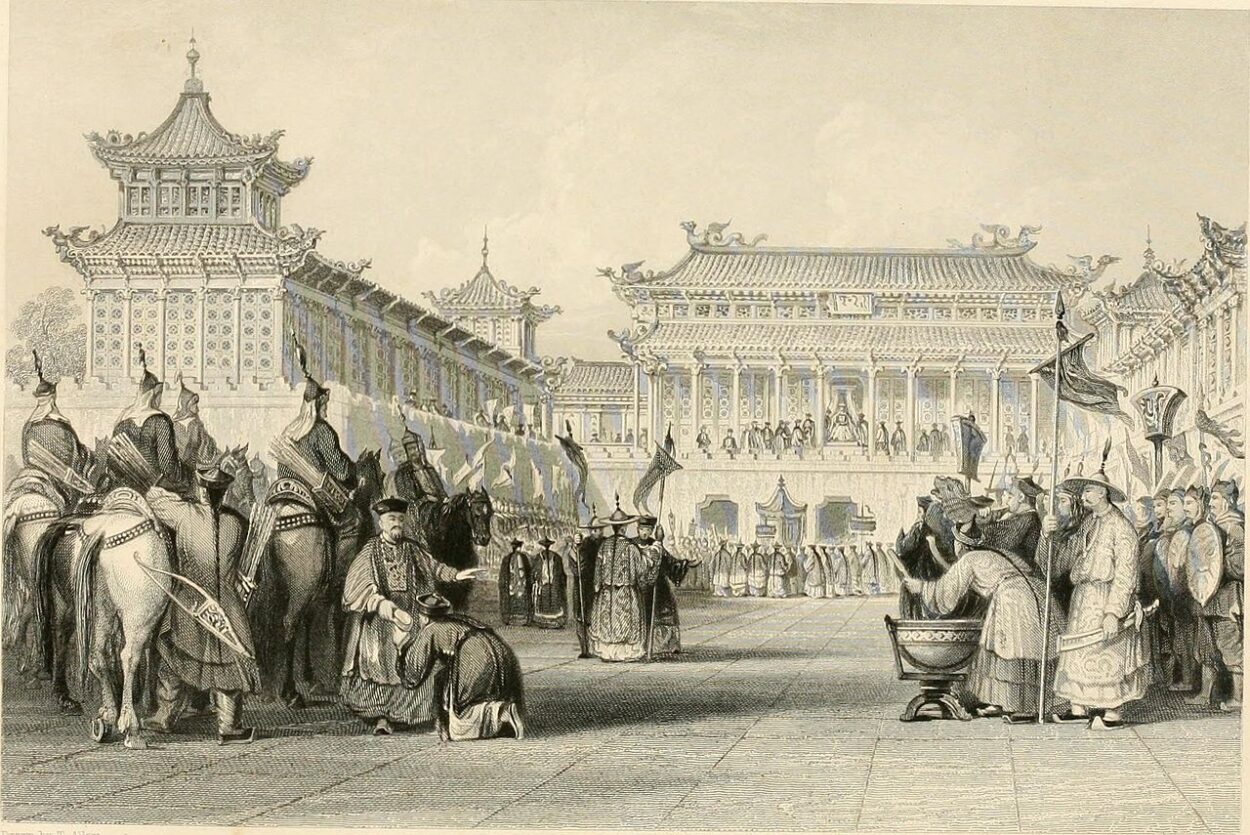
Tao Shu, a native of Anhua, Hunan Province, was an important official and scholar during the Daoguang period of the Qing Dynasty. He became a notable and major representative of the Jingshi School. In the seventh year of the Jiaqing era (1802), Tao Shu became a Jinshi and served as a Hanlin editor. Later, he was promoted and became an Imperial Censor.
In the tenth year of the Daoguang Emperor’s reign (1830), Tao Shu was appointed as the Governor-General of Liangjiang. Nine years later, during his tenure in the Liangjiang Governor’s Office, he died of an illness.
Tao Shu served as an official for 40 years. He was honest, diligent, and always concerned with civil affairs; he undertook to reform malpractices and achieved remarkable political successes.
He was born in a remote rural area and, as a child, was born into an impoverished family; he collected firewood, herded cattle, and fished to survive. At one point, he was engaged to the daughter of the Huang family, who lived in the same village. But as fate intervened, “someone” came to meddle. A wealthy man named Wu heard that the daughter of the Huang family was wonderful, so he decided to take her as his son’s second wife.
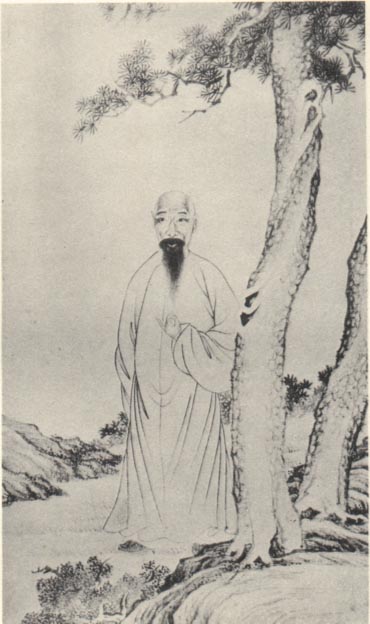
The elderly Mr. Wu attempted to bribe Mr. Huang with a generous gift. Mr. Huang immediately had second thoughts and forced Tao Shu to break off the engagement. Tao Shu and his future mother-in-law both disagreed. As for Ms Huang, she coveted the wealth of the Wu family, and with her father’s support and insistence, she decided not to marry the poor scholar.
At this time, the Huang family had a maid who was willing to marry in place of the young lady. Ms Huang’s mother agreed, and Tao Shu accepted it calmly. Later, Tao Shu was promoted to Governor-General of Liangjiang and later became the prince’s guardian. As for his wife, who was born a maid, she was granted a coveted title by the court and became a lady of the first class.
As for the elderly Mr. Wu, he took advantage of his family’s wealth and occupied the land of a family named Zeng. The two families had a feud and fought with each other. As a result, the son of the Wu family was beaten to death, and then the elderly Mr. Wu died. The Wu clan bullied the orphan and widow of the Huang family because they were weak and alone, and embezzled all their land. At that time, Tao Shu returned to his hometown for his father’s funeral and learned about the subsequent events. Feeling sorry for Ms Huang’s predicament, he gave her 50 taels of silver.
Ms Huang was so ashamed and remorseful that she wanted to commit suicide. She wept daily as she held the silver and was reluctant to spend it. A thief, soon after, stole the 50 taels of silver, causing Ms. Huang to hang herself in anger. Later, Tao Shu took it upon himself to continue to support her family year after year.
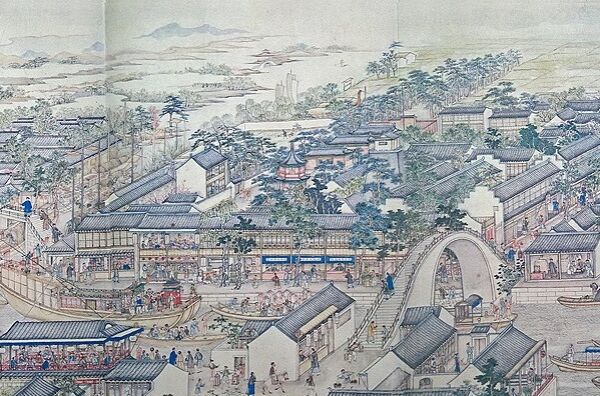
A woman regrets not marrying a poor man
Jin Shisong was a native of Wujiang, located in Jiangsu Province, during the Qing Dynasty. As a youngster, he came from a poor family. He often followed his father, Mr. Jin, to study outside as his father worked as a tutor for a family in the county. One year, Mr Jin did not take any holiday leave until Chinese New Year’s Eve. The master was amazed and asked why he had deferred his holiday. Mr. Jin said: “My son is getting married in the second half of the first lunar month next year, and I am worried that it will delay the class time, so I am making up for the lessons this year.” Mr. Jin further stated: “It is not easy for a poor scholar to arrange a wedding. The money for the betrothal gift has not yet been settled. Can you advance my two months’ salary for next year’s tuition? Is that okay?” After hearing this, the master paid his salary as requested and let him go home.
On the appointed date, the Jin family prepared the betrothal gifts and attended to the guests. The matchmaker, Mr. Zhao, was an old friend of Mr. Jin. The two were very happy about this marriage. Mr. Zhao came to the woman’s house with the betrothal gifts. The woman’s family was named Xu and was known as the “family of long-standing fiefdoms.” Although they had no official title or fiefdom, they were wealthy in the area.
As soon as Mr. Xu saw the matchmaker, Mr. Zhao, his face changed immediately, and he snarled: “You almost misled me. I have now come to know that the Jin family is so poor; they have nothing! How can my daughter marry a poor boy?” The matchmaker said to him: “You have already agreed to this marriage. How can you go back on your word?” However, Mr Xu’s words and tone were uncompromising, and he firmly disagreed.
The matchmaker had no choice but to return and inform Mr. Jin. At this time, the guests and friends were already seated. When they heard that things had changed, everyone was silent. Mr. Jin felt very ashamed and said: “Mr. Zhao acted as a matchmaker for my family, but I didn’t expect things to develop to this point. Now, I am being laughed at by everyone. What can I do?”
Mr. Zhao lowered his head and thought for a long time before he said: “You and I are old friends. I have a little daughter who is about the same age as your son. I want to marry her to your son and make our two families in-laws. What do you think?” Mr. Jin was pleased to hear this, and he immediately agreed. He asked the guests present to serve as witnesses and then presented the betrothal gifts to the Zhao family. The wedding was completed as scheduled.
Later, Mr. Jin’s son, Shisong, became the Minister of War, and his wife, Ms. Zhao, was conferred the title of First-Rank Lady. As for the Xu family’s daughter, who had regretted her decision, she disappeared without a trace.
These two stories highlight individuals who failed to keep their word, resulting in tragic consequences and unhappy endings. Thus unfolds the law of cause and effect and the traditional karmic view, where good is rewarded and unrighteousness leads to retribution.
Translated by Chua BC and edited by Maria
Follow us on X, Facebook, or Pinterest
