

Parents often want to give their children the freedom to grow naturally. But without structure, that freedom can easily turn into confusion — for the child and the parent. When a young child collapses to the floor crying, or stubbornly refuses to listen, many parents feel lost and begin questioning whether their approach is too permissive.
Family is a child’s first school. It shapes character, forms habits, and influences how they will handle relationships and challenges for the rest of their lives. Teaching children how to use their freedom wisely — supported by love and guided by rules — is one of the most essential responsibilities of parenthood.
Shouting may work in the moment, but it creates problems later
When emotions run high, shouting can be a quick way to regain control. It may produce immediate obedience, but the long-term consequences are damaging.
Children who grow up being yelled at often become anxious and hesitant. They watch adults’ expressions before speaking, afraid their thoughts or feelings might trigger anger. Shouting also erodes trust. The home gradually becomes tense, and children begin withdrawing emotionally.
More importantly, shouting teaches fear, not understanding. A child may comply, but the deeper skills — self-regulation, responsibility, empathy — do not develop through intimidation.
Why love and rules must grow together
A Chinese children’s story illustrates this balance well. A boy asks his mother: “If I make a mess and the feathers fly everywhere, will you still love me?” She replies: “I will always love you. But you need to clean up the feathers.” He then asks: “If I spill paint all over my little sister, will you still love me?” The mother answers: “I will always love you. But you must help give her a bath.”

This gentle pattern delivers two truths at once: love is unwavering, and actions still carry consequences.
Rules, in this sense, are not commands. A rule applies to everyone in the family — including the parents. If adults set expectations they do not follow, children quickly recognize the double standard and begin resisting. The goal is not to raise an obedient puppet, but a child with independent character, inner strength, and moral clarity.
Rules help children understand themselves, respect others, and recognize where their responsibilities begin.
Rules guide a child’s heart, not confine it
There is a saying in Chinese culture that raising children is like flying a kite: you want it to soar high, but you must keep the string steady. Boundaries are that string. They prevent a child from getting lost in a complicated world.
A home with fair, consistent rules naturally develops harmony — a place where parents model kindness and integrity, and where children learn gratitude, responsibility, and respect. Excessive indulgence, by contrast, raises children who never learn to appreciate what they receive. Without limits, they treat generosity as something owed to them, and resentment grows the moment their expectations are not met.
High-quality companionship, steady guidance, and clear family values matter far more than giving children everything they want.
4 rules that help children grow
Rule 1: Avoid crude or disrespectful behavior
If a child behaves rudely or uses coarse language, parents should calmly help the child understand why the behavior is unacceptable. Explain clearly: “This behavior is inappropriate and needs to stop.”
Then guide the child to reflect on better ways to handle the situation. This teaches emotional regulation and helps the child develop healthier attitudes toward frustration, desire, and self-expression. As they grow, they naturally apply this learned self-control to friendships, school life, and future relationships.
Rule 2: Do not take what belongs to others
Young children often struggle to distinguish between “mine” and “yours.” If they like something, they reach for it without hesitation. Parents should use these moments to establish clear boundaries.
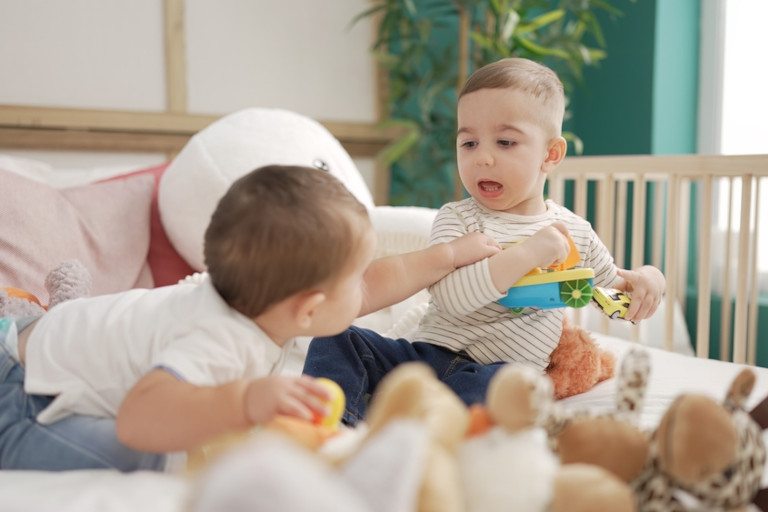
Help the child understand that other people’s belongings must be respected, while their own belongings are their responsibility. This rule is the foundation of moral awareness — respect for others, fairness, and the ability to empathize with how others feel when something is taken from them.
Rule 3: Do not interrupt others without a good reason
Children often burst with excitement when they want to share good news. But when they repeatedly interrupt adults, it can become a habit that disrupts others and reinforces self-centered behavior.
Parents can gently explain: “Interrupting someone who is focused is impolite. Imagine if you were doing something important and someone kept bothering you — would you like that?”
By encouraging children to think from another person’s perspective, parents help them build empathy and social awareness. Children who follow this rule integrate more easily into groups and form healthier friendships.
Rule 4: When you make a mistake, apologize — and expect the same from others
Some parents excuse their child’s behavior by saying: “The child is still young.” But when a child never learns to apologize, mistakes begin to feel inconsequential.
Teaching a child to apologize helps them develop humility and honesty. They learn to acknowledge the consequences of their actions rather than running from them.
Just as importantly, parents should apologize when they misunderstand or wrongly accuse their child. This model’s integrity and shows that fairness applies to everyone. A child who learns to apologize also learns to protect their own rights and express their feelings more maturely.
A child who grows up with love but no rules becomes dependent and unprepared for adulthood. A child who grows up with rules but no love becomes fearful and withdrawn. The best family education brings the two together — steady affection and clear boundaries — giving children both the courage to explore the world and the character to navigate it well.
Translated by Eva
Follow us on X, Facebook, or Pinterest
