
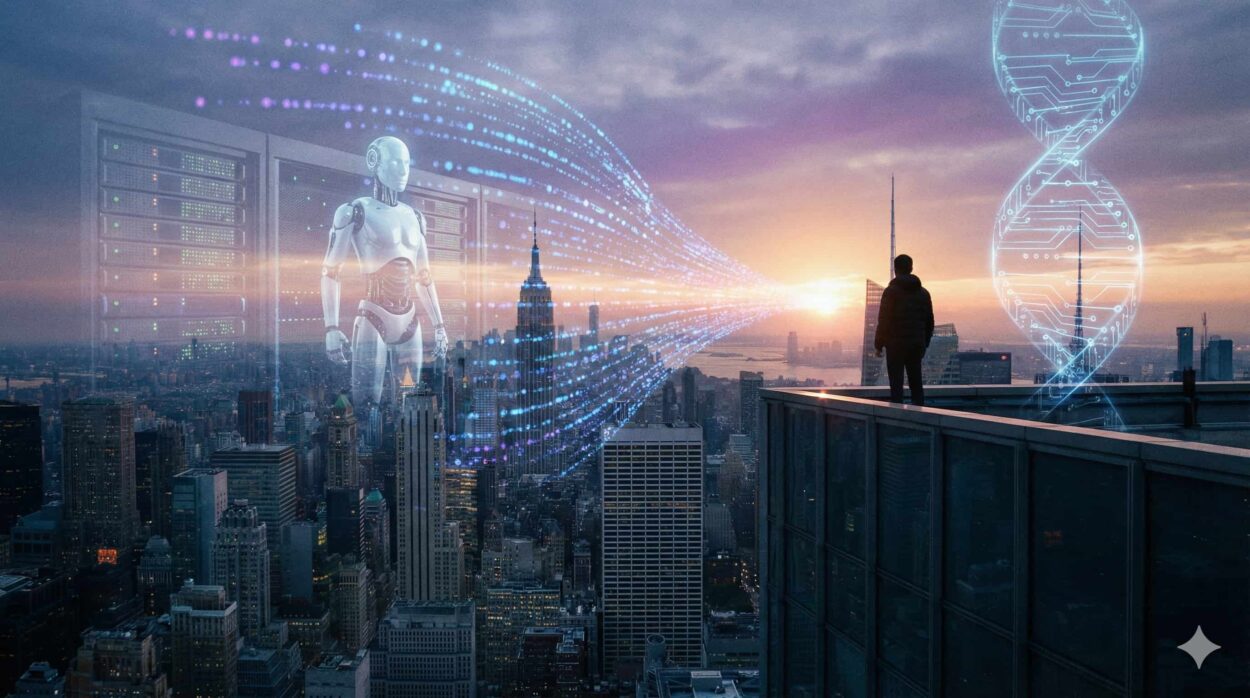
In the waning months of 2025, as quarterly earnings reports and holiday-season product launches monopolized headlines, a quieter, but more consequential narrative, began to take shape. The story of technology trends in 2026 is not about a single breakthrough in a given year, but rather about the moment when many converging technologies begin to define a new chapter of the digital age. From autonomous AI agents to brain-computer interfaces, the next year promises to deepen existing trends rather than deliver miraculous singularties — an evolution rather than a revolution.
This is a world of layered, overlapping transformations, each with its own momentum, but collectively shaping how we will live, work, and understand the boundary between human and machine.
Toward agentic intelligence: AI that does more than answer
One of the most intriguing shifts in artificial intelligence is the rise of agentic AI — systems that do not simply respond to prompts, but plan, execute, and adapt across multiple steps.
Unlike today’s chatbots, these agents can autonomously orchestrate a sequence of actions: booking travel, coordinating a project, or managing operational workflows without constant human intervention. This departure from reactive models reflects broader adoption patterns: a McKinsey survey reports that organizations are increasingly experimenting with — and beginning to scale — AI agents beyond narrow pilots. However, full enterprise-wide deployment is still rare.
The implications are profound. McKinsey research suggests that AI technologies could automate 60-70% of work tasks, not by replacing jobs wholesale, but by taking on repetitive and intermediary steps that currently occupy much of professional life.

In logistics, healthcare, and finance — once bastions of human operator control — agentic AI is being described as more than a productivity tool; it is becoming a decision-support and coordination engine. In enterprise settings, early adopters are already using these systems to manage complex logistics workflows and internal research tasks.
Bioprinting meets quantum ambition
Two fields seemingly as distant as astrophysics and tissue engineering — bioprinting and quantum computing — are also charting parallel advances. Clinical trials for 3D-printed skin and tissue have accelerated, with the 3D bioprinting market projected to expand into the billions by 2027. (Market projections estimate the bioprinting sector at well over $4 billion by that time.)
Simultaneously, quantum computing milestones — such as IBM’s development of hundred-plus qubit processors — signal greater capability for solving optimization problems that elude classical machines. Although universal quantum advantage remains aspirational, industry analysts now expect quantum algorithms to begin informing material science, drug discovery, and complex logistics well before the decade’s midpoint.
Together, these two frontiers — biological fabrication and quantum information — illustrate a broader reframing of innovation: from faster computers to fundamentally different computational paradigms.
It is not just about doing old tasks better, but about tackling new classes of problems that were once inconceivable.
The energy paradox: powering the digital age
As AI systems grow in capability, they also grow in appetite. Data centers — already among the most energy-intensive infrastructures on the planet — could see their electricity consumption double by 2026, according to projections from the International Energy Agency. To counter this, researchers are turning AI against itself.
For example, DeepMind’s cooling-optimization systems have reduced energy costs in Google data centers by 40% — a testament to the power of machine learning to optimize physical processes.
Meanwhile, machine learning models are being deployed to balance electrical grids under the strain of variable renewable power. The result: AI that not only drives demand, but also enhances the sustainability of the critical energy systems that underpin it.
From repetitive automation to adaptive autonomy
Markets and analysts project that the global robotics industry could exceed $200 billion by 2030, with new growth driven by adaptive tasks rather than assembly-line precision. In hospitals, distribution centers, and even public spaces, robots equipped with real-time perception and AI decision-making are expected to become increasingly common.
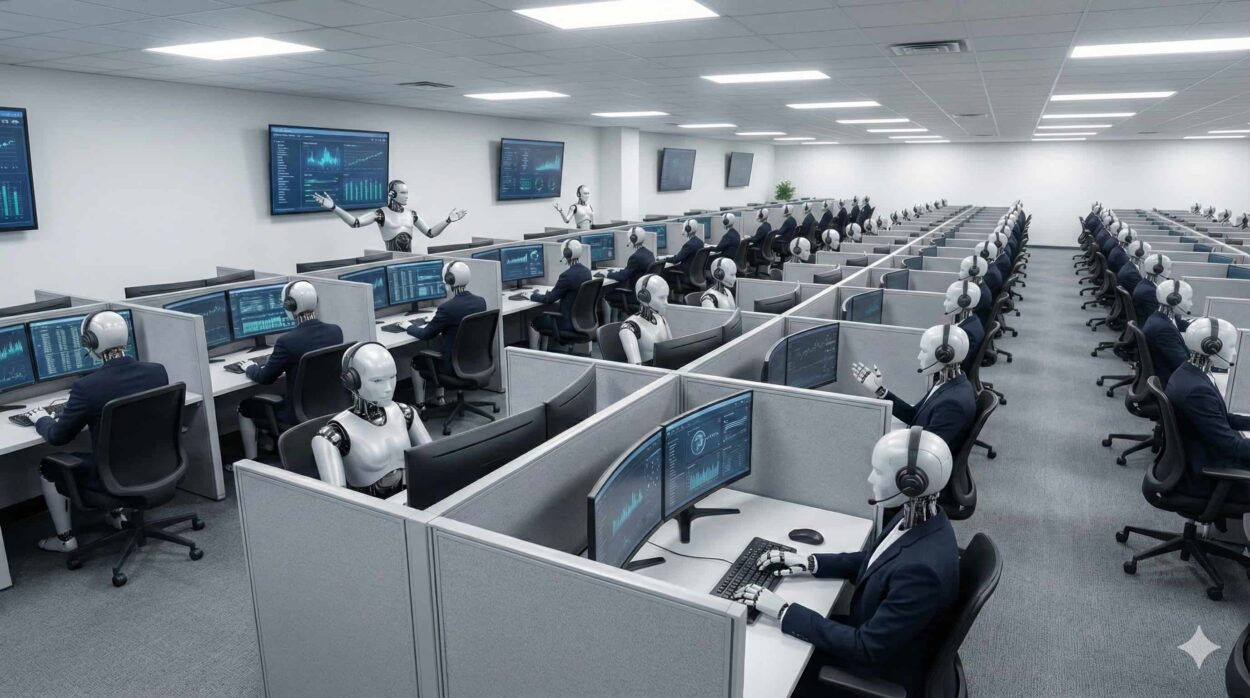
Not all of this will be slick or seamless — some may be logistics bots navigating campus paths or elder care assistants in Japan — but collectively, such systems are beginning to look less like science fiction and more like labor supplementation.
Synthetic biology and AI’s biological turn
The fusion of biology and computation — often framed as synthetic biology plus AI — is another axis of 21st-century innovation. AlphaFold’s remarkable ability to predict protein structures, once the domain of decades-long research cycles, is now routine, thereby enabling accelerated drug discovery and enzyme design.
Synthetic biology applications are expanding beyond medicine into agriculture and materials science, with AI-designed enzymes poised to enhance sustainable food production and biodegradable plastics.
This intersection is emblematic of a deeper convergence: biological systems as programmable matter, and AI as the software that writes those biological instructions.
Tech and geopolitics: sovereign AI and digital independence
The contest for technological autonomy is no longer rhetorical. Countries across Europe and the Middle East are investing in sovereign AI — national or regional models intended to reduce reliance on major U.S. or Chinese platforms.
France’s support for open-source AI initiatives and substantial EU funding under the Digital Europe program reflect a growing conviction that AI is not merely commercial infrastructure, but a national strategy.
This decentralizing trend will shape regulation, data sovereignty debates, and the balance of digital power in the years ahead — amplified by the international race to standardize or guard emerging technologies.
The immersive world: extended reality and everyday tools
Extended reality (XR), encompassing both augmented and virtual reality, is also moving beyond the gaming niche. Corporations such as Walmart have already deployed VR for employee training at scale, while headset manufacturers push mixed-reality devices toward educational and professional use environments.
As the technology matures, these immersive tools may become as common as smartphones in classrooms, remote workspaces, and retail experiences where customers interact with virtual products in physical contexts.
Similarly, AI-powered tools are rapidly becoming embedded in everyday software — Microsoft’s Copilot across Office apps and generative editing in creative suites signal a future where applications do not wait for commands, but begin to anticipate users’ needs. By 2026, this integration could feel normative rather than novel.
Privacy, autonomy, and decentralized trust
As data proliferates and the consumption of digital services becomes universal, concerns about privacy-first AI have pushed on-device processing into prominence. Smartphone vendors are increasingly optimizing chips for localized AI tasks, reducing reliance on cloud services and giving users greater control over their data.
Meanwhile, in a world grappling with misinformation and synthetic content, digital identity and decentralized trust frameworks are emerging as central infrastructural concerns. Blockchain-based IDs and digital wallets being piloted in the EU — coupled with experiments in biometric-anchored identity systems — suggest that trust will increasingly be engineered into the digital fabric, not treated as an afterthought.
Projections put the global digital identity market at tens of billions of dollars by 2027, reflecting its anticipated role as a critical underpinning of financial transactions, governance, and AI verification systems.
Networks, latency, and the edge of connectivity
Technologies such as edge computing and early 6G research reflect a broader imperative to process data as close to its source as possible. Lower latency and greater bandwidth will be necessary to support autonomous vehicles, industrial IoT, real-time augmented reality, and other advanced applications.
Telecommunications firms and research institutions in South Korea, Japan, and Europe are already trialing next-generation wireless technologies, and by 2026, these systems could begin enabling capabilities that seem futuristic today.
The hybrid future: cloud repatriation and new infrastructure
The era of “cloud everywhere” is giving way to a more nuanced landscape in which organizations balance public cloud with private and hybrid architectures. Rising costs and data governance concerns are driving workloads back on-premises or into hybrid models, a shift supported by surveys showing half of enterprises looking to repatriate some functions for efficiency and control.
In tandem with AI-native infrastructure—hardware, networking, and storage built around machine-learning workloads—this rebalancing reflects a broader reassessment of how digital systems should be architected for the long term.
Toward 2026 and beyond
The technologies poised to define the next year are less about singular breakthroughs and more about systemic maturation. Agentic AI, immersive systems, synthetic biology, and decentralized trust frameworks will not overturn society overnight — but they will begin to underpin everyday life in ways that are often invisible until a critical mass is reached.
In this sense, 2026 may not be remembered for one dazzling innovation. It may instead be remembered as the moment when the many currents of contemporary technology finally began to converge into a new ecosystem — one sprawling, interdependent, and profoundly consequential.
What happens next won’t be a question of if these technologies shape our world, but how we choose to govern, integrate, and steward them in the decades to come.
Follow us on X, Facebook, or Pinterest
