
Let us now examine America’s conquest of Japan.
The Meiji Restoration was the 1868 political revolution in Japan that overthrew the feudal Tokugawa Shogunate and restored the Emperor’s power. It triggered a period of rapid, state-led modernization, Westernization, and industrialization, transforming Japan into a centralized world power.
Following the Meiji Restoration, Japan adopted superficial aspects of Western culture but failed to embrace its essence — constitutional democracy. For instance, the Western democratic principle of military non-interference in politics was never implemented in Japan. Until its surrender, the military controlled the government. There was no freedom of the press, nor voluntary associations organizing social reform movements.
Japan also lacked core elements of Western democracy, such as human rights and civil liberties. Women’s suffrage remained a mere formality, as political and social pressures hindered their participation in elections.
MacArthur’s arrival and the shift in tone
At 2:05 PM on August 30, 1945, when General MacArthur stepped off the plane onto Japanese soil, the Japanese people witnessed an unprecedented moment of terror. Every heart whispered: “The nation is lost, lost, lost.” Yet the Japanese people did not anticipate that General MacArthur would bring peace, justice, tolerance, and democracy to Japan, not hatred.
Economically, postwar Japan lay in ruins, its economy collapsed, and hunger gripped the nation. At this critical juncture, MacArthur stepped forward, exerting immense pressure on the U.S. government to aid Japan. 3.5 million tons of grain and $2 billion in emergency economic assistance were swiftly dispatched. Politically, upon arriving in Japan, MacArthur immediately ordered the release of political prisoners long detained by the Japanese government.
The 400,000 American troops who landed also won over the Japanese people through their restraint, goodwill, and dedication. When Japanese civilians encountered American soldiers in Japan’s narrow city streets and alleys, the soldiers would always step aside and let the Japanese pass first. The Japanese could not help but ask themselves: If they were the victors, could they have done the same?
The push for popular sovereignty
The primary obstacle MacArthur faced in establishing constitutional democracy in Japan was the Meiji Constitution. Enacted in 1889, it had been drafted by advocates of reform and Westernization. Yet Japan’s three successive generations of politicians and military leaders had exploited inherent flaws within this constitution.
When MacArthur decided to rely on the existing government, he implicitly acknowledged the legitimacy of governance under the Meiji Constitution. Yet within weeks, he recognized the need for at least two amendments: the government’s power base must be grounded in the supremacy of popular sovereignty, and the Emperor must transition into a constitutional monarch.
Before implementing constitutional reforms in Japan, MacArthur had already initiated numerous substantive constitutional measures. These included permitting Japanese women to establish their own organizations and enacting legislation granting women electoral rights.
For the first time in Japanese history, women were granted the right to vote and stand for election. The ban on newspapers was lifted, enabling Japan to achieve freedom of the press and freedom of speech. The Trade Union Act was enacted, granting the working class genuine organizational rights.
Drafting the new constitution
The drafting of Japan’s new constitution undoubtedly stands as MacArthur’s most significant contribution. On February 3, 1946, MacArthur directed the Allied Headquarters to draft a model constitution for Japan. The U.S. government had earlier instructed MacArthur that the guiding principle for drafting the constitution was: the Japanese government must be absolutely authorized by and accountable to the entire electorate.
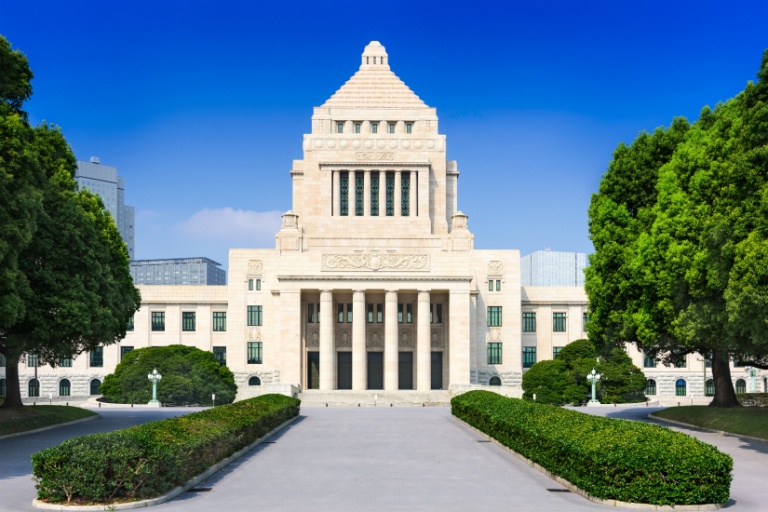
On May 3, the Allied forces submitted the draft constitution. On October 7, the Japanese Diet adopted the constitution. On November 3, the Emperor promulgated the new constitution. This was a constitution imposed by the occupiers on the occupied people, in line with Western values. Yet, it became one that brought welfare to the people of the occupied nation.
This constitution emphasized the fundamental civil rights of the Japanese people, guaranteeing these rights as “inherent and inalienable.” These rights included: the right to vote; freedom of assembly and of the press; the prohibition on arrest or conviction without immediate access to counsel; safeguards for residential security; and the ban on unreasonable searches and seizures.
Combining the executive power of the American system with the British parliamentary system, the new constitution transformed Japan into a parliamentary democracy. The Emperor became a nominal head of state, civil liberties were guaranteed, and the executive branch became accountable to the legislature.
Drafting a constitutional text acceptable to both Americans and Japanese proved a formidable challenge for MacArthur. Western concepts like sovereignty lacked precise Japanese equivalents. An agreement was reached primarily because of inherent ambiguities in fundamental terminology, allowing MacArthur to interpret key phrases one way while the Japanese interpreted them differently. Nevertheless, the basic principles of American constitutional democracy were ultimately woven into the new constitution, setting Japan on a genuinely new path of development.
Overcoming conservative resistance
Yoshida and most members of the Japanese cabinet were outraged by the draft of the new constitution. Its content far exceeded what they were prepared to accept. However, MacArthur knew how to persuade them: he proposed submitting the draft directly to the people for a national referendum.
The idea of granting millions of ordinary Japanese citizens direct say on such a significant issue as the constitution was unacceptable to the conservatives. They immediately relented, and when the Diet, Japan’s national legislature, adopted the new constitution, only minor revisions were made to its text.
Later, MacArthur remarked that Japan’s new constitution was merely a modification of the original Meiji Constitution. MacArthur had consistently sought to tailor the constitution to Japanese tastes as much as possible, yet in reality, the constitution he introduced represented a complete break with the past. This constituted one of the occupation’s most significant achievements.
The new constitution set Japan on the path to becoming a genuinely free and democratic nation — a status previously unseen in this region of the world. This constitution helped transform Japan into an enviable nation in East Asia, rather than a scourge upon it.
Land reform and education reform
On October 21, 1946, the Diet passed the Land Reform Act. The Japanese government purchased all land owned by foreign landlords and surplus land held by rural landlords, then resold it to landless farmers. For farmers unable to afford land purchases, the government provided mortgage loans. Overnight, without shedding a single drop of blood or taking a single life, all landless farmers obtained land that truly belonged to them.
On March 31, 1947, the Fundamental Law of Education was promulgated. It declared the primary goal of education to be “respecting the dignity of the individual and striving to cultivate a love for truth and peace.” Japanese schools were no longer controlled by the government but managed by publicly elected boards of education.
The selection of teachers, textbooks, and curriculum setting became entirely autonomous decisions made by the private sector. On September 1, 1947, the Labor Standards Act was enacted, establishing minimum wage and maximum working hours standards.
Transfer of governance and economic legacy
In 1952, the U.S. occupation authorities transferred governance back to the Japanese government. These seven years of national subjugation fundamentally altered Japan’s developmental trajectory, transferring state sovereignty from autocratic rulers to the Japanese people.
This catalyzed profound progress, setting Japan upon a path of prosperity. Within a decade, Japan emerged as the world’s second-largest economic power, characterized by national prosperity, affluent citizens, and social stability. Incidentally, the U.S. occupation authorities did not spend Japanese taxpayers’ money; American taxpayers covered their expenses.
The victor honored
It is no exaggeration to say that MacArthur is the founding father of modern Japan — the Japan of constitutional democracy. How did Japan view this founding father of the new Japan, this conqueror who had subdued the nation? During the U.S. occupation, countless Japanese wrote letters to MacArthur offering their farmland, family heirlooms, and property deeds. Even more Japanese women boldly declared in their letters their willingness to dedicate themselves to the general, with some courageous women directly stating: “Please let me bear your child.”
On the morning of April 16, 1951, General MacArthur, relieved of his command by President Truman, was preparing to return home. His departure was announced to no one except a few high-ranking Japanese officials. Yet as Mac boarded his car, he discovered that millions of Japanese had spontaneously lined the streets from his official residence to Atsugi Airport to bid him farewell. As the motorcade passed, heartfelt cries rose from the crowd: “Supreme Commander!” Old Mac was moved to tears.
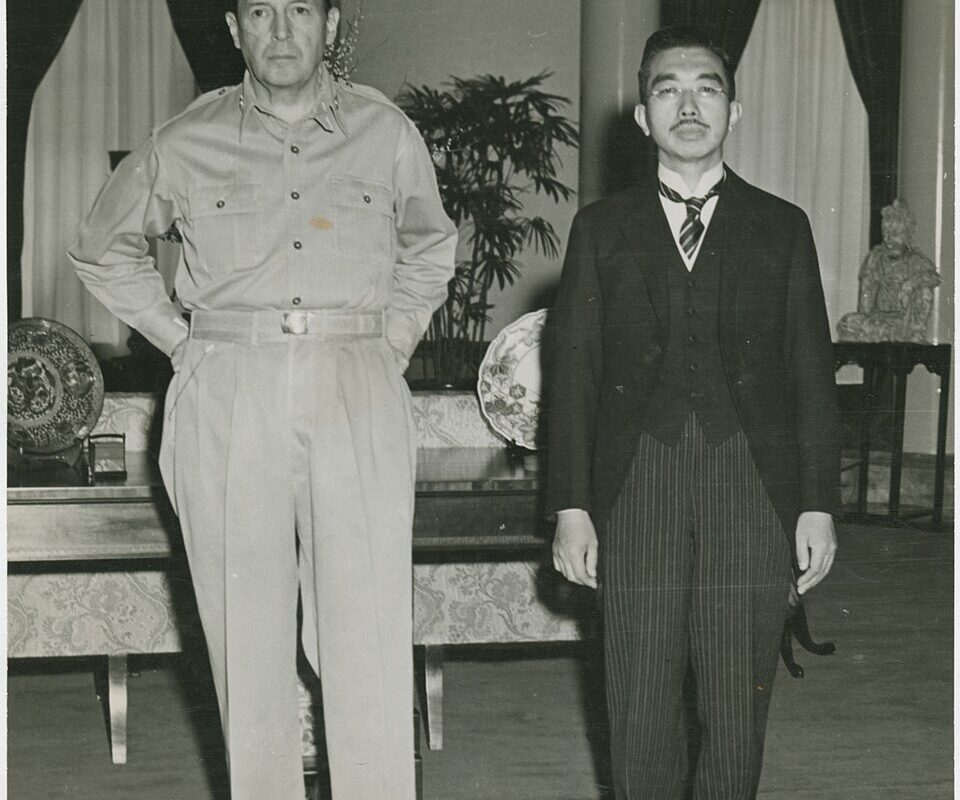
MacArthur finally departed Japan, with crowds lining Tokyo’s streets, tears welling in their eyes as they bid him farewell (completely forgetting he was the occupier who had defeated their nation’s army). The Emperor himself came to the embassy to see MacArthur off. At that moment, MacArthur, overcome with emotion and tears in his own eyes, clasped Emperor Hirohito’s hands tightly.
In his farewell address, then-Prime Minister Yoshida of Japan declared: “It was you, General MacArthur, who rescued us from the terror, anxiety, and chaos of defeat, guiding us onto the path of postwar reconstruction and recovery. It was you who sowed the seeds of democracy in every corner of our nation. It was you who paved the way for our peace. The profound sorrow our entire nation feels at your departure cannot be expressed in words.”
In 2015, Japanese Prime Minister Shinzo Abe addressed a joint meeting of the United States Congress. His speech, titled “Towards an Alliance of Hope,” was delivered on April 29, 2015. It was a significant event, as he was the first Japanese Prime Minister to address a joint session of Congress. The speech focused on strengthening the U.S.-Japan alliance, acknowledging historical issues, and discussing future trade and security cooperation.
Shinzo Abe spoke to the U.S. Congress in English: “America is truly a remarkable nation. There is no hierarchy or seniority-based hierarchy. People are judged solely by their achievements. When discussing issues with others, you need not concern yourself with their seniority. What matters is whether the idea itself is excellent, not who proposed it. This culture truly fascinates me.”
This is yet another response from a conquered nation to its conqueror — still devoid of hatred, filled only with gratitude and fascination.
See Part 1 here
Translated by Audrey Wang and edited by Helen London
Follow us on X, Facebook, or Pinterest
