

There is a quiet, transformative power in the way a mother moves through the world. For a child, a mother is not just a caregiver; she is the first window through which they view reality. When a mother treats herself with dignity, curiosity, and grace, she isn’t just “practicing self-care” — she is drafting a blueprint for her child’s own self-worth.
The art of the fairy-tale princess
Consider the morning ritual of the vanity mirror. Many mothers rush through their makeup in the bathroom’s harsh fluorescent light, treating it as a chore to be hidden. But one mother, Sarah, turned this into a collaborative masterclass in aesthetics.
Each morning, her 5-year-old daughter, Maya, sits on the counter, eyes wide as she surveys the palette of corals, mauves, and crimsons. “Which one matches my heart today, Maya?” Sarah asks. By inviting Maya to choose the lipstick, Sarah isn’t just teaching her about color coordination; she is teaching her that beauty is a choice and a form of play.
One Tuesday, after Sarah blotted her lips and straightened her blazer, she twirled and asked: “Do I look like a fairy-tale princess today?” Maya didn’t just nod; she beamed with a reflected glow. Over time, Maya’s own confidence surged. She began picking out her own mismatched yet bold outfits with fierce pride. The lesson was clear: because Mom is amazing and values her appearance, Maya feels amazing by association.

The strength in a gentle sigh
We often believe that to be a “good” mother, we must be a pillar of unbreakable granite. However, true independence in a child is often born from a mother’s calculated vulnerability.
Take Lily and her 7-year-old son, Leo. One afternoon, Lily sat at the kitchen table, feigning a struggle with a vacuum-sealed jar of pickles. She didn’t grunt or curse; she simply batted her eyelashes at the jar and sighed, “This lid is so stubborn. It’s winning the battle, Leo. Can you help Mom figure out a way to beat it?”
Instead of just pulling at it, Leo paused. He had watched a science video recently. He ran to the sink, soaked a small towel in warm water, and wrapped it around the lid to expand the metal. “Mom,” he said, puffing out his chest like a seasoned engineer, “you need to learn to use your smarts, not just your muscles.” By stepping back and showing “weakness,” Lily gave Leo the space to become a hero. Showing vulnerability is the “magic” that awakens a child’s problem-solving spirit.
The quiet dignity of the umbrella
Image is more than a reflection in a glass; it is a posture toward life. Xiaoya, a mother of a third-grader, understood that her “image” was a silent language. On a particularly gloomy, torrential Monday, the school pick-up line was a chaotic scene of frantic parents and mud-splattered kids.
While others were hunched over, shouting into phones or letting their frustration show, Xiaoya walked to the gate with a steady pace, holding a deep navy umbrella with practiced elegance. She greeted the teacher with a smile and knelt to keep her son dry as they walked to the car.
Later that evening, her son whispered: “Mom, you’re different from the other moms. You weren’t scared of the rain.” In that moment, he identified with her composure. He realized that a storm doesn’t require panic; it requires a better grip on the umbrella.
The calm in the middle of the scrape
Resilience isn’t taught through lectures; it’s caught through observation. When Zhang’s daughter, Chloe, first strapped on roller skates, she spent more time on the pavement than on the wheels.
A “perfect” mother might have rushed over with Band-Aids and frantic apologies to the universe. But Zhang simply crouched a few feet away, maintaining a serene expression. “Mommy knows it hurts a bit,” she said calmly, “but your legs are strong. You can get up on your own.”
This calm was a safety net. Years later, when Chloe sat at the dining table staring at a wall of complex long-division problems, she didn’t cry. She looked at her mother and said, “It’s like the roller skates, right? I just have to fall down a few more times until I get the answer.”
The rhythm of discipline
Discipline is often whispered about as a punishment, but in a healthy home, it is a rhythm. When a mother runs every morning — not to “lose weight” but because she loves the feel of the wind and the strength of her lungs — the child notices the joy in the effort.
One morning, after seeing his mother return from a five-mile loop, her 6-year-old son pushed away a second scoop of ice cream. “I only want half,” he said. “I want to stay healthy like you so I can run fast too.” He didn’t see the ice cream as a “forbidden” item; he saw his health as a tool he wanted to sharpen, modeled by the woman he admired most.
The brave act of letting go
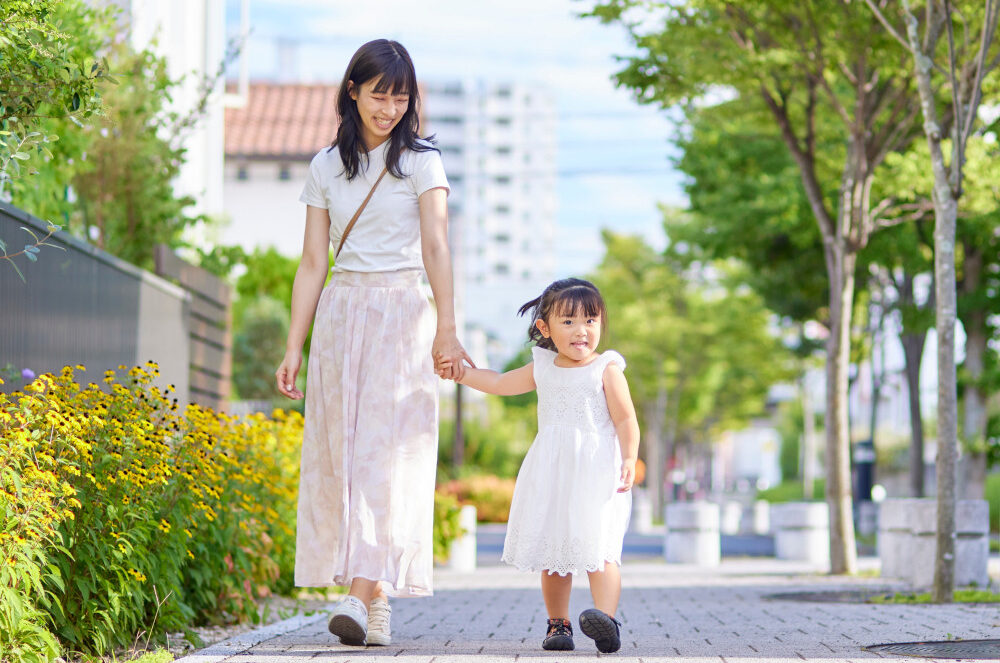
The hardest part of motherhood is the “step back.” We want to shield our children from every sharp corner, but overprotection is a velvet cage. By letting go — allowing a child to climb the slightly-too-tall slide or walk to the neighbor’s house alone — we hand them the keys to their own courage.
A mother who loves learning is the final piece of the puzzle. When a child sees their mother tucked into a book or taking an online course, they realize that growth doesn’t end at 18. It ignites an intrinsic motivation: “If Mom is still curious about the world, the world must be a place worth exploring.”
To all the mothers
Forget the “perfect” mother. She is a myth, a cardboard cutout that doesn’t breathe. Your children don’t want a superhero who never fails; they want a woman who is authentic. They want to see you try, fail, laugh at yourself, and try again.
You are their first role model, not because you have all the answers, but because you are brave enough to keep looking for them. By loving yourself, your image, and your growth, you aren’t being selfish — you are giving your child the greatest gift of all: a map to their own greatness.
Translated by Eva and edited by Amanda
Follow us on X, Facebook, or Pinterest
