
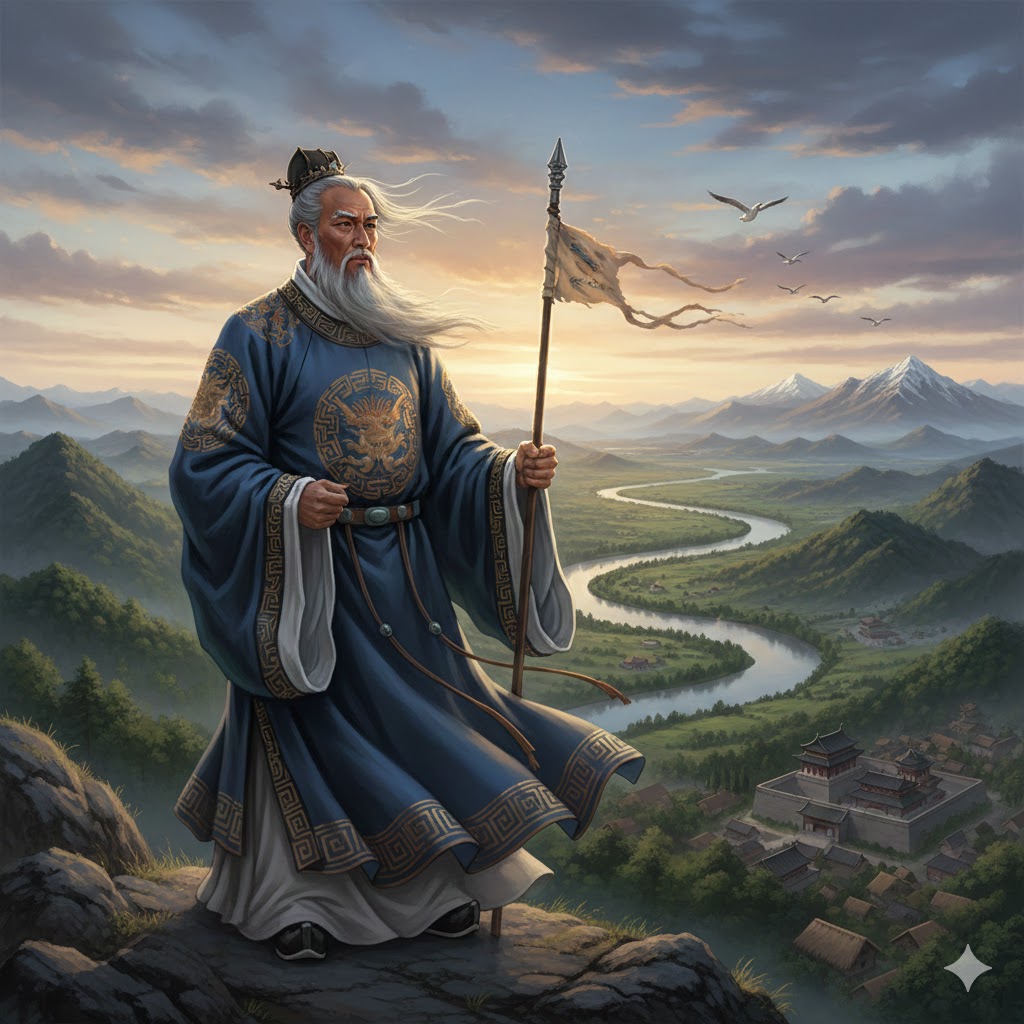
During the Southern Song Dynasty, a minister named Hong Hao (posthumous name Zhongxuan, 1088-1155), who was praised as a loyal and upright official, was often compared to Su Wu of the Han Dynasty. Yet few people today know of him.
Willing to exchange one life for ten thousand lives
Hong Hao was born in the late Northern Song period. He studied diligently from a young age and passed the imperial examination in the fifth year of the Zhenghe era (1115). During Emperor Huizong’s Xuanhe reign, he served as the official responsible for Xiuzhou (modern-day Jiaxing, Zhejiang), a region that frequently experienced natural disasters.
One year, a great flood struck Xiuzhou. Farmland was destroyed, homes were submerged, and starving civilians cried out in desperation. Many fled the area, hoping to survive. Seeing this, Hong Hao immediately ordered the granaries opened and sold grain to the victims at remarkably low prices. This helped many families survive the earliest days of the disaster.
But as the crisis worsened, the grain stores neared depletion. At that moment, a shipment of imperial grain from eastern Zhejiang happened to pass through Xiuzhou. Hong Hao urged the governor to intercept the grain to save the people. The governor refused — using imperial grain without permission was considered stealing from the emperor, a crime that could cost them their lives.
Hong Hao spoke with unwavering resolve: “I am willing to exchange my life for the lives of ten thousand people.”
His righteousness moved the governor, who reluctantly agreed. The imperial grain was distributed, and tens of thousands were saved from hunger. Sincerely grateful, the people began calling him “Hong Fozai,” meaning “Hong, the son of Buddha,” a reflection of their perception of his compassion and moral courage.
Later, when the Xiuzhou army rebelled and looted the city, homes everywhere were ransacked. But when the soldiers reached Hong Hao’s residence, they refused to enter, saying: “This is the home of Hong Fozai.” Out of respect for his virtue, they dared not offend him or his family.

Imprisoned by the Jin Dynasty for 15 years
During the Jingkang period, the Northern Song Dynasty collapsed, and Emperor Gaozong established the Southern Song Dynasty. Yet the Jin armies continued their assaults. Hoping to ease tensions through diplomacy, Emperor Gaozong sought a trustworthy and principled envoy. Because Hong Hao was known for his integrity, he was recommended for this challenging mission and sent to the Jin Kingdom.
Upon reaching Taiyuan, however, he was detained by the Jin for an entire year and subjected to constant humiliation. They repeatedly tried to force him to serve as an official under the Northern Song traitor Liu Yu, but Hong Hao refused without hesitation. Enraged, the Jin general Wanyan Zonghan wanted to execute him. At this critical moment, several nearby Jin officials knelt and pleaded for Hong Hao’s life, praising him as a loyal and upright minister. Because of their intervention, he was spared execution and exiled to Cold Mountain — modern-day Daqing Dingzi Mountain in Wuchang, Heilongjiang.
Cold Mountain was a harsh and desolate place. Spring vegetation appeared only in April, and snow often returned as early as August. Hong Hao lived in a cave, sometimes spending two years without proper clothing or food. In summer, he still wore rough, heavy cloth, and in winter, when firewood ran out, he burned horse manure to cook his noodles. Under these hardships, the Jin continued trying to persuade him to surrender, but he remained unshaken. Later, when the Jin ruler learned of Hong Hao’s reputation, he attempted to appoint him as a Hanlin scholar. Hong Hao firmly declined, preserving the honor and dignity of a Southern Song minister.
Even while enduring years of hardship in enemy territory, Hong Hao maintained his unwavering integrity. His steadfastness won the admiration of many Jin scholars, who eagerly recopied and printed his poems and writings. Though his situation was perilous, he still did all he could to assist Northern Song subjects who had fallen into the same circumstances.
When the general Yue Fei later achieved significant victories against the Jin, excitement spread throughout Yanjing. Even in captivity, Hong Hao was overjoyed. He secretly sent a message to Emperor Gaozong, reporting that the Jin were frightened and retreating north with their valuables. He urged the emperor to seize this opportunity and launch a major northern campaign.
During his years in exile, Hong Hao also gathered historical and geographical materials and wrote Records of the Pine and Desert, one of the earliest works documenting the history of Northeast China.
Return to the Southern Song
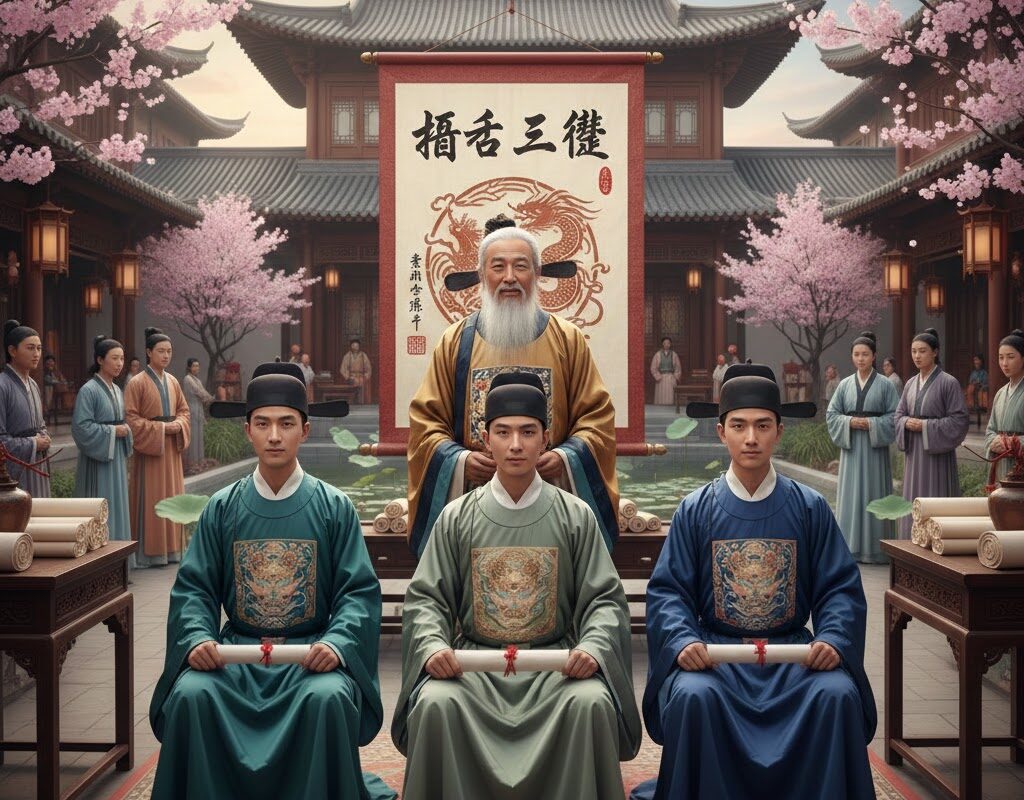
In the twelfth year of the Shaoxing era (1142), the Southern Song and the Jin finally reached a peace agreement, allowing Hong Hao to return home. From the day he was sent as an envoy until the day he came back, he had spent a full 15 years in captivity and exile within the Jin territory.
After returning to the Southern Song court, Hong Hao did not choose a quiet retirement. Instead, he openly criticized the treachery and wrongdoing of Qin Hui, the powerful prime minister under Emperor Gaozong, who was notorious for appeasing the Jin and for framing the loyal general Yue Fei. Because Hong Hao condemned Qin Hui’s corrupt actions, he was repeatedly demoted and reassigned, spending more than 10 years wandering from post to post. He eventually passed away in Nanhsiung, Guangdong, at the age of 68. Remarkably, Qin Hui died the very next day. Yet history remembers them in vastly different ways.
Hong Hao is honored for his benevolence, integrity, loyalty, and steadfastness — virtues that earned him deep admiration and left a noble legacy. Qin Hui, by contrast, has been condemned for centuries, symbolized by the kneeling iron statues placed before the tomb of Yue Fei.
Hong Hao’s moral character was reflected not only in his own life but also in the flourishing of his descendants. His three sons — Hong Shi, Hong Zun, and Hong Mai — all passed the imperial examinations and rose to prominent positions. Hong Shi served both as a minister and a military leader; Hong Zun became a high-ranking minister and scholar, holding a status equivalent to a prime minister; and Hong Mai served as a Hanlin scholar and was later promoted to the highest rank of officialdom. In the Ming Dynasty, many influential figures and high officials traced their lineage to Hong Hao. In the Qing Dynasty, the renowned playwright Hong Sheng — author of the celebrated drama Changsheng Hall — was also a descendant of the Hong family.
People have long said that the prosperity and distinction of Hong Hao’s descendants were closely tied to the great virtues he accumulated in his lifetime — virtues of kindness, loyalty, righteousness, and unwavering integrity. History remembers him not only for his deeds but for the example he set: a life guided by principle, compassion, and steadfast fidelity to the greater good.
Hong Hao’s story reminds us that true honor is measured not by titles or power, but by the courage to act righteously, even when circumstances are perilous, and by the enduring impact of one’s virtue on those who follow.
Translated by Joseph Wu and edited by Tatiana Denning
Follow us on X, Facebook, or Pinterest
