
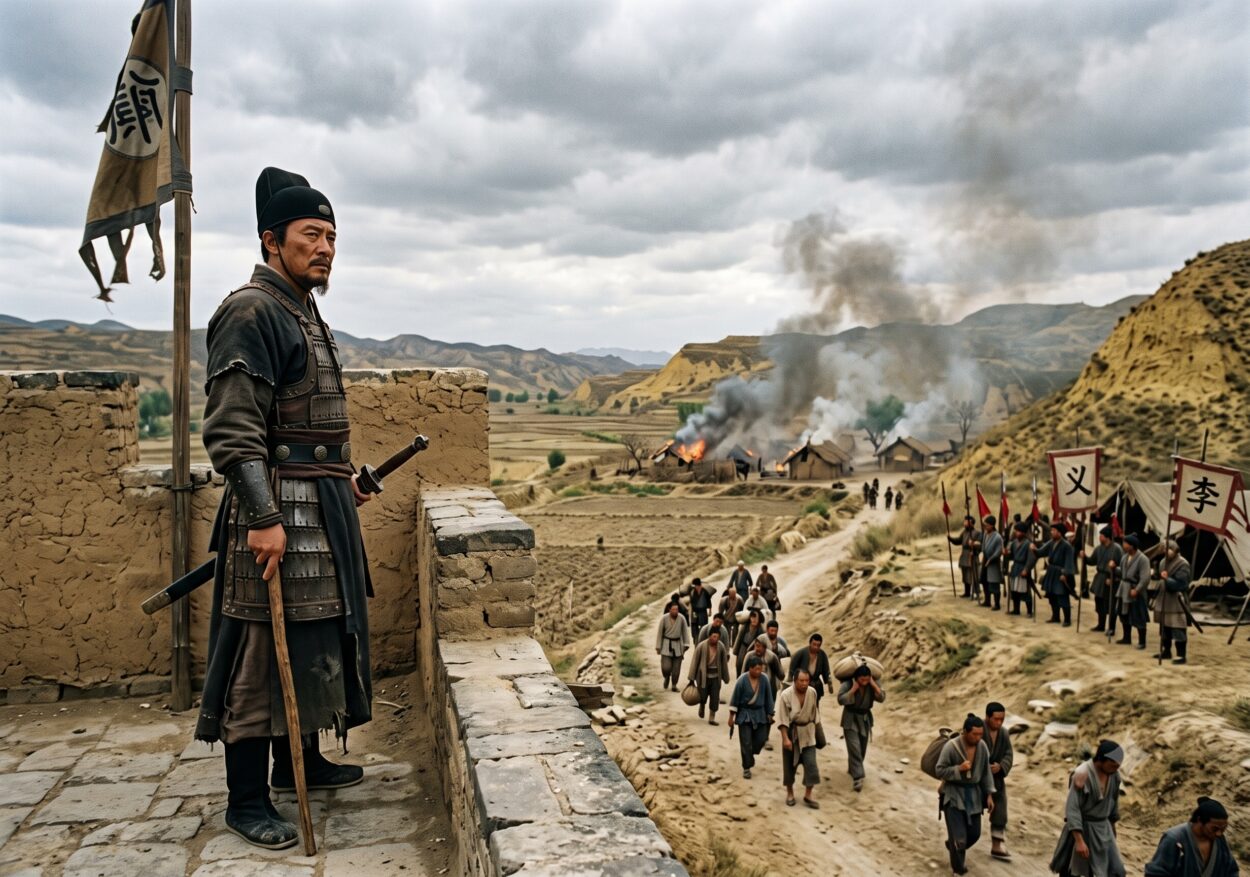
During the final years of the Sui Dynasty, Emperor Yang’s relentless ambition placed an enormous burden on the people. He ordered the construction of the Grand Canal and launched repeated military campaigns against Goguryeo (Korea), draining the empire’s manpower and resources. Countless young men were conscripted to dig canals and fight distant wars, leaving fields untended while taxes continued to rise. As famine, hardship, and resentment spread across the land, rebellions erupted one after another, pushing the empire toward collapse.
The man who foresaw the dynasty’s demise
Among those who recognized the gathering crisis was Li Jing, a government official serving in Mayi (present-day Shanxi Province). Seeing that the dynasty was heading toward disaster, he resolved to act before it was too late. Li Jing traveled to the capital in the hope of meeting Yang Su, the influential Duke of Yue, believing that decisive reforms might still restore stability to the empire and spare the people from further suffering. Unfortunately, Yang Su did not share Li Jing’s sense of urgency, and his appeal fell on deaf ears. Disappointed and seeing little hope of changing the course of events, Li Jing resigned from office and returned home. Rather than lamenting the empire’s decline, he devoted himself to the study of military strategy, convinced that if the opportunity ever arose, he would be ready to serve his country.
His uncle, Han Qinhu, was one of the founding generals of the Sui Dynasty and a renowned student of The Art of War. Recognizing Li Jing’s exceptional talent, he frequently discussed military theory and battlefield strategy with his nephew. After each conversation, Han Qinhu was struck by the depth of Li Jing’s insight and repeatedly praised his remarkable strategic ability. Before long, the empire descended further into turmoil. Yang Su died, rebellions spread across the country, and the Sui Dynasty began to crumble. When Li Yuan rose in rebellion and later established the Tang Dynasty, Li Jing joined his cause. Over the following years, he played a pivotal role in the campaigns that reunified China and laid the foundations of one of the greatest dynasties in Chinese history.
The general who secured the Tang Dynasty
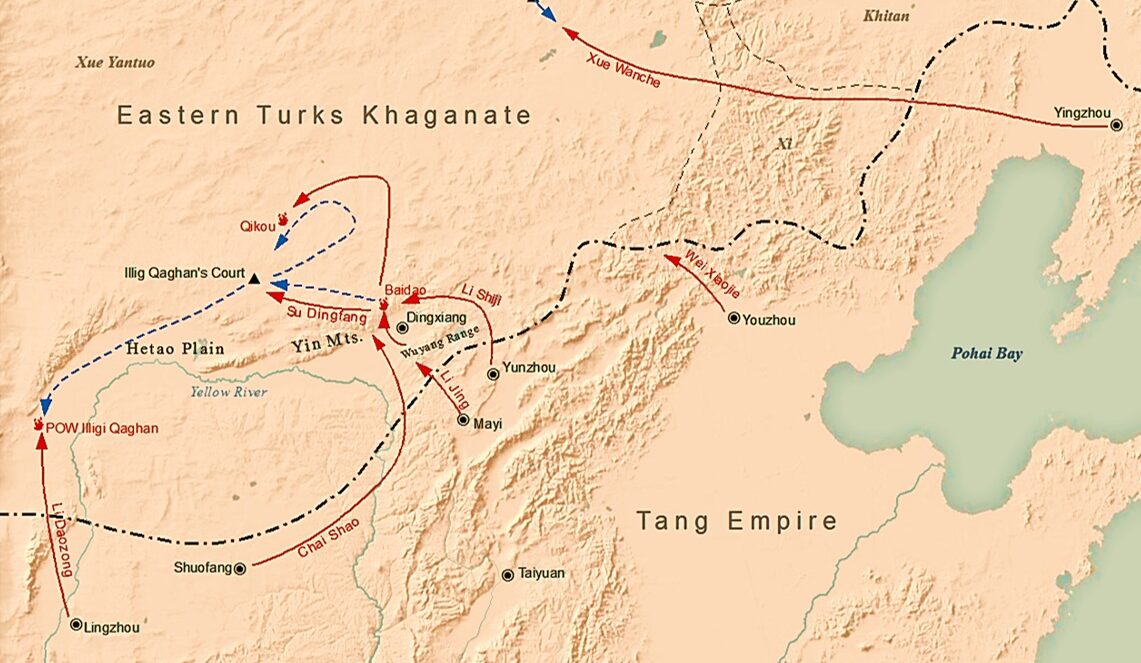
After Emperor Gaozu abdicated, his son, Emperor Taizong, ascended the throne. Having already served with distinction as Minister of Justice, Li Jing was appointed Minister of War, placing him in charge of the Tang Dynasty’s military affairs. At the time, the empire’s northwestern frontier faced constant threats from the Eastern Turks (Tujue) and the Tuyuhun Kingdom. Their mounted raiders frequently crossed the borders, seizing livestock, plundering settlements, and killing innocent civilians. The repeated incursions brought fear and hardship to the frontier and posed one of the greatest security challenges confronting the young Tang Dynasty.
Recognizing Li Jing’s extraordinary strategic ability, Emperor Taizong entrusted him with supreme command of the imperial army, confident that he possessed the wisdom and leadership needed to secure the empire’s borders. Li Jing repeatedly demonstrated extraordinary military leadership and strategic brilliance. In one of his most celebrated campaigns, he led just 3,000 cavalry on a daring surprise attack that shattered the Eastern Turks’ defenses and drove them far beyond the Tang frontier. It was a stunning victory that showcased his ability to achieve decisive results with speed, careful planning, and remarkably small forces.
Over the years that followed, Li Jing commanded numerous military campaigns, securing victory after victory and ultimately bringing lasting peace and stability to the empire’s northwestern frontier. In recognition of his exceptional service, Emperor Taizong promoted Li Jing to one of the highest offices in the empire, honoring him as one of the Tang Dynasty’s foremost military leaders.
The wisdom to let go
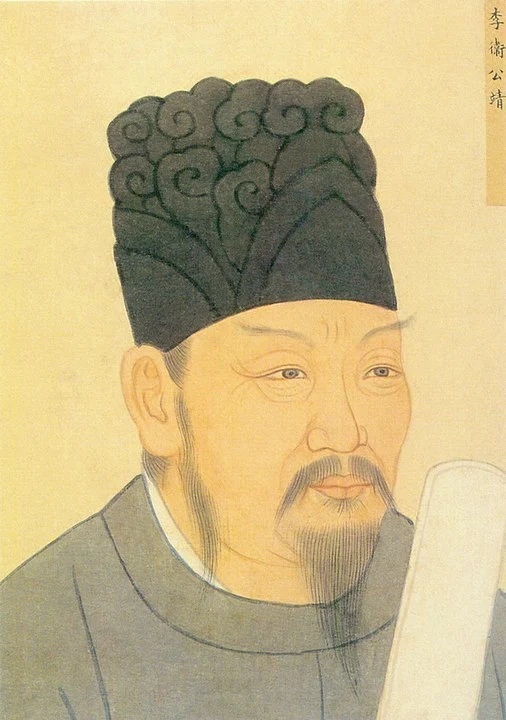
With the empire largely at peace, Li Jing began to reflect on the next stage of his life. He believed he had already made his greatest contribution to the nation. Rather than remaining in high office to enjoy its prestige and privileges, he felt it was time to step aside and allow younger officials the opportunity to serve and grow. On one occasion, Emperor Taizong asked Li Jing to inspect conditions throughout the empire. Li Jing respectfully declined. “I am growing old,” he said. “I fear I may no longer be able to fulfill Your Majesty’s trust as I once did. Please appoint someone younger. They should be given greater responsibilities so they may develop their talents and better serve the empire.”
Not long afterward, Li Jing submitted a formal memorial — a written petition to the emperor — requesting permission to retire. When Emperor Taizong read Li Jing’s memorial, he was deeply moved by its sincerity and humility. The following day, he dispatched a high-ranking official to deliver his reply in person. In his response, the emperor praised Li Jing, saying: “Throughout history, few who have attained high office have known when it was time to let go. Whether wise or foolish, many cling to power and its privileges. Some possess little ability, yet still refuse to step aside. Your conduct is truly exceptional. I gladly grant your request — not only to fulfill your wish, but also so that your example may inspire future generations.”
Emperor Taizong understood that true greatness was measured not only by a person’s achievements, but also by the humility to relinquish power when the time was right. After retiring, Li Jing devoted himself to recording the military principles and battlefield experience he had gained over a lifetime of service. His work, The Military Methods of Duke Wei of Li, became an influential military classic that was studied by generations of commanders.
By graciously accepting Li Jing’s request to retire, Emperor Taizong demonstrated not only wisdom, but also the ability to recognize true virtue. In allowing his most celebrated general to step away with honor, he preserved both Li Jing’s reputation and his example for future generations. Li Jing’s life reminds us that genuine honor is not found in holding power indefinitely, but in using it faithfully, relinquishing it willingly, and leaving behind a legacy that continues to guide and inspire others. His victories secured the Tang Dynasty’s frontiers, but his humility secured something even more enduring — the respect of history.
Translated by Katy Liu and reviewed by Tatiana Denning
Follow us on X, Facebook, or Pinterest
