
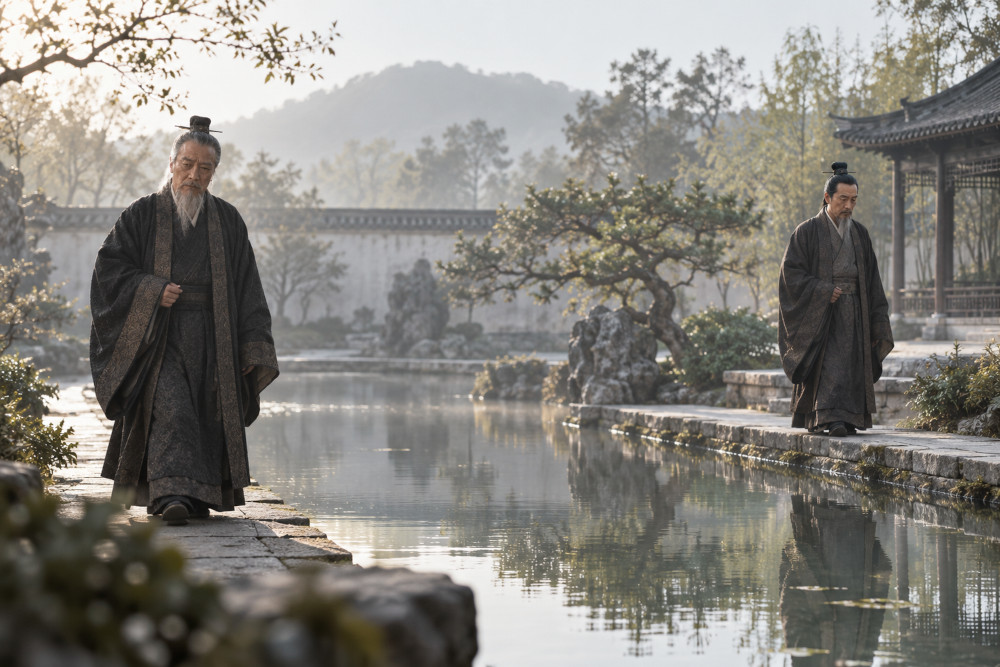
When speaking of Chinese history, it is difficult to avoid the idea of the junzi — the gentleman of virtue. His character and moral integrity, his affections and grievances, and the principles by which he conducts himself have left an enduring mark on history.
During the Spring and Autumn Period, the State of Jin was one of the great powers among the feudal states. Among its veteran statesmen was Qi Xi, who served under four successive rulers: Duke Jing, Duke Li, Duke Dao, and Duke Ping.
Qi Xi held the post of Lieutenant of the Central Army and ranked among Jin’s senior officials. The state maintained six armies, and although his position was below that of the six army commanders, he stood above the other military officials of his rank. At the time, civil and military authority were closely intertwined: the same men might command troops in the field and serve as ministers at court. Qi Xi therefore occupied a high, though not the highest, position in government. His reputation, however, was exceptional.
Judging men by merit
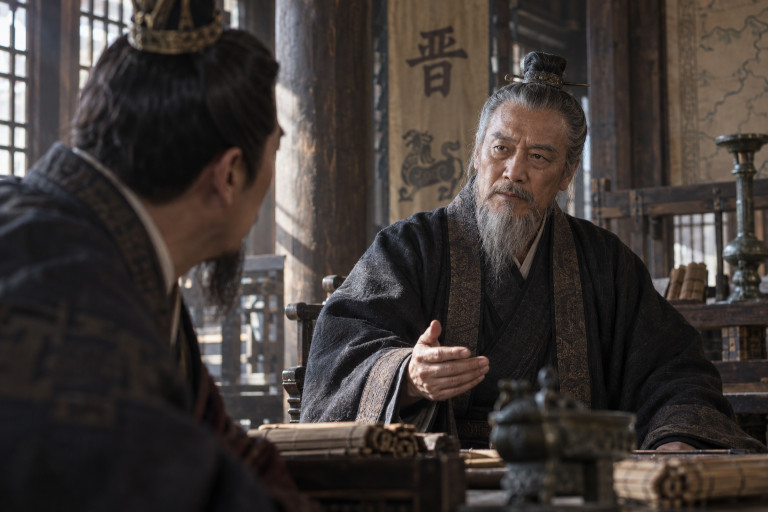
During the reign of Duke Ping of Jin, the post of magistrate in Nanyang became vacant. Duke Ping asked Qi Xi to recommend someone for the position.
Qi Xi replied: “Xie Hu would be the most suitable man.”
Duke Ping was surprised. “Isn’t Xie Hu your enemy?” he asked. “Why would you recommend him?”
Qi Xi answered: “My lord asked me who was suitable for the position. You did not ask me who my enemy was.”
Duke Ping considered this and saw the reason in it. “Excellent!” he said, and appointed Xie Hu.
After taking office, Xie Hu governed Nanyang in good order, and the people praised their new magistrate.
Some time later, Duke Ping again asked Qi Xi to recommend an official. “The state needs a lieutenant,” he said. “Who would be suitable?”
“Qi Wu,” Qi Xi replied.
Once again, Duke Ping was surprised, for Qi Wu was Qi Xi’s own son. “Isn’t Qi Wu your son?” he asked.
Qi Xi replied: “My lord asked me who was suitable to serve as lieutenant. You did not ask me who my son was.”
Again Duke Ping said: “Excellent!” Qi Wu was appointed and proved himself fully capable of the position.
By this time, Qi Xi was already advanced in years. Before long, he retired from public service and returned to his fief to spend his remaining years.
Racing to save Shuxiang
Later, conflict broke out among several powerful clans in Jin. Long-standing grievances led to fighting and bloodshed, and the Yangshe clan became entangled in the affair.
Shuxiang, a member of the clan, had taken no part in the conflict. Yet because his younger brother was implicated, Shuxiang was also caught up in the case. He was deprived of his freedom and confined to his own residence while awaiting judgment.
Shuxiang was a renowned man of virtue and an important minister of the state, and many were concerned that an innocent man had been implicated. Among them was Yue Wangfu, a great favorite of the ruler. Yue visited Shuxiang and volunteered to help clear him of the charges.
Shuxiang, however, did not respond to the offer. He neither continued the conversation nor offered thanks, but remained unmoved. Those who heard of this blamed Shuxiang for failing to appreciate Yue’s goodwill.
But Shuxiang told his family that only Qi Xi could save him. He knew that Qi would not stand idly by, and he was right.
When Qi Xi learned what had happened, he told his family: “I have heard it said that when one sees a petty man gaining power and fails to remonstrate with those in high office, that is not good; and when one sees a gentleman of virtue in distress and fails to come to his aid, that too is not good.”
Qi Xi immediately took the swiftest carriage he could find and hurried to see Fan Xuanzi, who was then in charge of Jin’s government. He feared that if he arrived too late, Shuxiang’s life might no longer be saved.

(Image: via ChatGPT)
Before Fan Xuanzi, Qi Xi argued his case on principle, citing the sage rulers of antiquity. Shun had executed Gun after he failed to control the floods, but Gun’s son, Yu the Great, later rendered extraordinary service to the realm. Cai Shu and Guan Shu, sons of King Wen of Zhou, had caused disorder and been punished, yet their descendants continued to be entrusted with important positions.
A man should not be condemned merely because a member of his family had done wrong. Shuxiang was innocent and should not suffer for another man’s offense. Qi Xi persuaded Fan Xuanzi, but that was not enough.
The two men then went together to see Duke Ping. Speaking from the standpoint of the welfare of the state and its institutions, they quickly persuaded the duke as well. Shuxiang was thus delivered from danger and regained his freedom.
The friendship of gentlemen
Why had Shuxiang been so certain that Qi Xi would come to his aid?
He explained: “When judging men on their merit, Minister Qi does not reject an enemy simply because he is an enemy, nor does he overlook his own kin simply because they are close to him. Would I alone be left out?”
When Qi Xi judged a man’s fitness for office, personal feelings did not enter into the matter. He did not reject a worthy man merely because the man was his enemy, nor did he shrink from recommending a worthy relative simply because others might accuse him of favoritism. How, then, could such a man abandon Shuxiang when he knew him to be innocent?
And why was Shuxiang so certain that Qi Xi would be able to save him?
Shuxiang continued by quoting the Book of Songs: “When a man possesses upright virtue, the states on every side follow him.” A man of upright character commands respect wherever he goes.
The story of Qi Xi’s impartiality and selflessness might well end there. But one further detail about these two men is especially revealing.
Once the matter was settled, Qi Xi went straight home. He did not visit Shuxiang to comfort him, nor did he seek recognition for what he had done. As soon as Shuxiang regained his freedom, meanwhile, he went directly to the palace to pay court to Duke Ping.
The man who had saved him and the man who had been saved hardly interacted at all. Qi Xi did not regard himself as having bestowed some enormous favor upon Shuxiang, and Shuxiang apparently did not feel that a debt of gratitude required even a word of thanks.
It is said that the friendship of gentlemen is as plain as water. In the case of Qi Xi and Shuxiang, it seems that even the water itself was hardly necessary.
Such was the bearing of the ancients: free of calculation, upright in conduct, and extraordinary in character.
References: Zuo Zhuan, third year of Duke Xiang, Lüshi Chunqiu
Translated by Joseph Wu
Follow us on X, Facebook, or Pinterest
