
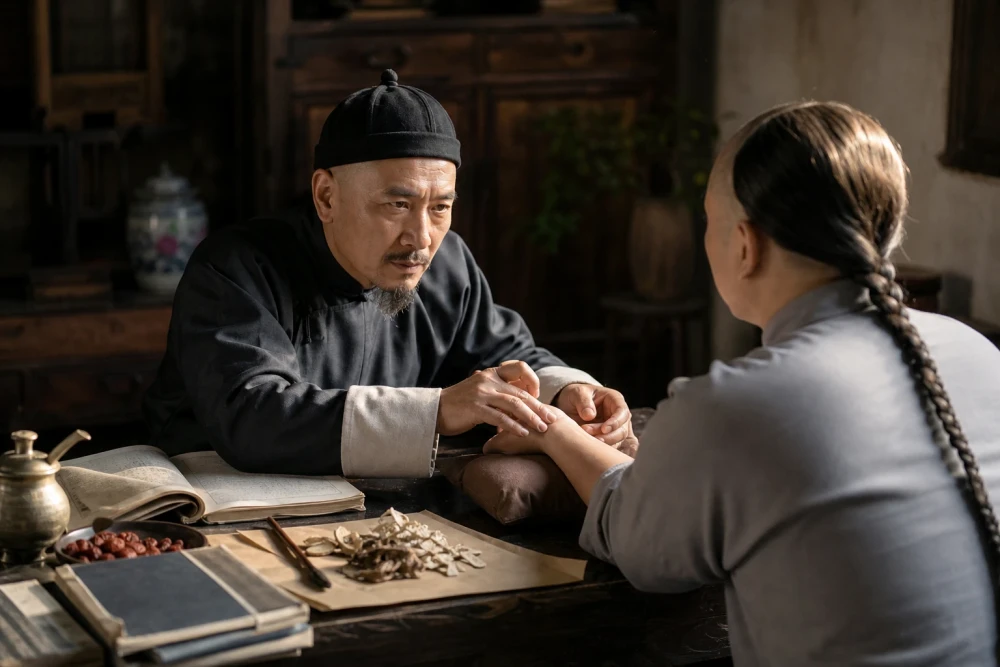
Ye Gui, widely known by his courtesy name Tianshi and art name Xiangyan, stands as one of the most brilliant luminaries in the history of traditional Chinese medicine. A native of Wu County in Jiangsu Province (now Suzhou), Ye Tianshi lived during the prosperous Yongzheng and Qianlong reigns of the Qing Dynasty. His contributions to clinical medicine, particularly his pioneering work in understanding epidemic warm diseases, transformed how practitioners approach acute febrile illnesses. Because his diagnostic precision and therapeutic ingenuity were considered extraordinarily profound — bordering on the miraculous — his contemporaries and future generations honored him with the title “Celestial Medical Star.” His reputation as a healer was so magnificent that countless legends, folklore, and historical anecdotes about his life are still celebrated and studied today.
Born into an esteemed lineage of physicians
Ye Tianshi inherited a rich medical tradition through his family heritage. Both his grandfather, Ye Shi, and his father, Ye Chaocai, were highly accomplished doctors who enjoyed great prestige within their community. Surrounded by medical texts, traditional herbal prescriptions, and daily clinical consultations from an early age, young Ye Tianshi developed an intense passion for the healing arts. According to historical accounts in the Biography of Ye Xiangyan, he diligently studied the Confucian classics during the day to build a solid intellectual foundation, while immersing himself in medical studies under his father’s direct guidance at night. When he was only fourteen years old, his father tragically passed away. Deprived of his primary mentor, Ye Tianshi did not abandon his path; instead, he devoted himself fully to medical study under Doctor Zhu, one of his father’s most capable disciples, and continued refining his foundational skills.
Unwavering humility and dedicated learning
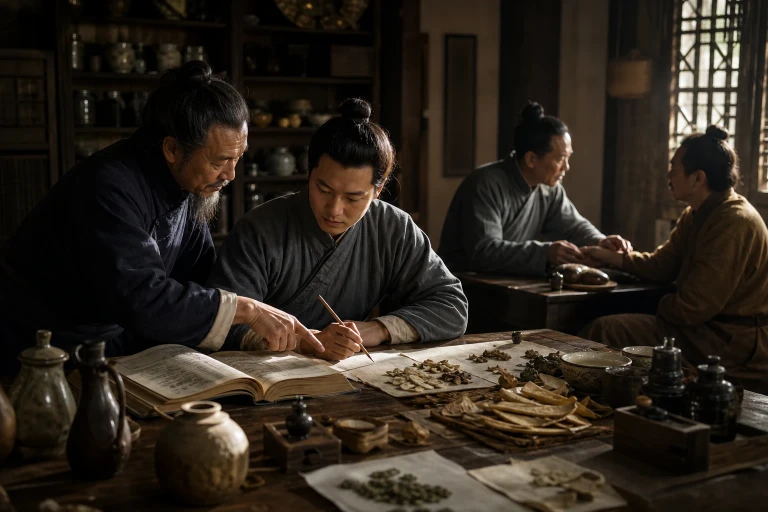
Exceptionally intelligent from childhood, Ye Tianshi possessed a rare gift for medicine, grasping complex theories and diagnostic principles the moment he heard them. Despite his natural brilliance, he remained remarkably humble and eager to learn throughout his life. He firmly believed that no single teacher possessed all medical wisdom, so he actively sought instruction from anyone whose medical skill surpassed his own in any specific area. Whenever he heard of a doctor who possessed a unique specialty, a secret family prescription, or a distinct diagnostic technique, Ye Tianshi would travel long distances to study under him, refusing to return home until he had thoroughly mastered the instruction. Between the ages of twelve and eighteen, he studied diligently under seventeen different masters. This open-minded approach allowed him to synthesize diverse medical traditions, blending classic theories with innovative practical methods to create his own unique clinical style.
Historical anecdotes reflecting extraordinary diagnostic skill
Many folk tales and fascinating legends surround Ye Tianshi’s life, illustrating his uncanny diagnostic accuracy and creative problem-solving. The following celebrated anecdotes are excerpted and adapted from Anecdotes of Ye Tianshi, compiled by the prominent Qing Dynasty writer Liang Zhangju.
Ye Tianshi’s uncanny diagnostic foresight
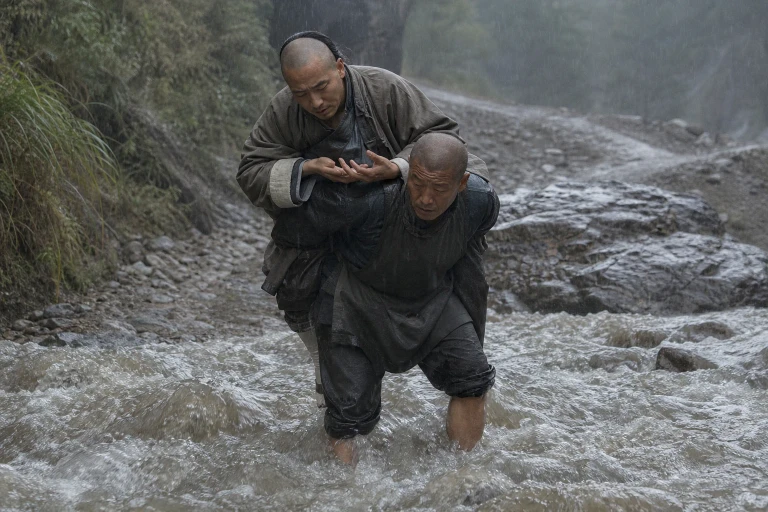
One day, Ye Tianshi was walking home when a sudden downpour washed out the mountain road. A local villager, recognizing the famous physician, offered to carry him across the raging floodwaters on his back. Touched by the man’s kindness, Ye Tianshi carefully observed the villager’s complexion and bodily markers during the crossing. Afterward, Ye Tianshi said to the villager, “On this exact day next year, you will die of a severe internal illness. If you seek treatment immediately, you may still survive.”
The villager, feeling completely healthy and strong at the time, did not believe the physician’s warning and dismissed the advice. When the predicted day arrived the following year, the villager suddenly developed a malignant sore on his head, accompanied by high fever and severe inflammation. Panicked, his family carried him to Ye Tianshi’s house for emergency treatment. Ye Tianshi examined the condition, shook his head in pity, gave him some money, and sent him away, saying, “The toxin has penetrated too deeply into your bone marrow. You will not live past tomorrow at dusk.” The sorrowful prediction proved entirely true, cementing Ye Tianshi’s reputation for miraculous foresight.
An unconventional method
On another occasion, Ye Tianshi was traveling through a rural village in a sedan chair when he noticed a young married woman picking mulberry leaves by the roadside. Observing her facial complexion, skin texture, and sluggish movements, he recognized that she was suffering from an acute condition. He instructed his sedan bearers to run over to the woman immediately and embrace her tightly in public.
The young woman became furious at this unexpected boundary violation and cursed them loudly, while her outraged husband rushed over and seized the sedan bearers, beating them severely. Ye Tianshi then stepped forward calmly, halted the altercation, and explained his actions: “This woman’s pox rash has reached the tissue layer just beneath the skin, but excessive internal cold and trapped heat have prevented it from erupting properly. I devised this unconventional method to provoke her intense emotional anger, which accelerates blood circulation and opens the skin pores. Tonight, the rash will break out rapidly. Otherwise, her condition would become critical within hours.” That very night, the woman’s pox rash emerged completely, relieving her internal fever and saving her life.
A desperate situation resolved through creative medical insight
Ye Tianshi had a young grandson, only one year old, who was suffering from a severe case of smallpox. The child’s fever raged, yet the pox eruptions refused to emerge, creating a dangerous internal toxicity. His daughter, desperate with fear, brought the infant to her parental home and begged her father to save him.
Ye Tianshi found the case extremely difficult because conventional herbal formulas failed to stimulate the skin. His distraught daughter repeatedly struck her head against the floor and wept bitterly: “Father, you always tell your patients that smallpox is not a fatal disease. Why can you save everyone else’s child but not your own grandson? If he must die today, then I shall die before him!” As she spoke, she picked up a pair of heavy household scissors and threatened to take her own life on the spot.
Ye Tianshi lowered his head and thought deeply for a long time. Finally, he ordered the child stripped completely naked, locked him alone in an empty storage room, and walked out of the house for the rest of the day. His panicked daughter desperately wanted to enter the room to comfort her child, but the solid door was firmly locked from the outside. Several groups of relatives were sent to urge Ye Tianshi to return home, but he ignored their pleas completely.
Not until late that night did Ye Tianshi return home and unlock the room. When the door was opened, the child was found resting peacefully, his body covered with fully emerged pox eruptions, each as round, clear, and shining as a pearl. The storage room had been naturally infested with summer mosquitoes. Ye Tianshi had cleverly relied on their gentle bites to stimulate the infant’s skin surface, promoting localized circulation and successfully drawing out the trapped toxic eruptions without causing permanent harm.
A lesson in tailoring treatment to seasonal qi
On another occasion, a neighboring woman suffered from severe obstructed labor and had been unable to give birth for several days and nights. Another local physician had already written a standard herbal prescription for difficult labor, but it yielded no results. The distressed husband brought the prescription to Ye Tianshi to seek his advice.
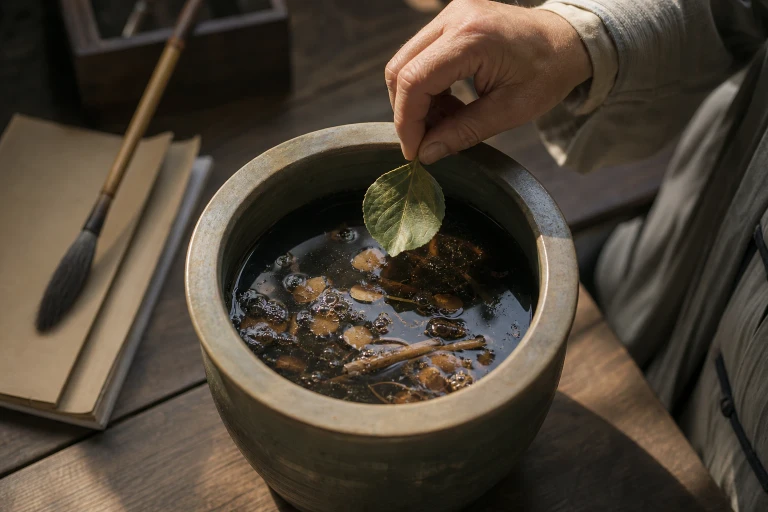
Ye Tianshi read the formula, picked up his brush, and added a single parasol-tree leaf as an adjuvant ingredient to the decoction. After taking the modified medicine, the woman gave birth smoothly within minutes. Impressed by this swift outcome, several local practitioners later tried to imitate Ye Tianshi by routinely adding a parasol-tree leaf to their own labor-inducing prescriptions, but their efforts proved ineffective.
Ye Tianshi chuckled at their blind imitation and explained: “I used the parasol-tree leaf because that specific day happened to mark the Beginning of Autumn, the exact moment when autumn qi causes leaves to fall naturally from trees. The leaf served as a symbolic and energetic catalyst to encourage downward movement in the body. After that day passed, what possible benefit could the leaf provide?” Ye Tianshi tailored his treatments not only to the specific pathology of the illness, but also to cosmic timing and seasonal changes, demonstrating the remarkable depth, subtlety, and brilliant flexibility of his medical art.
Translated by Cecelia and reviewed by Helen London
Follow us on X, Facebook, or Pinterest
