

Years of sweeping anti-corruption campaigns have failed to eliminate corruption within the Chinese Communist Party. Instead, investigations and purges have continued to reach ever deeper into the Party and military establishment, including officials once considered close to Xi Jinping.
In a purported prison letter disclosed by Australia-based legal scholar Yuan Hongbing, former senior Xi aide Zhong Shaojun offers a striking explanation for why. According to Zhong’s reported account, corruption among senior officials is no longer driven solely by greed or the desire for luxury. Increasingly, he claims, officials are accumulating money, moving assets, and building networks as protection against a future political crisis.
If his account is accurate, the change points to something more serious than ordinary corruption: a growing loss of confidence among those inside the system itself.
Corruption as “doomsday insurance”
A succession of prominent military figures and institutions have been caught up in investigations and purges, including Miao Hua, He Weidong, Li Shangfu, Wei Fenghe, the Rocket Force, and the Equipment Development Department.
In the purported letter, Zhong claims that after the CCP’s 20th National Congress in 2022, the psychology behind corruption among senior officials began to change.
During the eras of Jiang Zemin and Hu Jintao, he reportedly argues, corrupt officials often abused their power and accumulated wealth primarily to support extravagant lifestyles for themselves and their families.
Today, he claims, some senior generals and regional officials have a different motive.
Rather than simply seeking pleasure, they are allegedly accumulating money, moving assets, and placing trusted associates in key positions in preparation for the possibility of a future political collapse.
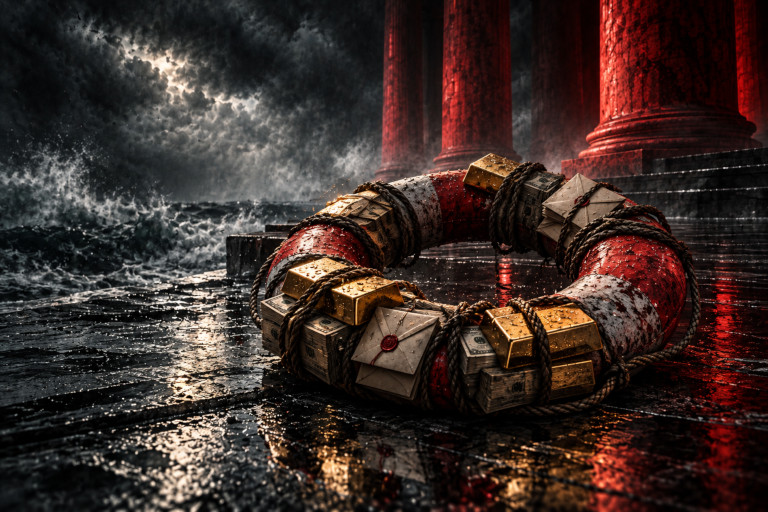
In other words, wealth is no longer merely something to enjoy. It has become a form of “doomsday insurance” — a reserve to draw upon if the political order suddenly changes and officials must protect themselves or escape.
Why Xi’ Jinpings own allies are not immune
Zhong uses this argument to explain why officials previously regarded as members of Xi Jinping’s own political camp have also been caught up in investigations and purges.
When a political system loses its ability to correct itself and officials lose confidence in its future, he reportedly argues, personal loyalty becomes increasingly fragile.
He compares the situation to sailors aboard a damaged ship. Even those personally chosen by the captain may begin scrambling for their own lifeboats once they believe the vessel is sinking.
According to the purported letter, widespread despair toward the top leadership has become an irreversible “political cancer” within the system.
Zhong even describes the anti-corruption campaign itself as another of Xi Jinping’s “unfinished projects” — a campaign intended to eliminate corruption but which, in his telling, has failed to remove the forces that continue to produce it.
Fear of instability at the grassroots
This sense of insecurity, according to Yuan Hongbing, extends far beyond the highest ranks of the Party and military.
Yuan has claimed that the CCP quietly established a “Central Social Governance Work Leading Group” in late 2025 and that Cai Qi, a member of the CCP’s Politburo Standing Committee, issued a confidential Party-wide directive in January 2026.
The concerns described in Yuan’s account focus heavily on groups outside the traditional structures of political control.
One is China’s large population of petitioners — people who seek redress from higher levels of government after grievances have gone unresolved locally.
Another is the vast number of food-delivery riders, ride-hailing drivers, unemployed young people, and others whom the authorities broadly classify as being in “flexible employment.”
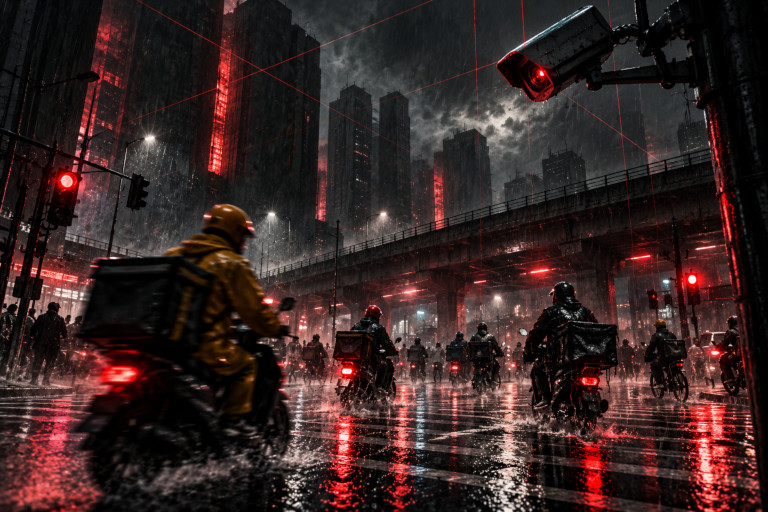
There are also informal groups formed by veterans, unemployed university graduates, migrant workers seeking to defend their rights, and others organizing outside official channels.
At the same time, local governments are under severe financial pressure. Civil servants have faced salary reductions and layoffs in some areas, while the machinery used to maintain grassroots stability is described as increasingly strained by a lack of funding.
Under such conditions, Zhongnanhai’s leaders are portrayed as fearing that the tightly controlled neighborhood-level system they once relied upon to monitor society is becoming less effective.
Overseas anti-CCP activism and the continuing efforts of Falun Gong practitioners to expose persecution and raise awareness about the nature of the Communist Party have added to those concerns.
The picture presented is one of growing pressure from both directions: division and distrust among senior officials above, and increasing frustration and instability below.
A system ruled by fear
According to this account, officials at the top turn against one another while the government responds to unrest below with expanding surveillance and social-control measures.
The purported letter alleges that political enemies within the upper ranks can be subjected to extreme forms of abuse, even as new security and monitoring bodies are created to watch ordinary citizens.
Zhong sees this combination — discord at the top, weakening control at the grassroots level, and mounting public resentment — as a warning sign of a political system approaching a profound crisis.
Whether his assessment proves correct remains to be seen. But the picture he paints is of a system increasingly governed not by confidence or loyalty, but by fear.
A prediction of historical reckoning
Near the end of the purported letter, Zhong turns from describing the political system to predicting Xi Jinping’s eventual fate.
He reportedly believes that although he himself may be reduced to a mentally incapacitated “living dead,” Xi Jinping will also ultimately face a severe reckoning.
The letter sets out two possibilities.
In the first, Xi Jinping is suddenly removed from power during a major political upheaval. Zhong invokes the example of Romanian communist leader Nicolae Ceaușescu, who was overthrown and executed in 1989, as well as Dong Zhuo, the notorious warlord of the late Eastern Han Dynasty whose violent death became a symbol of retribution against a tyrant.
In the second scenario, Xi Jinping remains in power until his natural death, but is condemned after a future political transformation, with even his remains subjected symbolically or literally to posthumous punishment.
The language is deliberately extreme. Zhong’s central contention is that years of political turmoil and suffering have accumulated grievances so deep that he believes a future reckoning is inevitable.
‘I only wish for a swift death’
The purported letter concludes with the statement that gives this article its title.
“I write this,” Zhong reportedly says, “to anger Chairman Xi into granting me an early death.”
The statement is chilling because, according to the letter, Zhong no longer regards death as the worst fate he could face.
He claims to have seen what happened to Liu Yazhou and fears that losing his own memory, reason, and ability to communicate would be worse than dying.
Yet Zhong’s reported decision to speak can also be understood as something more than desperation.
After describing a lifetime spent concealing his true thoughts and saying whatever was necessary to survive and advance within the political system, Zhong reportedly chooses, at the end, to say what he believes to be true.
An old Chinese saying holds that “when a person is about to die, his words are sincere.”
That idea lies at the heart of Zhong’s reported final message: A man who says he spent his career living by lies attempts, when he believes he has nothing left to lose, to recover some measure of his humanity by speaking openly.
His final words are therefore directed not only at Xi Jinping, but also at other officials who remain inside the CCP system.
Zhong’s reported experience stands as a warning that wealth, rank, and proximity to power may provide protection for a time, but they cannot erase the consequences of the choices a person makes.
Whether those who remain in power will heed that warning depends on whether they can awaken before it is too late.
See Part 1 here
This article reflects the personal views and opinions of the original author.
Translated by Chua BC
Follow us on X, Facebook, or Pinterest
