
What is most valuable in life? Some believe it is untold wealth; others, striking good looks; still others, supreme power and status. Yet wealth can be lost, looks fade, and power can be taken away. Only good character remains, serving as life’s crown and glory. By upholding your character, you safeguard your greatest treasure and reach life’s highest pinnacle.
In dealing with others, integrity comes first
Our recognition of a person often begins with trust in their character. Without trust, even the most capable individual will find meaningful success nearly impossible.
A large company was hiring a financial assistant. After several rounds of interviews, three candidates with evenly matched skills remained. To make a final decision, the boss asked each candidate the same question: “How could you help the company evade $500,000 in taxes?”
The first two candidates immediately offered to falsify the accounts. The boss nodded without comment and told them to wait. When the last candidate — a young woman — heard the question, she paused in surprise, stayed silent, and asked: “Are you sure you want to do that?” When the boss nodded, she immediately turned to leave and withdraw from the process.
At that moment, the boss stood up, smiled, and said: “Miss, please wait. You are the most honest and principled candidate here. Congratulations — you passed!” She was hired and eventually promoted to Chief Financial Officer, earning widespread respect.
As the Book of Rites states: “Virtue is gain.” Those with virtue inevitably reap rewards. Character is the ultimate touchstone — the essential foundation for how one conducts life.

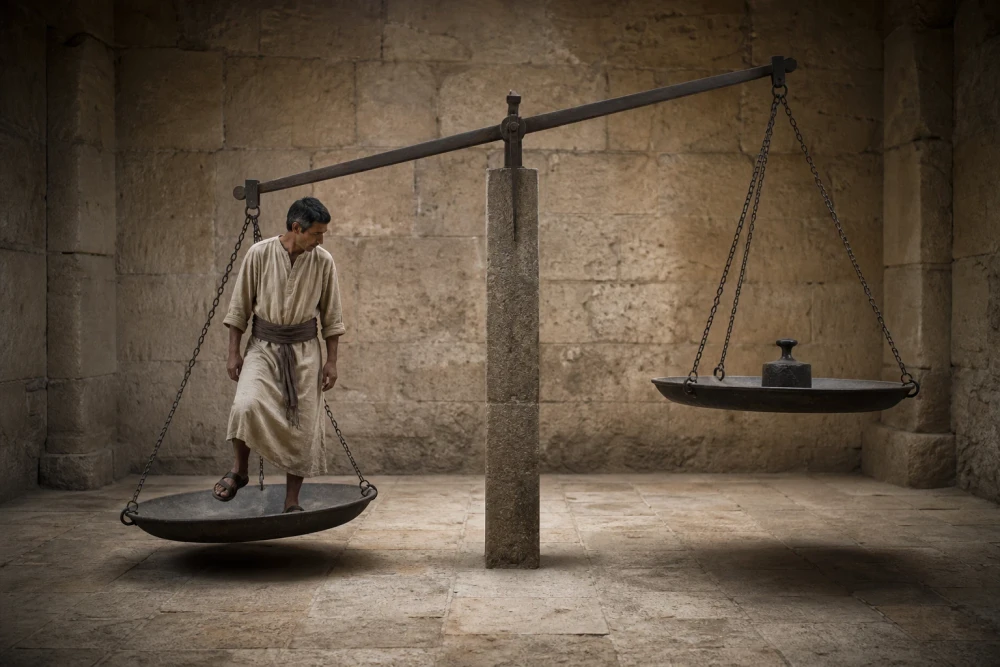
Consider an interesting fable: God used heavenly scales to weigh human character, placing a standard weight on one side. Those who weighed more than the standard were deemed highest caliber; those who weighed less were deemed lowest caliber.
A poor man arrived, stripped off his clothes, and stepped onto the scale. His weight far exceeded the standard. God praised him, saying: “Excellent! You are of the highest caliber.”
A wealthy man approached next. Fearing he might fall short, he wrapped a thick gold belt around his waist and stepped onto the scale. His side tipped heavily past the standard. But God shook His head and said: “This is bottom-grade.”
The rich man protested furiously: “This scale is inaccurate! That poor man has nothing, while I am wearing ten thousand pieces of gold — how can I weigh less than him?”
God replied: “This scale measures character, not wealth. Put simply, the poor man’s bones alone weigh far more than yours. Without the gold, your bones are virtually weightless!”
The most precious wealth in life is not financial abundance, but moral integrity. Good character is a person’s finest credential, directly shaping their long-term success, health, and happiness.
Getting along with others requires knowing how to show respect
One day, a commotion broke out at a school entrance when a woman began shouting abuse at a security guard.
She had arrived to visit a friend on staff and insisted she had already turned in her pass to the morning guard. Following standard procedure, the guard on duty simply asked her to sign in. Viewing this requirement as beneath her, she berated him: “You’re just a lousy security guard — what right do you have to tell me what to do?” The guard countered: “This is a school. We must follow procedure to protect the children’s safety.”
The woman began crying dramatically, demanding that onlookers judge the situation, and insisted on complaining to the principal. Fortunately, her friend arrived, assessed the situation, and repeatedly apologized to the guard. Onlookers agreed that the woman’s lack of manners and basic respect had caused the entire ordeal.
Whether someone is a security guard or a janitor, every person and profession deserves respect. Showing consideration, understanding, and tolerance for others’ daily hardships reflects fundamental character.
Human interactions act like a mirror. If you smile or show courtesy, others will return it. Morality can compensate for a lack of talent, but talent can never make up for a lack of morality. Respecting others is ultimately an act of respecting yourself.

Be grateful for life and keep a kind heart
From childhood, we are encouraged to cultivate compassion and practice kindness. Ultimately, the greatest benefactor you will ever encounter is the version of yourself that holds kindness in your heart.
An American named Aaron was searching tirelessly for work to feed his 2-year-old child. After securing a job interview, he spent his last $2 early one morning to board a bus across town for the appointment.
En route, the bus passed a serious traffic accident. Although the vehicle stopped, no passengers stepped forward to assist. Aaron asked the driver to wait briefly while he helped the injured victim. The driver replied: “The bus doesn’t wait for anyone. If you step off, I drive away.” After a brief struggle, Aaron got off, giving up his critical interview. The injured victim was rushed to the hospital and stabilized. Aaron later reflected: “I missed a job opportunity, but others will come. A human life is singular. At that moment, my only priority was saving a life.”
His selflessness gained widespread media attention. Soon after, he received numerous job offers — including one from the exact company where he had missed the interview. Financial contributions from supportive donors also significantly improved his family’s situation.
Kindness functions like a circle: when you live with gratitude and treat others well, your good deeds return in unexpected ways.
As one author noted: “Sometimes kindness does not reward you immediately, but it brings unexpected surprises; sometimes it takes a different form, allowing you to experience its vastness and true abundance.”

No matter how much you learn, you must learn to be a good person
“No matter how much you learn, you must learn to be a good person.” This famous insight comes from the renowned educator Tao Xingzhi. Throughout life, we must take responsibility for ourselves, treat others sincerely, practice tolerance, see things from different perspectives, stay grateful, and maintain a compassionate mindset.
Across a lifetime, personal character serves as our primary foundation. Character measures a person’s true worth, determines long-term success or failure, and stands as our strongest pillar of support. Possessing good character is ultimately our greatest asset!
Translated by Audrey Wang and reviewed by Amanda
Follow us on X, Facebook, or Pinterest
