
A Nordic media outlet once surveyed a broad spectrum of prominent public figures, asking a surprisingly simple yet profound question: What kind of person is most likely to achieve lasting success in life? The replies varied widely, reflecting diverse views on talent, intelligence, and ambition, but one concise response stood out: “Those who are easily impatient rarely succeed; those who are patient are far more likely to achieve greatness.”
Sensing that this particular insight captured a deeper truth, the organizers sent a follow-up questionnaire to a wider audience, asking whether they agreed with this specific point of view. The result was striking: 100% of respondents completely agreed with the premise. This universal consensus underlines a timeless reality that transcends cultures and eras: true accomplishment relies heavily on a single core virtue, which can be summed up in one word — patience.
Patience is far more than the simple physical act of waiting or enduring a delay without complaining. It is the mental and emotional capacity to remain calm and focused when progress is slow, tasks are difficult, circumstances are frustrating, or events are entirely beyond our immediate control. Impatient individuals are quickly derailed by minor inconveniences and surface-level irritations, making it nearly impossible to focus deeply on the complex, troublesome tasks required for genuine achievement.
Patient individuals, by contrast, approach every challenge with steady determination and measured steps. They recognize that significant outcomes take time to mature, and they are willing to give every endeavor the time it genuinely requires. Over time, while others burn out or abandon their pursuits in frustration, patient people quietly maintain their effort and move steadily closer to their long-term goals.
In almost every complex scenario in life, ultimate success does not belong to the person who moves fastest at the beginning. Instead, it belongs to the individual who can maintain a steady, disciplined pace over the longest period. Speed often invites careless mistakes, burnout, and premature surrender, whereas sustained endurance allows a person to navigate inevitable setbacks and outlast temporary challenges.
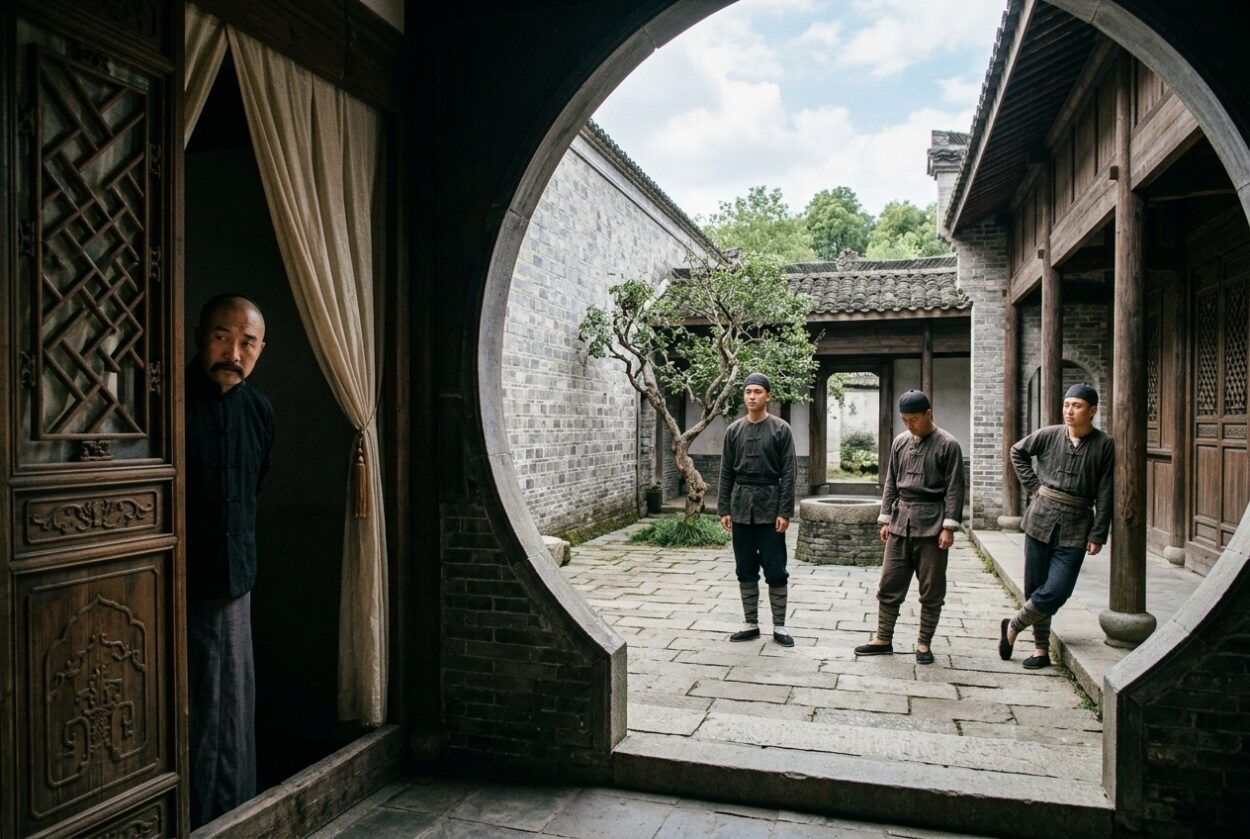
Quiet observation during moments of waiting reveals the true depth of human character
The historical record offers clear illustrations of how patience reflects deep internal strength. When the Huai Army was first established in 19th-century China, the military official Li Hongzhang recommended three promising young men to meet the senior leader, Zeng Guofan, for evaluation. Rather than receiving the candidates immediately in his quarters, Zeng quietly observed them from a hidden position nearby while they waited in the courtyard.
After half an hour, Zeng noticed that two of the men had already grown visibly restless. One paced around, constantly examining the furniture and room decorations, while the other stood upright but exhibited clear signs of inner anxiety and impatience. Only the third candidate remained completely calm, composed, and natural throughout the extended wait.
Although this third man’s physical appearance was ordinary, his overall demeanor radiated a calm, grounded stability. He simply clasped his hands behind his back and gazed peacefully at the drifting clouds, untroubled by the delay or the situation’s uncertainty.
After observing their natural behavior in an unscripted moment, Zeng Guofan formed a clear judgment about how each man should be deployed. He turned to Li Hongzhang and remarked, “Of the three men you recommended to me today, only one is truly fit to handle great responsibility.”
Li was surprised by the swift evaluation and asked how he could know their capabilities so quickly. Stroking his beard with a smile, Zeng replied, “To accomplish great things in this world, patience is the most crucial quality. Of these three, only one possesses true patience — he is the one who will become a great talent.”
History ultimately validated Zeng’s judgment. That third candidate was Liu Mingchuan, who later rose to prominence as a distinguished Huai Army general, played a critical role in the Sino-French War, and became the first governor of Taiwan.
True emotional composure grants individuals the space to reflect before taking action
What Zeng Guofan recognized in that brief period of forced waiting extended far beyond surface-level politeness or the physical ability to stand quietly. He recognized fundamental character. A person who cannot remain calm while waiting in a quiet room will almost certainly struggle to maintain composure when confronted with severe adversity, shifting uncertainties, sharp criticism, or unexpected setbacks on the battlefield or in leadership.
Conversely, someone with the inner discipline to quiet the mind and stay composed under pressure gains a vital strategic advantage: the mental space to think carefully before acting. Patience gives a person room to observe a situation objectively rather than react emotionally, reflect deeply on options rather than worry needlessly, and execute decisions deliberately rather than impulsively.
Patient individuals can tolerate all manner of external disruptions and noise without letting those distractions pull them from their main purpose. They can clear away internal worry and anxiety, maintain harmonious relationships with colleagues and subordinates, and remain intensely focused on the primary task at hand.
An ancient proverb wisely advises: In the face of great matters, maintain composure; steady your footing and do not panic. When formidable difficulties arise in work or life, blaming fate or complaining about unfavorable circumstances accomplishes nothing. What truly matters is keeping a clear mind, evaluating the situation carefully, and executing the next correct step with calm confidence.

Self-governance under difficult circumstances represents a quiet yet formidable form of strength
True patience must never be mistaken for weakness, passivity, or resigned defeatism. It is a quiet, resilient form of inner strength — the unique ability to govern yourself completely when external circumstances try to govern and overwhelm you.
When your mind learns to rise above temporary personal feelings, and you make a conscious effort to consider the broader picture in all things, you naturally begin to act with greater serenity and grace. You become less reactive to immediate discomforts and far more resilient against long-term fatigue.
When patience shifts from an occasional conscious effort to a core part of your character, you become fully prepared to endure prolonged hardships. You gain the stamina to stay steady through inevitable defeats and the wisdom to finish complex projects that impatience would have made you abandon halfway through.
Sometimes, the individual who appears to be doing the least in a moment of stillness is actually revealing the most about their potential. In those quiet, unglamorous moments of waiting, true character has a way of making itself clearly known to the world.
Translated by Cecilia and reviewed by Tatiana Denning
Follow us on X, Facebook, or Pinterest
