
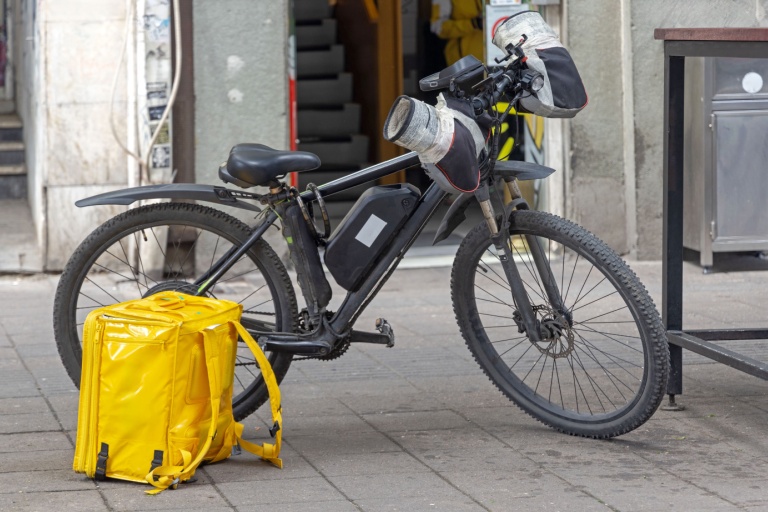
On the day his daughter, Yiyi, turned one month old, single father Chen Ping completed a special “travel preparation” for her: He used a stone slab to level the footrest of his electric bike, allowing the infant carrier to sit securely — this makeshift “seat” would carry his youngest family member on a journey for survival. Yiyi, thus, became part of the “second generation of delivery riders.” This electric bike was the tiny, mobile fortress her father had fought to build for her in the vast city.
Delivery babies
At 2 a.m., Liu Ying rides her blue windbreaker up Chongqing’s slopes. She hears her daughter Qiuqiu, swaddled in the carrier on her back, crying again from the jostling. Liu Ying, however, dares not break to avoid delays. She pulls her daughter close, gently patting her back as she waits for her to calm down.
She sings to her child, against the wind: “Little bunny, open the door. Quick, Qiuqiu, stop crying. After this delivery, we’ll go home.” As she hums, she feels her daughter gradually quiet down on her back, her whimpers fading. Qiuqiu, a two-and-a-half-year-old girl, clings to her mother Liu Ying’s back every night from 10 p.m. to 3 a.m., accompanying her on food delivery.
Nighttime deliveries pay higher rates, allowing Liu Ying to earn over 100 yuan in four or five hours. Chongqing’s weather, though, is unpredictable. When sudden rain hits, Liu Ying — still with orders left to deliver — hurriedly covers her child with a plastic sheet. Squinting against the downpour, she pedals on. She fears Qiuqiu catching a cold; medical bills would cost hundreds more. While two-and-a-half-year-old Qiuqiu nestles in his delivery rider mother’s baby carrier, in Huizhou, Guangxi, three-year-old Yiyi also lives this “temporary life,” atop her father Chen Ping’s delivery e-bike.
In 2022, before his daughter was born, Chen Ping ran a mobile barbecue stall in Huizhou. When Yiyi was just a month old, Chen Ping spotted a portable car seat on an online shopping platform and decided to start delivering takeout. Each morning, Chen Ping sets out carrying his infant in the carrier — a basket measuring roughly 70cm long, 30cm wide, and 20cm tall — placed on the front footrest of his motorcycle. He remembers the struggles when he first started caring for his daughter alone. He set an alarm to feed her every four hours. At first, he didn’t know how to handle her gently; however, later, things improved.
The electric bike is just over a meter long, but filled with formula, a thermos, wet wipes, and scattered toys. Frequently, used diapers are bagged and hung on the front of the bike. After each diaper change, Chen cleanses his daughter with fresh water. Children like Yiyi grow within a confined space, bending and stretching from a half-cubic-foot infant carrier to a child seat.
In the spring of 2024, Ren Xuemin, a mother in Jinan, Shandong, began delivering food with her one-and-a-half-year-old son, Fufu. She previously worked in construction, but a project’s debt spiral forced her into delivery. Initially, she was overwhelmed by worries, but over the years, she became very resilient. Now, at 42, divorced, and raising a son and daughter from her previous marriage, Ren wears a bright smile.
The ark of life
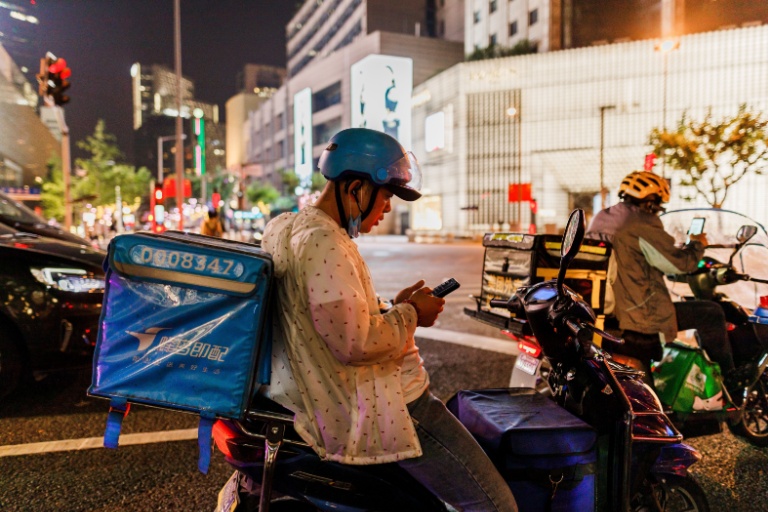
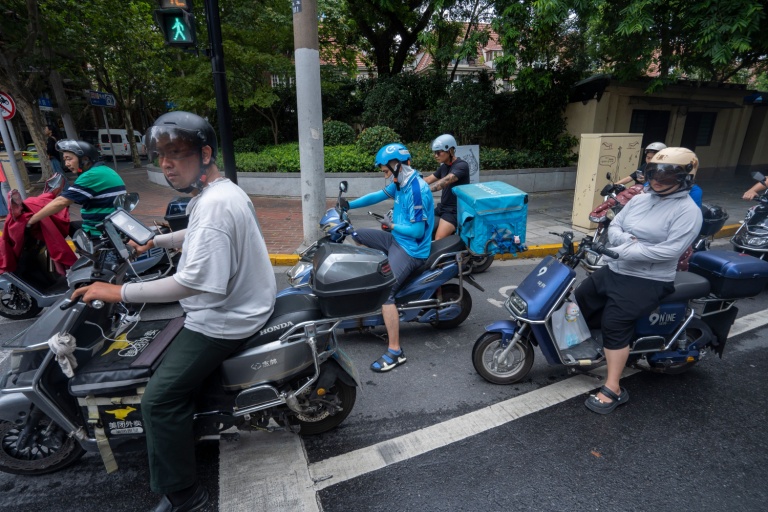
Delivery riders share similar life stories: rural origins, limited education, and an early departure from home to seek opportunities. Chen Ping’s daily earnings are modest. Delivering orders with a child under one year old requires frequent stops to change diapers, feed the baby, and handle unexpected situations. Statistics show that about four-fifths of delivery riders work outside their registered hometowns. The challenges faced by those with families remain largely unwritten.
Chen Ping’s parents divorced when he was young. His father remarried, and his grandfather raised him. At 15, he left home to work, drifting through Inner Mongolia, Guangdong, and Zhejiang before settling in Huizhou over a decade ago. Three years ago, when Yiyi was born, he admitted he wanted a child because he feared no one would bury me when I died. With children, at least I wouldn’t rot away alone at home.” Yet, when he first cradled his seven-and-a-half-pound princess, Chen Ping felt at home. Shortly after Yiyi’s birth, he separated from the child’s mother. He pleaded with his stepmother to help care for the baby, offering monthly compensation, but she refused.
He chose to keep his daughter by his side. He had been a barbecue vendor for five years and continued with the stall — parking the stroller nearby while regular customers occasionally helped watch her. Unfortunately, business slowed after the pandemic, and he abandoned that idea.
He spotted an infant carrier on an e-commerce platform and thought that delivery work might be a solution. Yiyi grew up on her father’s delivery bike. She consumed five cans of formula milk per month, each costing 280 yuan. Combined with diapers and clothing, her monthly expenses exceeded 3,000 yuan. He felt sorry for Yiyi, especially in bad weather conditions. He once left her with a familiar shopkeeper, only to receive a frantic call within half an hour: “Hurry back! Your daughter is wailing heartbreakingly!”
In 2024, during her first Chinese New Year after divorce, Ren Xuemin had only a little over 2,000 yuan left in her account. She had to find a way to earn money. On New Year’s Eve, she took both children along to deliver food. Fufu has been accompanying his mother on delivery runs for over a year. He even considers this hustle his own “job” — pressing elevator buttons in buildings, occasionally snatching his mother’s phone, dashing into restaurants to announce “Meal pickup!” in his childish voice.
Living in the moment
When Yiyi was just over a year old, she outgrew her infant carrier. Chen Ping switched her to a child seat and later upgraded again to a safer model. Yiyi resembles him, yet at 37, Chen Ping looks older than his age due to his stressful life. Exhausted, he feels like “a delivery machine,” existing solely to fulfill orders and care for his child, with no time for himself. Sometimes, he works eight or nine hours straight and still earns less than 100 yuan, which deepens his anxiety.
Now, Ren Xuemin can steadily support this small family and feels content and proud. To earn more, she switched from freelance delivery to dedicated routes, gradually stabilizing her monthly income above five thousand yuan. She hopes her child will soon be able to play among his peers.
Ren Xuemin often says that her hard life rarely allows her to make choices aligned with her desires. She has developed a simple philosophy: focus on the present and, when problems arise, calmly tackle them one by one. Over these three years of single parenting, he’s been there for Yiyi’s countless “firsts” — her first children’s festival, her first day of kindergarten, her first parent-teacher meeting. “I was present for every important moment in her world. That feeling is truly wonderful,” he said.
As Yiyi gradually grew older, new challenges quietly emerged. Recently, 3-year-old Yiyi has started to show signs of self-awareness. She dislikes listening to Chen Ping and prefers playing by herself. One morning, Chen Ping woke to find his toothpaste squeezed onto the bathroom floor, the brush tossed into the toilet — Yiyi’s handiwork. Her father felt both exasperated and amused, but needing to deliver food orders, he hurried to the convenience store for replacements.
Ren Xuemin recalls her daughter saying: “Mom, I feel pleased right now.” — once when the three of them lay chatting in bed, another time when the girl was leaning against her shoulder on the backseat of the electric bike. In those moments, Ren Xuemin’s heart finally felt at peace.
Translated by Eva and edited by Laura Cozzolino
Follow us on X, Facebook, or Pinterest
