
In modern society, the number of young couples struggling with infertility has surged, leading to a proliferation of specialized hospitals and clinics dedicated to treating this condition. Many couples, however, have undergone treatment for years without seeing any resulting children. Perhaps, few people consider that infertility is not necessarily a disease; the root cause of many hardships, illnesses, and misfortunes lies in the karmic retribution accumulated through evil deeds — some from past lives, others from this present life.
Below is the story of two individuals from the Qing Dynasty, both over 50 years old and without children. Having lived most of their lives without seeking medical treatment, they suddenly welcomed a precious child. How did they achieve this?
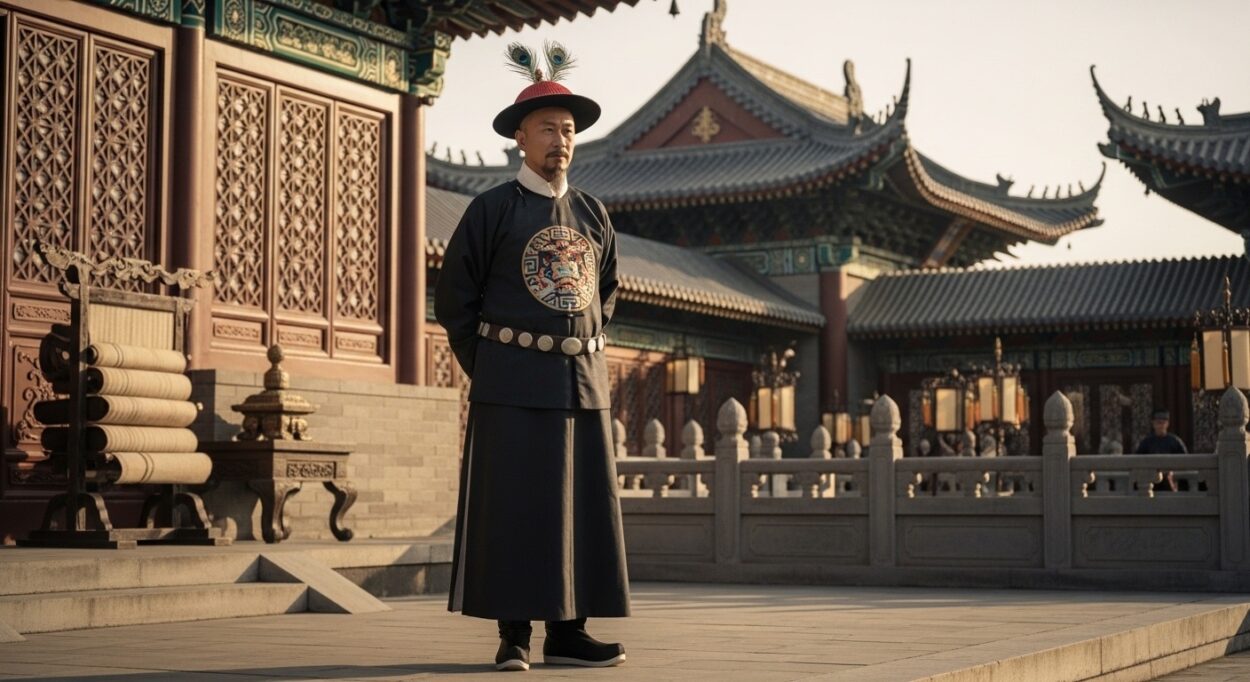
During the Jiaqing reign, there was a distinguished minister named Qin Weiyue. A native of Lanzhou, Gansu, he passed the imperial examination in the 55th year of the Qianlong reign (1790) and was later selected as a junior scholar at the Hanlin Academy. Emperor Jiaqing held him in high esteem, entrusting him with the management of salt affairs in Hubei and the supervision of the provincial imperial examinations. He served with integrity and achieved remarkable administrative accomplishments. Though he lived a simple life, he donated all his savings to establish an academy that nurtured many students in virtue and learning.
In the eyes of others, his father, Old Mr. Qin, received imperial honors because of his son’s distinguished official career. Yet legend holds that it was his virtuous father who brought him good fortune and divine blessing.
Qin Weng was exceptionally intelligent from a young age and went out to make his living before he was even of age. Later, he met a provincial governor who highly valued his character and asked him to help manage his household affairs. Many years later, Qin Weng established his own business, and his life grew increasingly prosperous.
By the time he was over forty, however, he still had no children. Every day at home, he would reflect on his situation and sigh, wondering who he would leave his fortune of tens of thousands of dollars to. He took a large sum of silver to the capital, intending to purchase an official title for himself, but then reconsidered: “The officialdom is like a stage — one person’s performance ends, and another takes the stage. After all that hustle and bustle, one can accomplish very little of substance.”
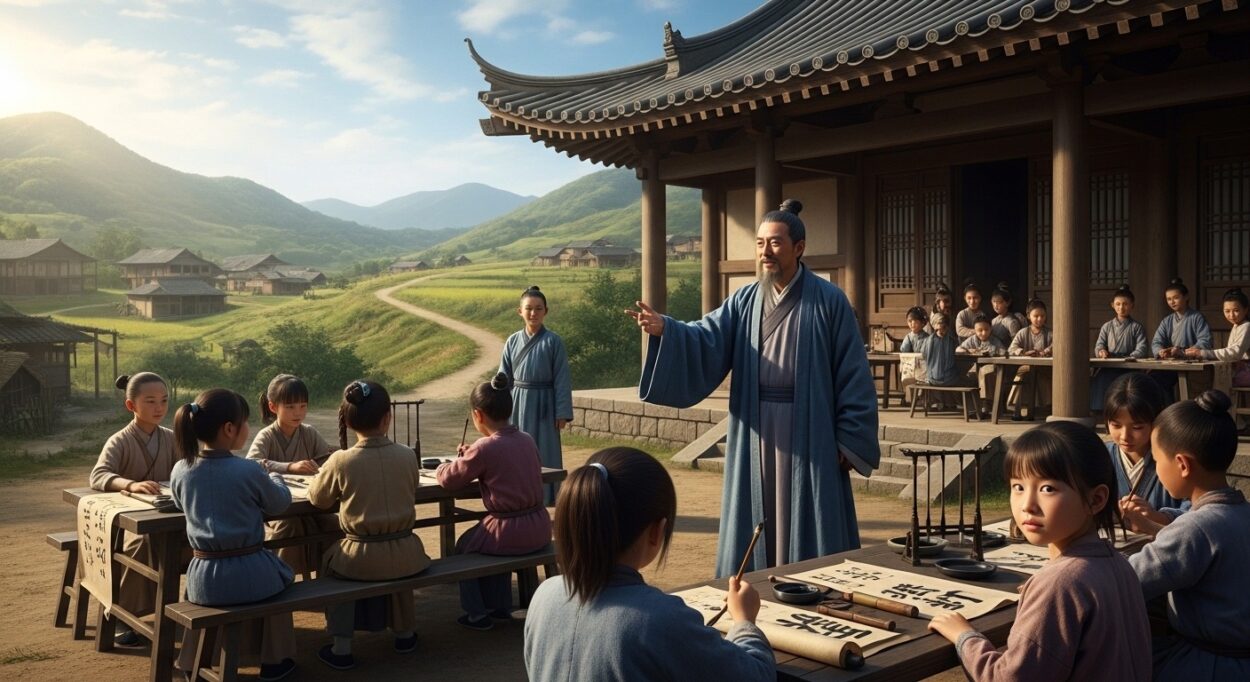
At that moment, he recalled that in his hometown, many children were unable to attend school due to poverty. He immediately resolved to return home and establish a free school, providing them with the opportunity to study and gain wisdom. So using the silver he carried, he purchased a large number of books in the capital and then transported them back to his hometown in bundles.
The school in his hometown was soon built. On the first and fifteenth of every month, Qin Weng would personally visit the school to donate writing brushes, ink, and paper to the children and encourage them to study diligently. At the same time, he used his own savings to open a “Charity Hall,” providing poor families with free clothing, medicine, and other daily necessities. If they faced other difficulties, he would also offer thoughtful and thorough assistance.
Before long, Mr. Qin’s wife gave birth to two sons in quick succession. The eldest was Qin Weiyue; the younger son passed the provincial examination and served as a county magistrate in a certain part of Shanxi. In his later years, Mr. Qin saw his grandchildren also don official caps. He appreciated the joys of family life for decades, passing away only after reaching his nineties.
Coincidentally, the Jiang family of Changzhou County in Suzhou Prefecture also produced a man of integrity, named Jiang Weicheng (style name Gongbiao). After placing first in the entrance examination for the Imperial Academy, he was appointed by the court to the post of Director of Education.
Jiang Weicheng was a man of integrity, known for his generosity in daily life. In the second year of the Kangxi reign (1663), a famine struck the region. Together with his younger brother (Jiang Dezhen, courtesy name Gongxun), he established a soup kitchen in the town to distribute free porridge to the victims. Although the daily requirement for millet reached as much as 3,000 kg, he was willing to exhaust his entire fortune rather than let the local people go hungry. As a result, he saved many lives.
Jiang Weicheng’s acts of kindness were not merely a passing impulse; even after the famine subsided, he did not cease his charitable work. At that time, he had befriended many prominent figures and men of integrity. At Jiang Weicheng’s suggestion, each of them donated over 100 acres of farmland, and together they founded an orphanage that gradually took in many abandoned infants.
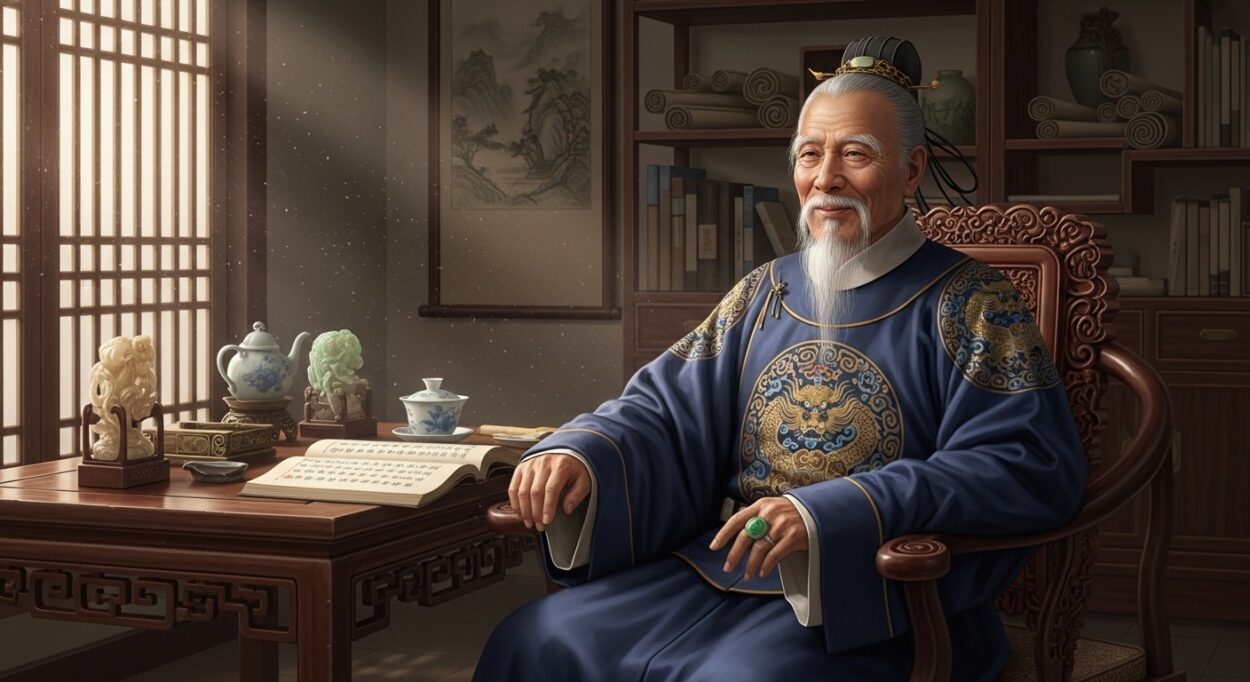
Jiang Weicheng remained childless until he was sixty. At that time, he lived in seclusion on a mountain in Dongting. Every time he came down from the mountain, he would spend three days by the shores of Lake Tai, purchasing aquatic creatures from fishermen and then releasing them back into the water. Later, his wife arranged for two concubines to care for him.
Over the course of five years, they bore Jiang Weicheng five sons. He was extremely close to his younger brother; upon learning that his brother’s son had died in infancy, he gave one of his own sons to his brother. Many years later, the two brothers passed away one after the other. To commemorate these two men of integrity, the villagers built a “Temple of the Two Jiang Sages” in the local area.
Translated by Audrey Wang and edited by Laura Cozzolino
Follow us on X, Facebook, or Pinterest
