
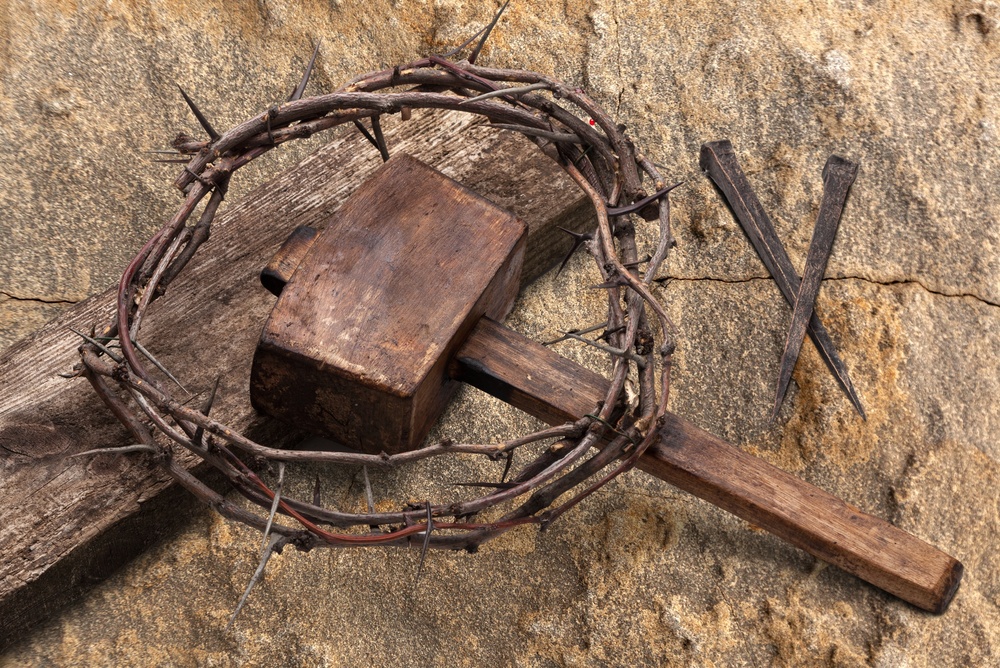
Each Christmas season, front doors across Europe and North America are adorned with wreaths woven from holly leaves and bright red berries. To many people, they are simply festive decorations. In Christian tradition, however, holly carries a deeper meaning. Its sharp leaves have long been associated with the crown of thorns placed on Jesus before the crucifixion, while the red berries are often seen as a reminder of the blood he shed.
That symbolism gives the Christmas wreath a more solemn dimension. Beneath its beauty lies a memory of suffering, sacrifice, and faith under trial. It also points back to one of the most enduring stories in Christian history: the story of the Crown of Thorns itself.
Jesus’s final journey
The New Testament describes the last days of Jesus with unforgettable intensity. After the Last Supper, he was betrayed by Judas and arrested. He was then brought before Pontius Pilate, the Roman governor of Judea, and condemned to death under the charge of claiming to be the Messiah and the “King of the Jews.”
Before the execution, Roman soldiers mocked him. They placed a crown woven from thorns on his head, dressed him in a robe, and bowed before him in cruel imitation of royal honor. What was meant as humiliation became, for later believers, one of the most powerful images of sacred endurance.
Jesus was then scourged and forced to carry the cross through Jerusalem to Golgotha, the site of the crucifixion. Christians later came to know this route as the Via Dolorosa, or “Way of Suffering.” To this day, it remains one of the most meaningful pilgrimage paths in the Christian world.

Pilgrims who walk those narrow streets are not simply retracing the steps of a historical event. They are entering a story that has shaped faith, art, memory, and devotion for nearly two thousand years.
How the relics were lost
In the aftermath of the crucifixion, preserving anything connected to Jesus would have been dangerous. Crucifixion was not just a form of execution in the Roman world. It was a public warning meant to terrify dissenters and disgrace those deemed enemies of imperial power.
In such a climate, it is not hard to understand why the relics associated with the Passion were not openly treasured from the beginning. Objects linked to Jesus’s suffering, including the cross, the nails, and the crown of thorns, could easily have been discarded, hidden, or buried in haste. Time, war, and political upheaval only made their disappearance more likely.
The story changed in the early fourth century. After Constantine I issued the Edict of Milan in A.D. 313, Christianity gained legal recognition within the Roman Empire. The faith that had once been persecuted was now moving toward the center of imperial life.
According to early church tradition, Constantine’s mother, Helena, who became known for her Christian devotion, traveled to Jerusalem in search of places and objects connected to Jesus’s final days. Later accounts credit her with helping uncover relics associated with the Passion, including wood identified as the True Cross and other sacred objects revered by generations of Christians.
Whether viewed as history, sacred tradition, or a mixture of both, this moment marked the beginning of the Crown of Thorns’ long reappearance in public memory.
From imperial treasure to royal devotion
Once relics connected to Christ’s Passion entered imperial and church custody, they were treated with immense reverence. Over time, Constantinople became one of the great centers for such treasures. Yet sacred value did not protect political powers from decline. As centuries passed, financial strain and instability changed the fate of many treasured objects.
By the 13th century, the Crown of Thorns had become entangled in the desperate politics of a troubled age. It was no longer only a religious relic. It had also become an object of enormous prestige and material value.
That was when King Louis IX of France entered the story.
Louis IX, later canonized as Saint Louis, did not treat the relic as a diplomatic curiosity or a ceremonial prize. He regarded it as a sacred trust. In 1238, he arranged to acquire the Crown of Thorns at enormous expense, spending a sum so large that it became one of the most remarkable religious purchases of the medieval world.
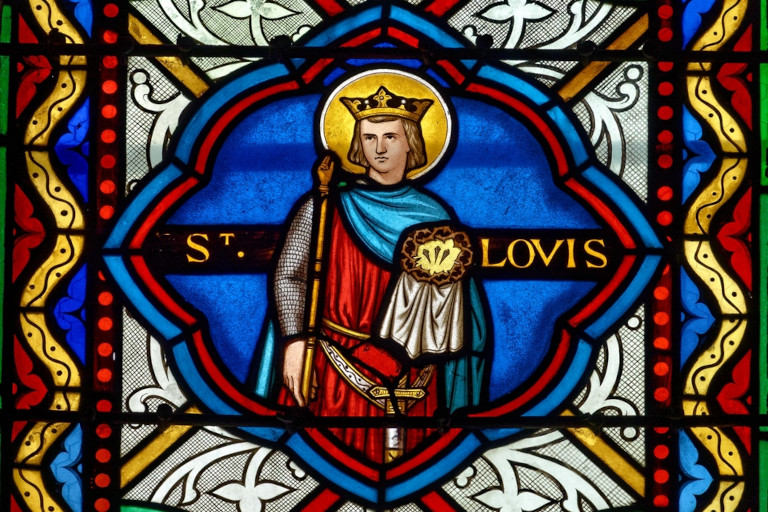
His actions after acquiring it made an even greater impression. Rather than receiving the relic with ordinary royal splendor, Louis is said to have humbled himself before it. In one of the most famous scenes associated with the crown’s arrival in France, he removed his royal garments, dressed simply, and took part in a barefoot procession as the relic was brought toward Paris.
This was not staged as a display of political triumph. It was presented as an act of reverence. Church leaders, nobles, clergy, and ordinary citizens gathered to witness the arrival of what they believed to be one of the holiest objects in Christendom.
To house the relic, Louis IX built the Sainte-Chapelle in Paris, one of the great masterpieces of Gothic religious architecture. The chapel itself became a jewel box of light and stone, created to honor the sacred treasure placed within it.
A relic that survived the centuries
In later centuries, the Crown of Thorns was transferred to Notre-Dame Cathedral, where it became one of the cathedral’s most revered treasures. It remained a relic of extraordinary spiritual significance, shown publicly on special occasions and preserved with deep ceremonial care.
Then came April 15, 2019.
As flames tore through Notre-Dame, people around the world watched in shock. The cathedral’s roof and spire were devastated, and the fear was not only for the building itself, but for the priceless objects held within it. Among the treasures saved from the fire was the Crown of Thorns.

That rescue gave the relic’s story a startling modern chapter. For believers, it felt almost impossible to separate the moment from the long history of danger, disappearance, recovery, and preservation that had followed the crown across the centuries. Once again, it had survived.
Why the crown still matters
The Crown of Thorns is not remembered for its beauty. It is remembered because of what it represents.
It stands for humiliation transformed into meaning. It recalls the suffering of Jesus, but it also reflects the trials that faith itself has endured through persecution, neglect, political upheaval, and the passage of time. The relic’s story is inseparable from the story of Christianity’s rise from a hunted faith to a world-shaping religious tradition.
That is why the image of holly at Christmas still carries such power. Its thorned leaves and vivid berries are not merely decorative. They quietly echo a much older memory: that glory and suffering are often intertwined, and that what appears fragile can endure far longer than empires.
The next time a Christmas wreath hangs on a door, it may be worth seeing it not just as a seasonal ornament, but as a symbol pointing back across centuries to one of the most enduring stories in Christian memory.
Translated by Chua BC
Follow us on X, Facebook, or Pinterest
