
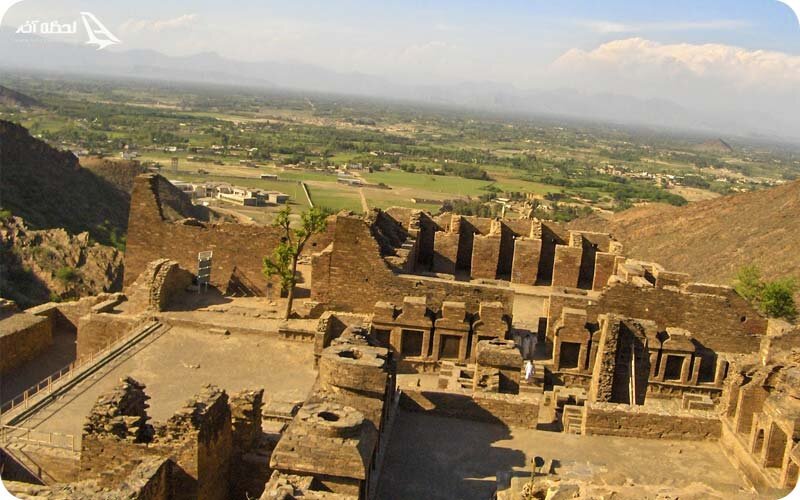
There is a village in southwestern Iran called Jandi Shapur. Fourteen kilometers southeast of the city of Dezful, where the Khuzestan plain meets the foot of the Zagros Mountains, farmers still work the land above a sprawling ghost. The ruins beneath their fields stretch more than three kilometers in length and nearly two in width — the low mounds of a city that was once the greatest center of learning on earth. Archaeologists have mapped it. Historians have studied it. And almost nobody in the West has heard of it.
That absence is not an accident. It is a symptom.
The city was called Jundishâpur or Gondishapur. At its height in the 6th and 7th centuries A.D., the distinguished historian of science George Sarton called it ‘the greatest intellectual center of the time.’ It was home to the world’s first true university — a structured institution with a curriculum, examination standards, licensed graduates, and annual international congresses that drew scholars from Persia, Greece, India, Syria, and Rome. It had a teaching hospital that introduced the concept of ward segregation by pathology, the forerunner of every hospital wing and specialty unit in existence today. Its library held every known medical text in the ancient world, translated from Greek, Sanskrit, Syriac, and Pahlavi.
It saved Western civilization. And it is not in the story we tell about Western civilization. The knowledge that powered the Renaissance did not originate in the Renaissance. It was rescued, translated, transmitted, and held in trust across centuries — by people Europe later forgot to thank.
Understanding why Jundishâpur has been lost to the Western imagination requires understanding what it actually did. Not as an abstraction. As a sequence of specific, dateable, irreversible acts of preservation that form an unbroken chain from the libraries of ancient Athens to the scholars of medieval Baghdad to the printing presses of Renaissance Europe. Pull any link from that chain, and the philosophical and scientific tradition we call ‘Western’ does not emerge in the form we know it. It may not emerge at all.
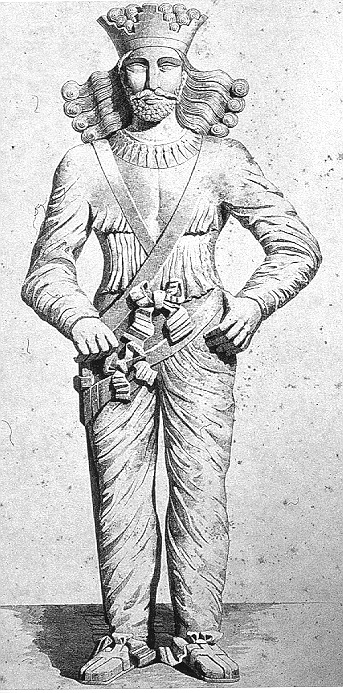
What tolerance looks like in the Jundishâpur Ancient University
Jundishâpur was founded in the 3rd century A.D. by the Sassanid emperor Shapur I, the same king who defeated three Roman emperors in succession — capturing Valerian himself and leading him back to Persia in chains. Among the tens of thousands of Roman, Greek, and Syrian prisoners Shapur relocated to his new city were craftsmen, engineers, physicians, and scholars. He gave them land, gave them freedom within the empire, and put them to work building. The city was designed in a Roman grid pattern, almost certainly by the captured Antiochene planners who had built cities for a living. From its first stones, Jundishâpur was cosmopolitan not by ideology but by composition. It was structurally plural.
This matters. Tolerance at Jundishâpur was not a policy position. It was an architectural reality. When your city is built by Greeks, administered by Persians, doctored by Indian physicians, and attended by Nestorian Christian scholars who arrived as refugees, pluralism is not something you choose — it is the condition of daily function. The city could not operate any other way.
That structural pluralism was then formalized under the reign of Khosrow I Anushirvan, who ruled from A.D. 531 to 579. and whom the Greeks who sheltered in his empire would later call ‘Plato’s Philosopher King.’ Khosrow had read Plato’s Timaeus, the Gorgias, and the Phaedo. He sent his personal physician, Borzuya, to India with a diplomatic mission to return not with treasure but with philosophers and medical texts. Borzuya translated the Panchatantra from Sanskrit into Persian — arguably the first major act of intercultural literary transmission in recorded history. Indian physicians and mathematicians flocked to Jundishâpur to teach alongside Syriac-speaking Nestorian Christians and Persian Zoroastrians.
Khosrow also held what the sources describe as annual international congresses — structured scholarly gatherings where physicians and philosophers from across the known world assembled, debated, and had their ideas tested against one another. The first congress on record was convened in A.D. 550. This is, to be precise, fourteen centuries before the first modern international scientific conference. Fourteen centuries before the first international scientific conference, a Persian king was convening annual congresses of scholars from every civilization — not because he was virtuous, but because he was hungry for what they knew.
The Jundishâpur hospital operated on principles that would not be rediscovered in Europe for over a thousand years: graduated clinical training, the separation of surgical from internal medicine, ethical codes for physicians, and the requirement that new doctors pass a licensing examination before treating patients. These are not romantic approximations. They are documented practices, described in contemporary sources, whose transmission can be traced to the Islamic hospitals that followed — and from there to the medical schools of Salerno and Montpellier that trained the first European physicians of the medieval period.
The year the lights almost went out
In A.D. 529, the Byzantine Emperor Justinian I did something that would reverberate for centuries. He closed Plato’s Academy in Athens. The Academy had been founded by Plato himself in approximately 387 B.C. It had operated in various forms for nearly 900 years. It was the institutional home of Neoplatonism — the philosophical tradition that held the material world to be a shadow of a higher, immaterial reality accessible through contemplation and reason. It was, in the most literal sense, the living vessel of the Greek philosophical tradition. Justinian shut it down because he considered it a pagan institution incompatible with Christian orthodoxy.
The last scholars of the Academy — among them Damascius, Simplicius, Priscianus, Hermias, Eulamius, and Isidore — had nowhere to go. The intellectual tradition they carried was now contraband in their own empire. They left Greece and traveled east.
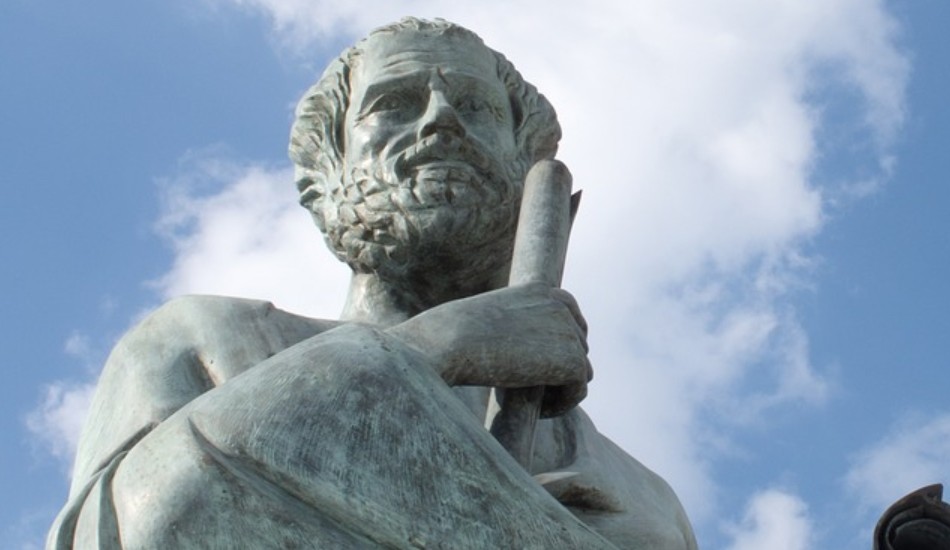
They went to Jundishâpur
Khosrow I welcomed them. He had been at war with Justinian’s empire for most of his reign, and the enemies of his enemy were, in the most pragmatic of ways, useful. But the sources are consistent that Khosrow’s interest in the Greek philosophers was genuine and personal. He commissioned them to translate Greek and Syriac philosophical texts into Pahlavi — the written language of Sassanid Persia. Works on medicine, astronomy, mathematics, and philosophy were systematically rendered into a new language, embedded in a new culture, and preserved in a new library.
For two centuries, as Europe moved through what it would later call its Dark Ages — as the Roman infrastructure collapsed, as Latin literacy contracted, as manuscripts rotted in unattended monastery cellars — the accumulated philosophical and scientific inheritance of ancient Greece was alive and actively studied in Persia. Not in translation alone. In practice. In the hospital wards, Hippocratic and Galenic medicine was being taught, debated, and extended. In the astronomy tables compiled at Jundishâpur, which would still be in use in Baghdad in A.D. 800, while Europe called those centuries dark, they were only dark in Europe. In Persia, the lights had never gone out — they had simply moved.
The relay
When the Arab armies conquered Persia in A.D. 638, they encountered Jundishâpur intact. The conquerors did something that history does not always celebrate: they kept the school running. For two more centuries, many of the leading minds of the new Islamic civilization received their education at Jundishâpur from Christian teachers trained in the Greco-Persian synthesis that the city embodied.
It was the physicians of Jundishâpur who were summoned to Baghdad when Caliph al-Mansur fell ill in the 8th century. It was the Jundishâpur-trained doctor Jurji ibn Jibril ibn Bukhtishu who became the director of the great Baghdad hospital, and whose family would dominate Islamic medicine for generations. The organizational model of the Jundishâpur academy — its hospital structure, its examination standards, its synthesis of traditions — became the template for the Baghdad House of Wisdom, the institution that would transmit this inheritance to the Western world.
The House of Wisdom, at its height in the 9th century under Caliph al-Ma’mun, received the baton that Jundishâpur had carried for four centuries. Greek texts that had been translated into Syriac, then into Pahlavi, then into Arabic, were now being translated again into Latin. They traveled from Baghdad to Cordoba, from Cordoba to Toledo, from Toledo to the scholars of Paris, Oxford, and Salerno who would form the intellectual backbone of the European Renaissance.
Ptolemy’s Almagest. Aristotle’s corpus. Hippocrates. Galen. The mathematical works of al-Khwarizmi — whose very name gives us the word algorithm, whose decimal system gave Europe the numerals it still uses. All of it was carried across centuries in a chain of custody that ran through a ruined city in southwestern Iran, which farmers still plow over today. The knowledge did not teleport from Athens to Florence. It traveled. Person by person, library by library, translation by translation — carried by people who understood that what they held was too important to drop.
The legacy is scattered and still blooming
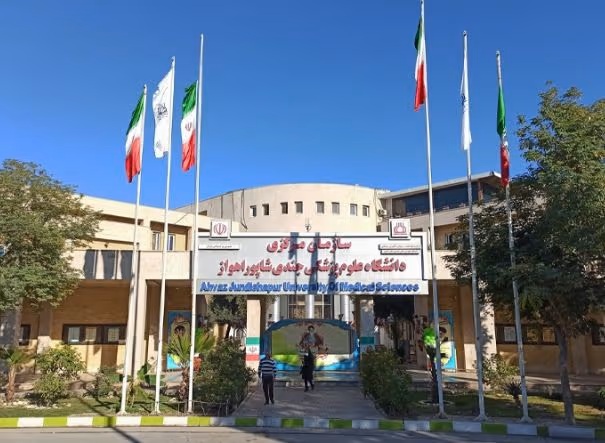
In 1955, the Iranian government founded the Jundishapur University of Medical Sciences near the ancient ruins, drawing symbolic lineage from the academy. Today, it operates across multiple campuses and hospitals. The ancient site itself remains largely unexcavated — the archaeology is still catching up to what the historical sources have described for centuries.
But the deeper legacy of Jundishâpur is not in Iran. It is distributed throughout the entire architecture of modern medicine and science in ways that have largely gone unattributed. The hospital as a teaching institution — where you learn by doing alongside those who know, where theory and practice are held in the same building — that is a Jundishâpur invention. The physician licensing examination, the ethical oath, the ward round, the idea that medicine is a discipline with standards rather than a trade with techniques — these have a genealogy, and that genealogy runs through Persia.
The concepts of pharmacology, ophthalmology, surgery, and hospital administration that were developed and systematized at Jundishâpur traveled with Arab and Persian physicians to Europe via Spain and Sicily, embedded in the texts that European medical schools would study for centuries. Ibn Sina’s Canon of Medicine — the foundational medical text of medieval and Renaissance Europe — is itself a synthesis of the Jundishâpur tradition. When European students read the Canon, they were reading a Persian Muslim scholar’s integration of Greek Hippocratic medicine, Indian Ayurvedic practice, and the clinical protocols of the world’s first teaching hospital. They just did not know it.
Nothing new under the sun
There is a question underneath all of this that the story of Jundishâpur forces into the open. Why does knowledge need to be rescued at all? Why does the accumulated understanding of a civilization — its medicine, its mathematics, its philosophy — require a relay station in a foreign empire to survive? Why does wisdom have to be smuggled across borders, translated into new languages, held in trust by strangers, before it can return to the civilization that produced it? The answer touches something deeper than historical contingency. It touches the nature of knowledge itself.
The scholars of the Italian Renaissance who first read Plato in the original Greek — made possible by Byzantine scholars fleeing the Ottoman conquest in the 15th century, carrying manuscripts west — did not believe they were discovering something new. They called what they were doing the recovery of prisca sapientia: ancient wisdom. They understood their project as remembering, not inventing. Copernicus, Kepler, Bacon, Newton — the foundational figures of what we call the Scientific Revolution — each, in their own way, expressed the conviction that they were uncovering truths that had been known before, truths that had been present in ancient texts they were now finally learning to read correctly.
Copernicus did not invent heliocentrism. He recovered it from Aristarchus of Samos, who proposed it in the 3rd century B.C. Newton’s laws were, in his own framing, stones taken from an Egyptian temple to build a new one. The Renaissance was an act of remembering dressed as a revolution.
This is not a diminishment. It is a revelation. It means that knowledge is not a linear accumulation progressing from ignorance toward truth. It is something more like a standing wave — a pattern that re-emerges in different forms, in different languages, in different civilizations, because it corresponds to something real about the structure of the world. The same principles surface in Vedic mathematics, Greek geometry, and Islamic algebra, not because one tradition copied another, but because they were all looking at the same reality with sufficiently refined instruments.
What Jundishâpur understood, structurally, was that the instrument is the institution. You do not preserve knowledge by locking it in a vault. You preserve it by building a community of practice around it — by teaching it, debating it, testing it against the sick body in the hospital ward, measuring it against the stars in the astronomical tables, arguing it in the annual congress where the scholars of five civilizations sit in the same room and refuse to agree until the argument is settled.
Modern science has inherited the methods of that tradition while losing its memory of where those methods came from. It has kept the examination, the peer review, the ward round, the clinical trial — all Jundishâpur architecture — while severing the connection to the philosophical frame that gave those practices their meaning. In the ancient world, science and sophia were not two disciplines. They were two aspects of one practice: the disciplined investigation of how the world actually is, in the service of understanding how to live well within it.
The divorce between science and wisdom is not a sign of maturity. It is a symptom of a particular historical rupture — the same rupture that made Jundishâpur necessary in the first place. Every time an empire decides that certain knowledge is dangerous and shuts the academy, the knowledge does not disappear. It goes somewhere else. It waits. It gets translated. And eventually, sometimes centuries later, it returns as a new discovery — now validated by the instruments the intervening centuries have built — and the civilization that receives it does not recognize it as its own inheritance. There is nothing new being discovered. There is only old knowledge returning home, wearing the clothes of the era that rediscovered it.
What we owe the ruins
The mounds near Jandi Shapur are not a monument to a lost civilization. They are evidence of a continuous one. The knowledge that passed through those walls is still passing through the hospital where you were last treated, through the mathematical notation you use without thinking, through the philosophical categories that structure your sentences, even when you do not know their origin.
Jundishâpur did not save the Renaissance through heroism. It saved it by being open. By being the kind of place where a Zoroastrian king could call himself a student of Plato, where a Nestorian Christian could teach Greek philosophy to a Persian astronomer, where an Indian physician could sit in a room with a Syrian translator and a Roman-trained surgeon and argue about the nature of fever until they arrived at something true.
That is what preserving knowledge actually requires. Not vaults. Not monuments. Not institutional prestige. It requires the conditions in which honest inquiry can happen across the boundaries that political and religious authority keep trying to draw.
Every time those boundaries close — every time an academy is shut, a library burned, a tradition declared heretical, a language of scholarship suppressed — Jundishâpur becomes necessary again. Someone has to hold the flame. Someone has to welcome the refugees. Someone has to build a city where all the traditions can argue in the same room. The ruins are still there under the farmers’ plows. What passed through them is still moving.
Follow us on X, Facebook, or Pinterest
