
The human body is a marvel of biological engineering, but it has strict limits. Among the many ways a person can perish, freezing to death in the wilderness is widely considered one of the most terrifying. When the cold sets in, it chips away not just at physical warmth, but at the psychological resolve to survive. In situations where rescue seems impossible, many understandably lose hope, succumbing to the creeping lethargy of hypothermia. Yet, history occasionally presents us with anomalies—stories of survival so profound they challenge our understanding of human physiology.
One such story unfolded in the desolate, snow-choked landscapes of northern Sweden. It is the tale of Peter Skyllberg, a 44-year-old man who endured two months trapped inside a frozen vehicle under conditions that should have been fatal. Through a combination of environmental luck, basic gear, and a rare biological response, Skyllberg looked into the abyss of a subarctic winter and survived.
Trapped in the subarctic void
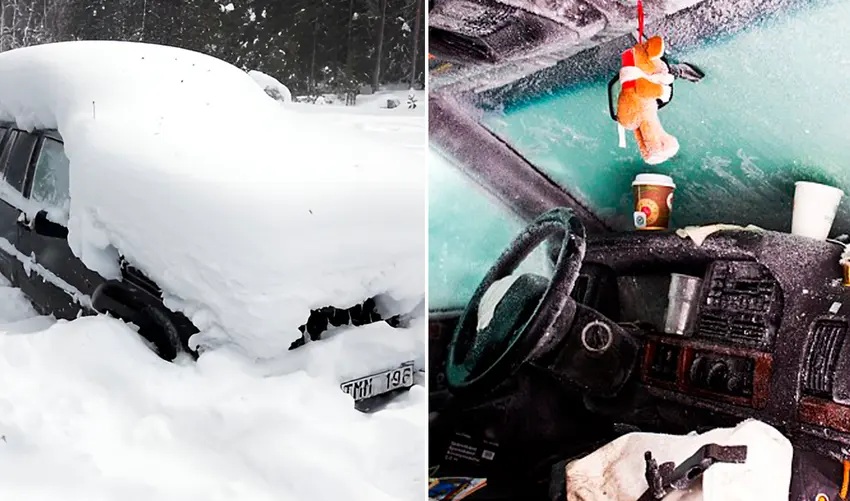
The ordeal began on a remote, snow-covered track near the town of Sävar in northern Sweden. While driving through the isolated region, Skyllberg’s car became hopelessly bogged down in a massive snowdrift. In this part of the world, a simple driving mishap can instantly transform into a life-or-death struggle. The snow quickly accumulated around the vehicle, burying it under a dense, heavy blanket of white.
With temperatures outside plummeting to a bone-chilling –30°C (–22°F), escaping on foot was not a viable option. Without specialized arctic gear, walking into the wilderness in such temperatures guarantees death by hypothermia within hours. Skyllberg was forced to make a definitive choice: stay with the vehicle and pray for rescue.
As the days turned into weeks, the reality of his situation became increasingly grim. Skyllberg had no food supplies inside the car. His only source of sustenance was the very element trapping him: snow. By scraping snow from the inside of the windows or opening the door just enough to scoop it up, he was able to stay hydrated. However, consuming snow presents its own dangers, as the body must expend precious caloric energy to melt the ice into water, further lowering internal body temperature. Despite having virtually no resources, Skyllberg clung to life inside his frozen metal cocoon for an astonishing 60 days.
The miraculous discovery
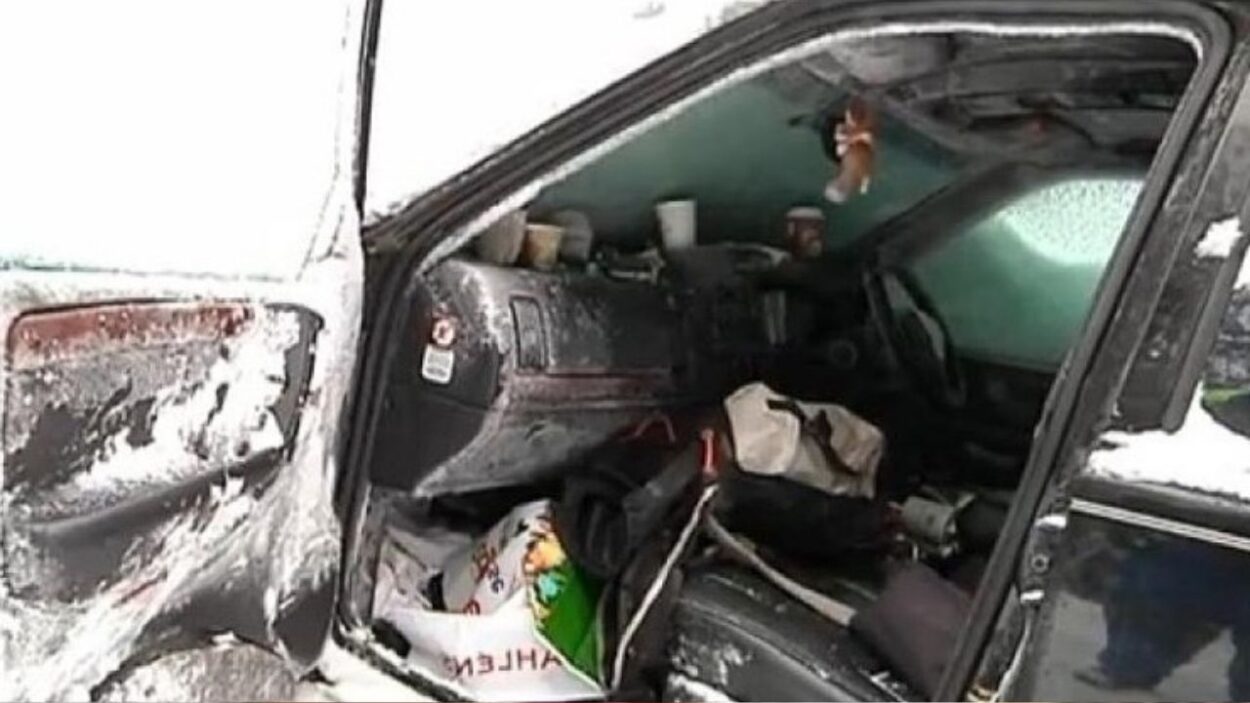
Skyllberg’s rescue was not the result of an organized search party, but a stroke of absolute luck. Two months after he first disappeared, a snowmobile enthusiast was riding through the remote area. Spotting the top of a vehicle protruding from a drift, the rider initially assumed it was an abandoned wreck. Curious, he approached and began digging through more than a meter of packed snow to reach the windows.
Wiping away the frost, the rescuer was shocked to see movement inside. Curled up in a sleeping bag on the back seat was a gaunt, ghostly figure.
The medical reality upon rescue
Though Peter Skyllberg was miraculously alive, he was on the absolute brink of death. Emaciated from two months of starvation and severely hypothermic, he was entirely unable to move and could barely whisper a few incoherent words.
Emergency services were rushed to the scene, and Skyllberg was transported to Umeå University Hospital. The medical staff who treated him were stunned by his survival. Dr. Ulf Segerberg, the chief physician overseeing his recovery, remarked that he had never witnessed or read about such a case in his entire medical career.
The science of survival: The snow-cave effect
How does a human being survive for two months in a frozen car without food? Dr. Segerberg and his team pointed to a phenomenon known as the “snow-cave effect.”
While the snow trapped Skyllberg, it also saved him. The thick layer of snow covering the vehicle acted as natural insulation, shielding the car from the howling, subarctic winds. Inside the buried car, the temperature likely stabilized around 0°C (32°F). While freezing to a human, 0°C is significantly warmer than the catastrophic –30°C ambient temperature outside.
Furthermore, Skyllberg’s clothing and his sleeping bag provided critical layers of insulation. By trapping his body heat within the sleeping bag, he was able to maintain a core temperature just high enough to keep his vital organs functioning. Even so, doctors noted that humans cannot survive indefinitely if their body temperature drops to match a freezing environment, unlike cold-blooded animals, which can tolerate freezing temperatures. Skyllberg was operating at the absolute razor’s edge of human tolerance.
The hibernation hypothesis
Beyond the physical insulation provided by the snow and sleeping bag, doctors sought a physiological explanation for how Skyllberg survived 60 days without food. The average human can survive only a few weeks without nourishment before the body begins to digest its own vital tissues, leading to organ failure.
| Survival Factor | Standard Human Limit | Peter Skyllberg’s Experience |
| Time Without Food | 3 to 4 weeks | Approx. 8.5 weeks (60 days) |
| Sustenance | Balanced caloric intake | Snow water only |
| Ambient Temperature | Variable | Sustained down to –30°C |
Dr. Stefan Branth, a metabolic expert, suggested that Skyllberg may have entered a state reminiscent of human hibernation. He hypothesized that the combination of extreme cold and starvation triggered a severe metabolic slowdown. By entering this low-energy state, Skyllberg’s body temperature likely dropped slightly, minimizing his caloric expenditure. His heart rate and respiration would have slowed dramatically, allowing his body to stretch its meager fat and muscle reserves over two months rather than two weeks.
Sweden’s forbidding geography
To truly appreciate the extremity of Skyllberg’s survival, one must understand Sweden’s geography. Situated on the Scandinavian Peninsula in Northern Europe, Sweden is a vast, sparsely populated country. It has an average population density of just 25 people per square kilometer, but this population is heavily concentrated. Roughly 87% of Swedes live in urban areas, which cover only 1.5% of the country’s total landmass.
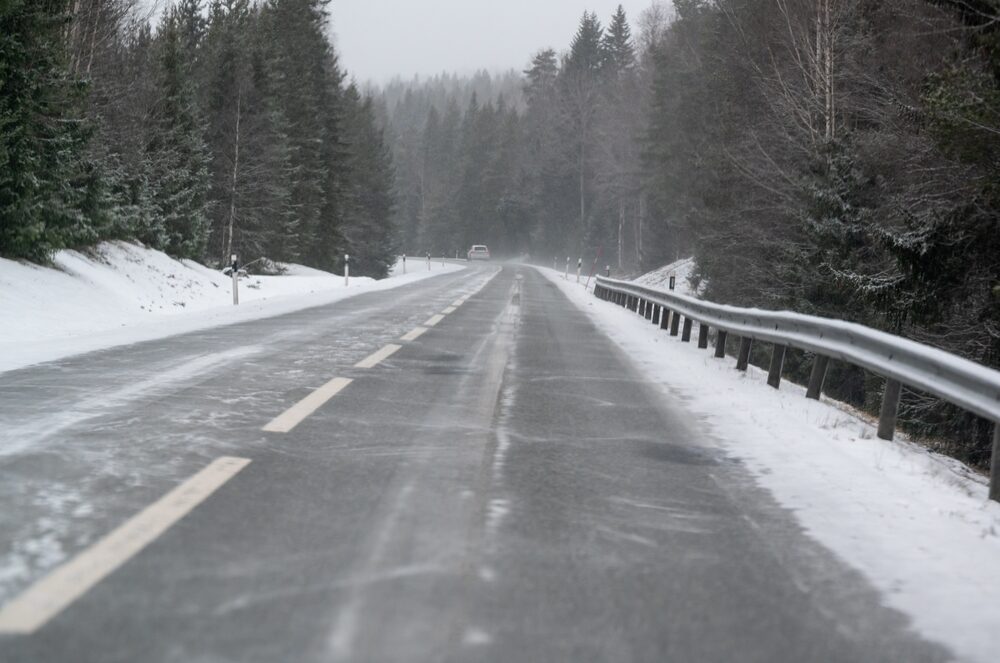
The remaining territory is dominated by nature, with dense forests covering 64% of the land. In the northern regions, where Skyllberg was trapped, the environment transitions into a harsh subarctic climate. Unlike the temperate continental climate of central and southern Sweden, the north experiences incredibly short, cool summers and long, bleak, bitterly cold winters. It is a beautiful but unforgiving landscape where the wilderness can swallow a car whole, leaving a person completely isolated from civilization.
Peter Skyllberg’s rescue remains one of the most extraordinary survival stories in modern history. It serves as a profound testament to the hidden resilience of the human body and the quiet power of the will to live, even when buried under a meter of subarctic snow.
Translated by Cecilia and edited by Amanda
Follow us on X, Facebook, or Pinterest
