
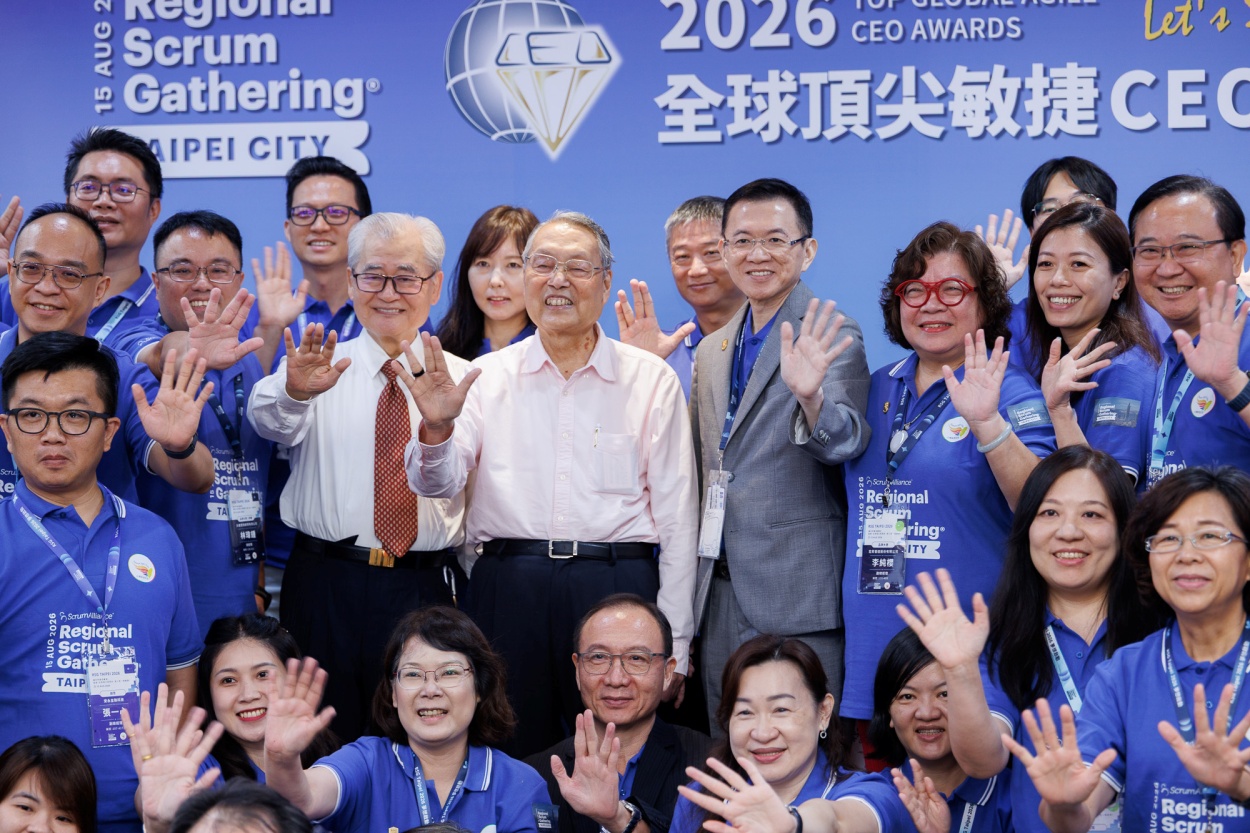
Regional Scrum Gathering (RSG) Taipei 2026 was held at the National Taiwan University Hospital International Convention Center in Taipei on Saturday, August 15. Licensed by the international Scrum Alliance and hosted by the Taiwan Agile Tribe (TAT), the gathering adopted the theme “Launching Dreams: Let the World See Taiwan.”
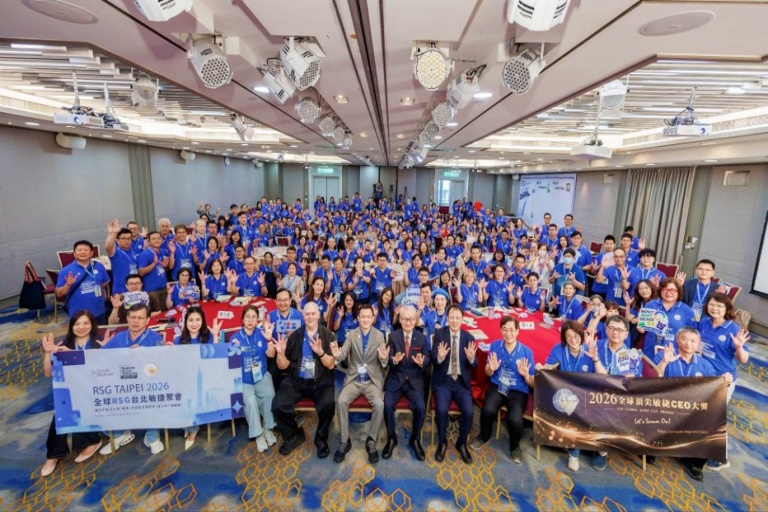
This year’s RSG Taipei introduced a distinctive format designed specifically for CEOs and senior decision-makers. Rather than focusing primarily on Agile practitioners such as engineers, project managers, and Scrum Masters, the event centered on executives and organizational leaders, exploring how Agile thinking can influence corporate strategy, governance, and high-level decision-making.
From agile teams to the executive suite
Agile has traditionally been associated with software development and information technology. However, as artificial intelligence and rapidly changing markets reshape virtually every industry, Agile thinking is increasingly relevant to corporate leadership itself.
Dr. Roger Chou, Taiwan’s International Agile Ambassador, a Certified Scrum Trainer (CST), and a newly elected member of the Scrum Alliance global board, argues that the biggest obstacle to Agile transformation is often not the teams implementing it, but the leadership making the decisions.
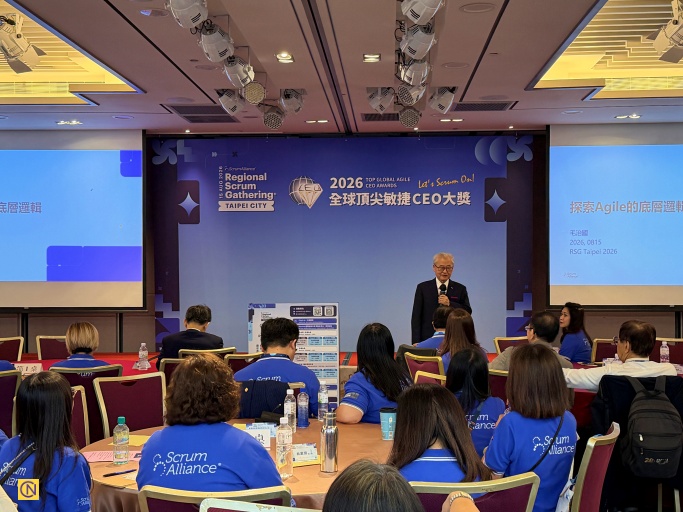
“Agile rarely gets stuck with the engineers,” Chou said. As AI increasingly participates in coding and decision-making, he emphasized that executives must also develop the ability to make decisions quickly, adapt to changing information, and continuously learn. Without Agile thinking, he noted, even good decisions may not be fast enough to keep pace with technological change.
This perspective forms the foundation of RSG Taipei 2026: Agile must begin with senior leadership and extend into every industry.
A gathering built around facilitation
One of the most distinctive features of this year’s event was its emphasis on facilitation rather than conventional keynote-driven learning.
Participants were encouraged to bring their own unresolved strategic and organizational challenges into the room. Through facilitated dialogue, peer exchange, practical exercises, and cross-industry discussion, leaders could examine complex issues from multiple perspectives and explore potential solutions together.
The program featured several interactive tracks built around three themes: “Seeing Real Challenges,” “Deep Participation and Co-Creation,” and “Opening Authentic Dialogue.” Rather than simply listening to presentations, participants were encouraged to engage directly with the issues confronting their organizations.
A roundtable deep-dive session during lunch further encouraged cross-industry conversations, allowing executives to exchange experiences and perspectives in an informal setting.
Leaders from business, government and academia
The keynote program brought together perspectives from business, government, and academia. Featured speakers included Dr. Mao Chi-kuo, former Premier of Taiwan, and Stan Shih, founder and Honorary Chairman of Acer Group.
Their participation highlighted an important message of the gathering: Agile is no longer merely a methodology for technology teams. Its principles can also inform public governance, corporate leadership, innovation, and long-term organizational strategy.
The event also featured international facilitation expertise. Lawrence Philbrook (Larry), an internationally recognized facilitation master, led the closing session, guiding participants through reflection, dialogue, and convergence after a full day of executive-level exchange.
Two global attendance records
RSG Taipei’s significance within the international Agile community is also reflected in its previous editions.
In 2022, RSG Taipei attracted 888 registrations, setting a record for the highest attendance in RSG events worldwide at the time. Two years later, the 2024 edition surpassed that record with 1,111 registrations, establishing a new global attendance high.
With two consecutive editions setting global attendance records, Taipei has demonstrated its ability to bring together a large and diverse Agile community. In 2026, however, the organizers chose a different approach: rather than pursuing scale, they condensed the event into a focused, single-day gathering centered on senior leadership and meaningful dialogue.
The goal was to transform years of Agile experience in Taiwan into an executive-level conversation that could also resonate with the international community.
Recognizing agile leadership across industries
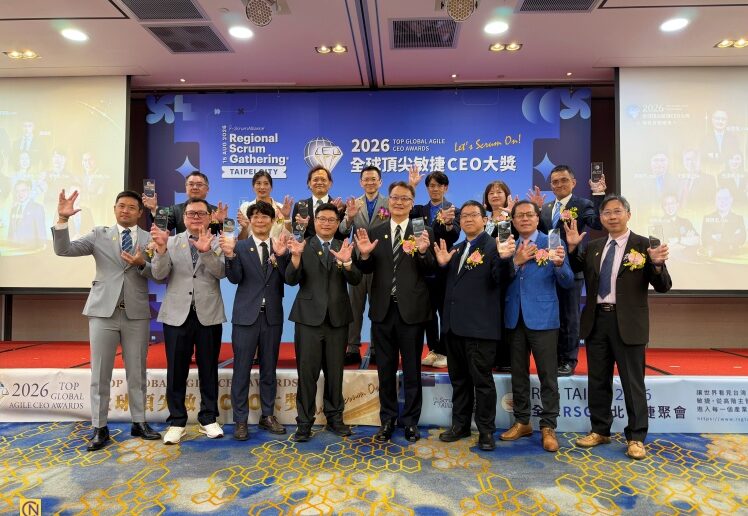
The event also featured the fourth annual Global Top Agile CEO Awards, recognizing 14 executives for their achievements in applying Agile thinking to organizational leadership and transformation.
The recipients represented a broad range of industries, including manufacturing, construction, consumer services, healthcare and biotechnology, digital technology, and education. Their recognition illustrated how Agile principles are increasingly moving beyond software development and into the wider business and organizational landscape.
Let the world see Taiwan
As the Product Owner of RSG Taipei, Chou has articulated one central vision for the gathering: “Let the world see Taiwan. Agile starts with senior leadership, and reaches into every industry.”
That vision captures the broader significance of RSG Taipei 2026. Rather than simply introducing another management methodology, the event sought to create a new conversation about how leaders make decisions, develop talent, respond to uncertainty, and prepare their organizations for an AI-driven future.
By bringing senior executives from different industries into the same room, RSG Taipei 2026 positioned Taiwan not merely as a participant in the global Agile movement, but as a place where new approaches to leadership, facilitation, and organizational transformation are being explored and practiced.
From Taipei to the world, the message is clear: Agility is no longer just about how teams work. It is about how organizations lead, decide, learn, and adapt.
Follow us on X, Facebook, or Pinterest
