
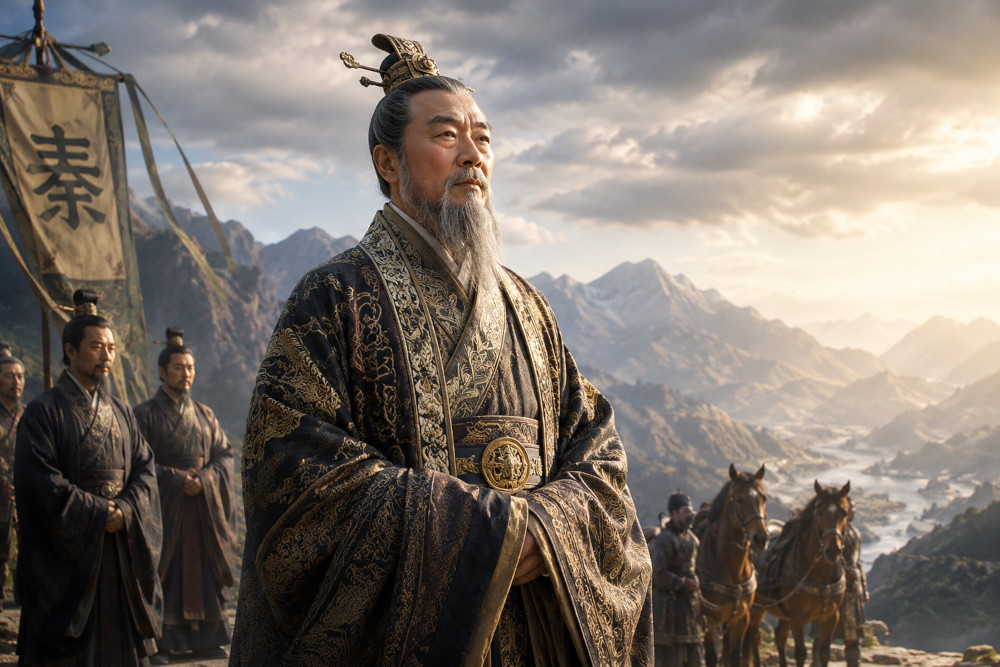
“Heaven has no favorites, yet it always stands with the good.”
This ancient saying, often quoted as an encouragement to cultivate kindness and virtue, comes from Chapter 79 of the Tao Te Ching. It expresses a central idea in traditional Chinese thought: Heaven and the natural order are impartial, treating all things without favoritism, yet those who do good and accumulate virtue may receive an unseen protection.
In this view, blessings are not simply matters of luck. A person’s thoughts and actions help shape what follows.
Good thoughts bear good fruit
An old Chinese saying goes: “Plant melons, and you harvest melons; plant beans, and you harvest beans.”
The meaning is simple: what we sow eventually bears fruit. Cultivating kindness and goodwill creates the conditions for good to follow, while allowing greed, resentment, or malice to take root can bring harmful consequences.
The Book of Changes expresses a related principle:
“Those of the same voice echo with one another; those of the same spirit seek one another.”
Traditional Chinese thinkers believed that people tend to draw toward themselves others of a similar character. Those who cultivate goodness are more likely to encounter goodwill and good fortune, while those who harbor harmful intentions may find themselves surrounded by conflict and misfortune.
These ideas reflect an ancient belief in the connection between virtue and consequence. The story of Duke Mu of Qin and his lost horses became one well-known illustration.
The lost horses of Duke Mu of Qin
During the Spring and Autumn period, Duke Mu of Qin led his forces against the state of Jin. Jin was at least as powerful militarily as Qin and sent 600 armored chariots into battle.
The armies met beneath Longmen Mountain.
In the fighting, two Jin commanders broke through the Qin ranks, killed Qin officers, and charged toward Duke Mu. With enemy forces closing in, the duke believed he was about to be captured.
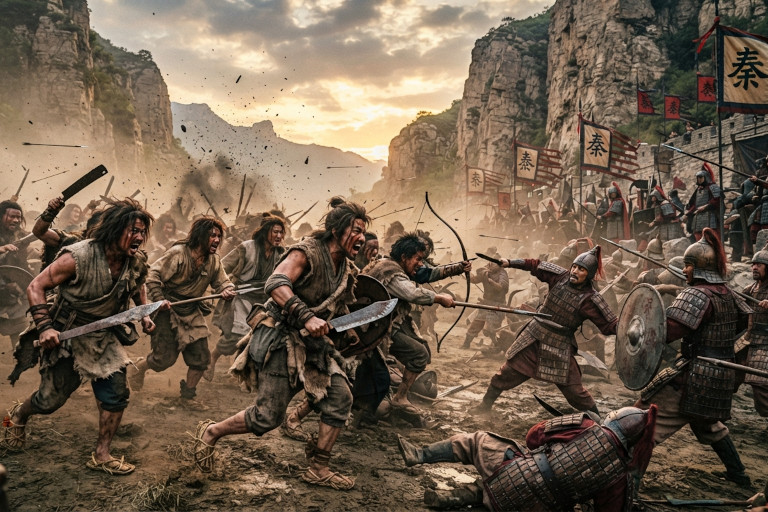
Suddenly, a group of about 300 warriors rushed onto the battlefield.
They wore rough straw sandals, their hair was unkempt, and their shoulders were bare. Armed with large blades and bows, they charged rapidly into the Jin forces. Wherever they went, Jin soldiers fell before them.
The sudden attack threw the Jin army into confusion, allowing Duke Mu to escape.
Who were these men, and why had they come to his aid?
The answer went back to an incident several years earlier.
Duke Mu had once gone hunting near Mount Liang. One night, several of his finest horses disappeared. His men followed their tracks to the foot of Mount Qi, where they found a group of mountain dwellers dividing up the horses’ meat and feasting on it.
Rather than confront the large group themselves, the duke’s men returned and reported what they had seen. They asked permission to send soldiers to punish those responsible.
Duke Mu refused.
“The horses are already dead,” he said. “If I now take human lives as well, the people will say that their ruler values livestock more than human life.”
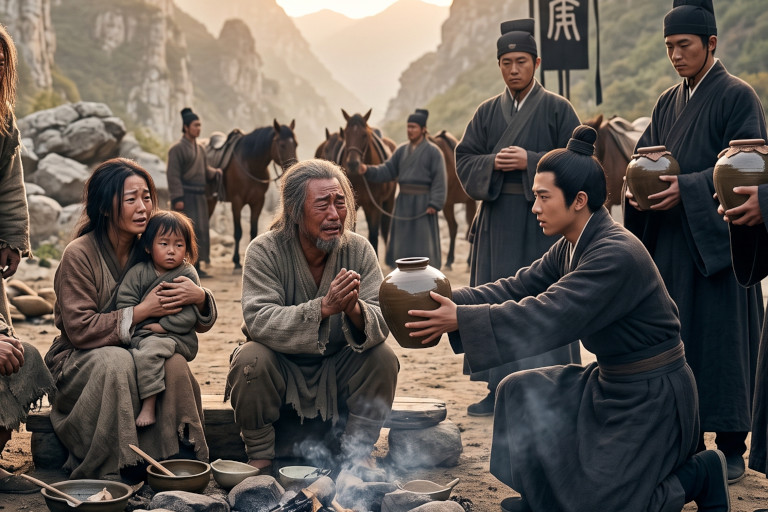
Instead of seeking revenge, he ordered his men to take several dozen jars of wine to the mountain people.
According to the story, Duke Mu was even concerned that eating the horse meat might harm their health, so he sent them wine to drink.
The mountain dwellers were astonished. They had stolen and eaten the duke’s horses, yet he had neither arrested nor punished them.
Moved by his mercy, they said: “We stole your horses and ate them, yet our lord not only refuses to blame us, but is concerned for our well-being and has given us fine wine. How can we ever repay such kindness?”
For a time, they had no opportunity to do so.
Years later, however, they heard that Duke Mu had gone to war against Jin. Remembering the kindness he had shown them, they gathered together and went to help him.
They reached the battlefield at the very moment Duke Mu was surrounded and in danger of capture.
The men whose lives he had once spared now risked their own lives to save his.
When kindness returns
For the ancient Chinese, the story illustrated the workings of cause and effect. Duke Mu had shown mercy when he had every reason to punish those who had wronged him. He did not spare them because he expected something in return.
Yet years later, that act of compassion returned to him at the moment he needed help most.
Traditional Chinese culture placed great value on helping others in times of need, treating people with compassion, and putting righteousness above personal gain. Good deeds might not produce an immediate reward, but they were believed to accumulate virtue and eventually bear good fruit.
That is the meaning behind the old saying that Heaven protects the good. Heaven may show no personal favoritism, but according to the ancient belief, those who cultivate virtue create the causes that bring blessings into their lives.
Translated by Katy Liu
Follow us on X, Facebook, or Pinterest
