

There was a poor man who had very little. A wealthy woman took pity on him and decided to give him an opportunity to improve his circumstances.
She gave him a cow and encouraged him to clear some land. When spring arrived, he could plant crops, she told him, and by autumn he might finally begin to leave poverty behind.
Filled with hope, the man set to work.
Before long, however, he encountered a problem. The cow needed grass, while he himself still needed food. Instead of making life easier, the new responsibility seemed to make his immediate hardships even greater.
So he came up with another plan.
He sold the cow and bought several sheep. He could slaughter one for food, he reasoned, while allowing the others to reproduce. Once there were more sheep, he could sell them and make money.
At first, the plan seemed promising. But the sheep did not reproduce as quickly as he had hoped, and hunger soon became a problem again. Unable to endure the hardship, he slaughtered another sheep.
Then he changed plans once more.
He sold the remaining sheep and bought chickens. Chickens laid eggs more quickly, he thought, and he could sell the eggs for immediate income.
But again, his circumstances did not improve quickly enough. One by one, he slaughtered the chickens for food.
Eventually, only one chicken remained.
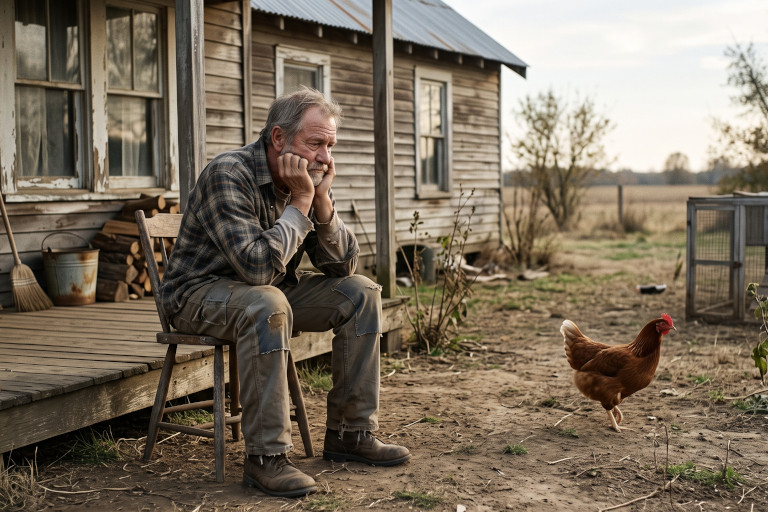
By then, the man’s hopes of becoming prosperous had disappeared. He decided that getting ahead was hopeless anyway, so he sold the last chicken, bought some wine, and drank to forget his troubles.
When spring arrived, the wealthy woman returned, bringing seeds for the land she expected him to plant. Instead, she found him sitting in his nearly empty home, eating pickled vegetables and drinking wine.
The cow was gone. The sheep were gone. The chickens were gone.
The opportunity she had given him was also gone.
Protecting tomorrow from today’s pressures
The story does not explain why people experience poverty. Financial hardship can arise from many circumstances beyond an individual’s control. Instead, the parable illustrates a narrower lesson: an opportunity can be lost when short-term pressure repeatedly causes us to sacrifice the resources meant to improve our future.
Many people begin with ambitions and even take meaningful first steps, but continuing through difficulty is often much harder than beginning.
One investor described his own approach this way: when money was tight, he tried not to raid the investments and savings he had set aside for the future. Instead, the pressure forced him to look for other ways to earn money and meet his obligations.
That approach won’t work in every situation, but the underlying principle is worth considering. Resources intended for long-term goals are easily consumed by immediate needs unless we deliberately protect them.
Repeated choices eventually become habits, and habits can strongly influence where we end up.
People who have been through many difficulties often become calmer and less easily disturbed. Those who have faced few real tests may be more easily shaken when circumstances fail to go according to plan.
Strength does not mean never feeling discouraged. Sometimes it simply means continuing despite discouragement.
Move forward before everything is ready
Traditional Chinese stories contain many examples of people accomplishing difficult tasks without waiting for perfect conditions.
In Romance of the Three Kingdoms, famous episodes involving Zhuge Liang, Guan Yu, and Zhang Fei portray men confronting shortages, dangerous enemies, and seemingly impossible situations. They are remembered not because everything was prepared for them in advance, but because they found ways to act with what they had.
A popular motivational story about the general Zhao Zilong makes the same point. In the tale, he receives an order to capture enemy territory despite having very few soldiers. By the time the campaign is over, he has gained cities, troops, and horses along the way.
Whether taken as history, literature, or legend, the lesson is simple: if everything you needed were already provided, there would be little need for ingenuity, courage, or ability.
People sometimes tell themselves that they will begin once the right people appear, once conditions improve, or once every necessary resource is available.
But life often works in the opposite direction.
In the classic Chinese novel Journey to the West, Tang Sanzang does not begin his pilgrimage with his entire group already assembled. Sun Wukong, Zhu Bajie, Sha Wujing, and the White Dragon Horse become his companions along the way.

In other words, sometimes you must begin before you have found everyone who will eventually accompany you.
You do not always find the right people first and then move forward. Sometimes moving forward is how you find them.
Not every conflict deserves your attention
Another old parable tells of a lion that quickly moved away when it saw a rabid dog.
The young lion was puzzled.
“You will fight a tiger or challenge a leopard,” he said to his father. “Why would you run away from a dog?”
The older lion replied: “Would defeating a rabid dog bring us any honor?”
The young lion admitted that it would not.
“And would being bitten by one bring us harm?”
The young lion agreed that it would.
“Then why should we provoke it?”
The lesson is not about fear. It is about judgment.
Not every challenge is worth accepting, and not every provocation deserves a response. Some arguments offer nothing to gain and plenty to lose.
A common thread runs through all these stories. Opportunity must be protected. Difficulties must sometimes be endured rather than escaped. Progress often begins before conditions are ideal. And energy should be reserved for problems that are actually worth solving.
A person cannot control every circumstance, but he can decide whether today’s pressure will destroy tomorrow’s opportunity, whether imperfect conditions will prevent him from beginning, and whether needless conflict will pull him away from what truly matters.
Translated by Joseph Wu
Follow us on X, Facebook, or Pinterest
