
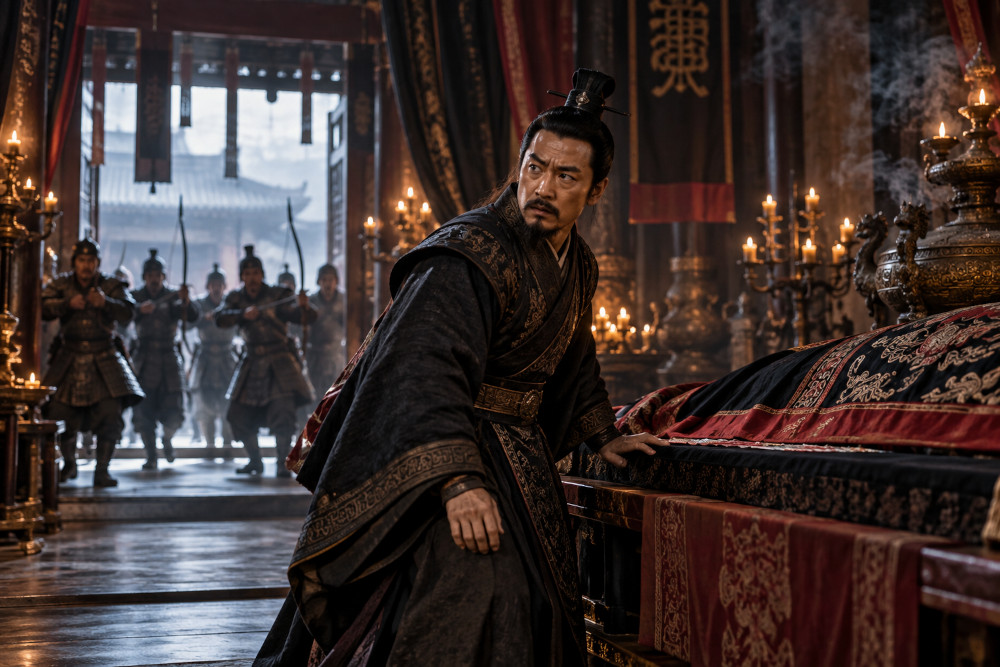
Wu Qi (440-381 B.C.) was a prominent military commander, strategist, and political reformer during China’s early Warring States period. A native of Zuo in the State of Wei, he studied Confucianism under Zeng Shen, better known as Zengzi. Bold in carrying out reforms and highly skilled in warfare, Wu Qi became one of the most formidable military figures of his age. Yet his ambition and uncompromising nature also made him a controversial figure and contributed to both his rise and his downfall.
A ruthless pursuit of military glory
Wu Qi once held office in the State of Lu. As Lu prepared for war against the State of Qi, its ruler considered appointing him commander. One concern, however, was that Wu Qi’s wife was from Qi, raising doubts about where his loyalties lay. Determined to obtain the command and make a name for himself, he killed his own wife to prove that he had no allegiance to Qi. History came to know the episode as “killing his wife to seek command.” Wu Qi was subsequently appointed general and defeated the Qi army.
Before long, however, someone spoke to the ruler of Lu against him. “Wu Qi once studied under Zengzi,” the man said. “When his mother died, he did not return home for her funeral, and Zengzi broke ties with him because of his lack of filial piety. Now he has killed his own wife merely to become commander. Such a man is cruel and shameless. Moreover, Lu is a small state. If it becomes known for military victories, other states may begin plotting against it.” The ruler of Lu became suspicious and dismissed Wu Qi.
Wu Qi then heard of Marquis Wen of Wei’s wisdom and sought to enter his service. Marquis Wen asked his minister Li Ke what kind of man he was. “Wu Qi is greedy for fame and fond of women,” Li Ke replied. “But when it comes to commanding an army in battle, no one can surpass him.” Marquis Wen appointed Wu Qi as a general, and while leading Wei’s forces against the State of Qin, he captured five cities.
Strict discipline and loyalty among the ranks
Wu Qi believed that an army depended above all on discipline, clear laws, and reliable rewards and punishments. If orders were unclear or rewards and penalties were untrustworthy, he argued, even an army of a million soldiers would be useless. On one occasion, a capable soldier attacked the enemy without orders. Wu Qi had him executed to demonstrate that military law applied even to those who fought bravely.
At the same time, Wu Qi shared ordinary soldiers’ hardships. He wore the same clothing and ate the same food as the lowest-ranking men. He slept without a mat, traveled on foot rather than riding a horse or carriage while on campaign, and carried his own provisions. When one soldier developed a festering sore, Wu Qi personally sucked the pus from the wound with his mouth.
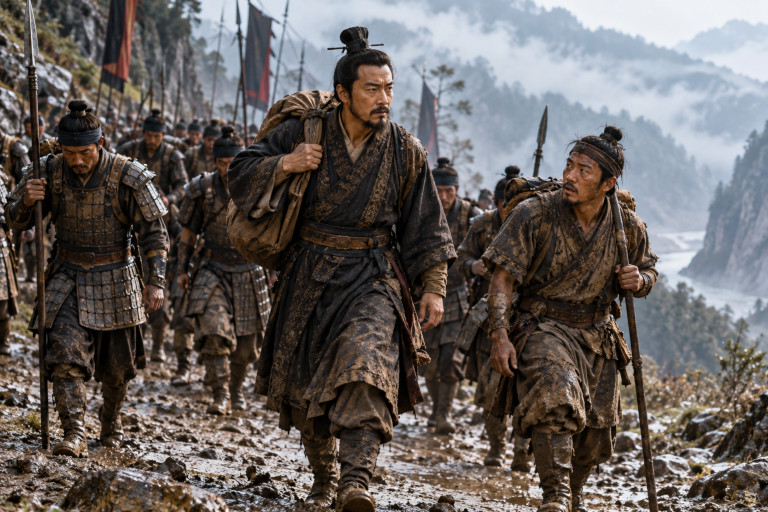
When the soldier’s mother heard what had happened, she burst into tears. Someone asked her: “Your son is an ordinary soldier, yet the general himself treated his wound. Why are you crying?” She replied: “Years ago, Lord Wu did the same for my husband. My husband was so moved that he fought with all his strength and died on the battlefield. Now Lord Wu has done this for my son. I do not know where my son will die. How could I not grieve?”
A trap in Wei
Wu Qi’s abilities eventually aroused Gongshu’s jealousy; the chancellor of Wei feared Wu Qi might one day replace him. Gongshu devised a scheme and told the ruler of Wei: “Wu Qi is an extraordinary man, but Wei is a small state, and I fear we may not be able to keep him. There is one way to test his loyalty: offer him a princess in marriage. If his heart is not truly with Wei, he will refuse.”
Gongshu then invited Wu Qi to a banquet at his home. During the gathering, Gongshu’s wife, who was herself a princess, deliberately treated her husband with contempt and repeatedly insulted him, while Gongshu patiently endured the abuse. The scene left a deep impression on Wu Qi.
Several days later, the ruler of Wei summoned Wu Qi and proposed that he marry a princess. He immediately remembered what he had witnessed in Gongshu’s household and recoiled at the idea. Known for his rigid temperament and blunt speech, he walked directly into the trap and declined the marriage, saying that he was unworthy of such an honor. Astonished, the ruler realized that Gongshu had maneuvered him into appearing disloyal. Fearing for his life, he left Wei and fled to the State of Chu.
Reforming the State of Chu
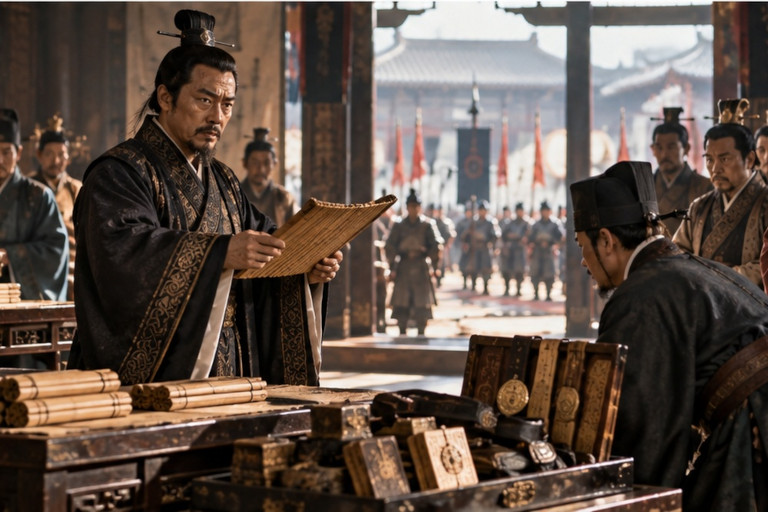
The ruler of Chu had long admired Wu Qi’s abilities and appointed him chancellor. Once in office, he swiftly introduced far-reaching reforms. He established laws suited to the needs of the time and sought to strengthen respect for their enforcement. He dismissed officials who collected salaries without performing useful work and withdrew titles and stipends from more distant members of the royal family, reducing government expenses. He also intensified military training and strengthened the army.
Under Wu Qi’s reforms, Chu grew substantially more powerful. Within several years, its territory expanded toward the Baiyue regions in the south. Chu checked advances from Han, Zhao, and Wei to the north and repeatedly repelled Qin attacks from the west. But the reforms came at a price: members of the nobility and royal family who lost titles, income, and influence under Wu Qi’s policies came to hate him bitterly.
A final stratagem
In 381 B.C., King Dao of Chu died. As the kingdom mourned, members of the royal family and aristocratic clans harmed by Wu Qi’s reforms seized the chance to rebel and hunt him down.
Realizing that he had no way to escape, Wu Qi fled into the funeral hall where King Dao’s body lay. In one last calculated move, he threw himself against the dead king’s body. His pursuers rushed in and unleashed a volley of arrows, killing him, but also striking King Dao’s corpse.
After the national mourning period ended, the crown prince succeeded his father as King Su of Chu. An investigation was launched into those who had attacked Wu Qi and, in doing so, desecrated the body of the late king. As punishment, more than 70 clans were ultimately wiped out for their involvement. He had been unable to save his own life, but even in death, his final stratagem ensured that those who killed him would pay a devastating price.
Translated by Eva
Follow us on X, Facebook, or Pinterest
