

The question “Have Chinese scientists created an invisibility cloak?” has fascinated both the scientific community and the general public. While the idea conjures images of Harry Potter’s magical cloak, the reality is more nuanced. Recent breakthroughs in China involve adaptive camouflage and advanced materials that manipulate light or radar waves, significantly reducing detectability.
However, these technologies do not yet make humans or objects entirely invisible to the naked eye. Instead, they represent a remarkable step forward in the field of stealth technology, blending the boundaries between science fiction and scientific achievement.
Self-adaptive photochromic cloaking brings nature’s stealth to technology
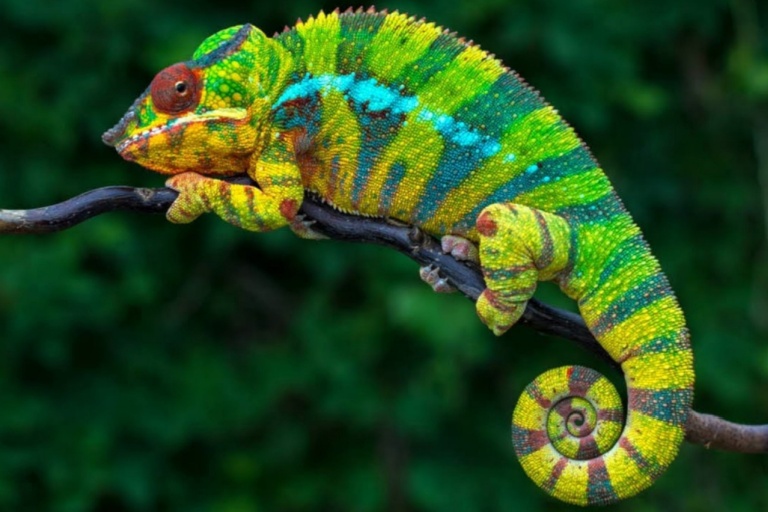
One of the most exciting developments in this field is self-adaptive photochromic cloaking. Researchers at China’s University of Electronic Science and Technology have created a material that automatically shifts its color to match its surroundings, much like a chameleon blending into its environment.
This innovation is rooted in a process called Self-Adaptive Photochromism (SAP), which utilizes organic dyes and molecules known as donor-acceptor Stenhouse adducts. Like a chameleon, these molecules change their appearance in response to light, requiring no external power source.
In practical demonstrations, a transparent container filled with SAP solution was able to match backgrounds in red, green, yellow, and black within just 30 to 80 seconds. This rapid adaptation suggests the potential for spray-applied clothing or coatings that could be utilized in military uniforms, architectural designs, or even anti-counterfeiting measures. However, the technology is currently limited by its speed, color range, and scalability. Despite these limitations, SAP camouflage offers a promising glimpse into practical, passive camouflage, echoing the stealthy adaptations found in nature.
From passive camouflage to active stealth: The rise of the aero-amphibious metasurface cloak
Building on the concept of passive camouflage, Chinese engineers at Zhejiang University have developed an intelligent cloak for drones that adapts to various environments, including air, land, and water. This innovation, known as the aero-amphibious metasurface cloak, represents a significant leap toward active stealth technology. Unlike SAP, which passively matches background colors, this cloak uses tunable metasurfaces to control electromagnetic scattering in both space and time.
A neural-network system guides the metasurfaces, optimizing the drone’s camouflage in real time. In laboratory tests, the cloaked drone’s radar signature matched its surroundings with up to 95% similarity, effectively rendering it invisible across multiple environments.
While still experimental and limited to small unmanned aerial vehicles (UAVs), this technology demonstrates the potential for dynamic, intelligent cloaking systems that could one day be applied to a wide range of platforms.
The metamaterials foundation: Building blocks of modern cloaking
To fully appreciate these advances, it’s essential to understand the foundation of metamaterials upon which they are built. Cloaking using metamaterials and transformation optics has been an area of intense research since the early 2000s.
Metamaterials are engineered structures designed to manipulate electromagnetic waves in ways not found in nature, enabling the bending or redirection of light and radar waves around an object. Early demonstrations of metamaterial cloaks successfully hid small objects, such as copper cylinders, from microwave detection. However, scaling these effects to larger objects or to the visible light spectrum has proven challenging.
Key hurdles include frequency dispersion, absorption losses, parallax distortions, limited spectral bandwidth, and significant manufacturing challenges. Despite these obstacles, the field continues to advance, with each breakthrough bringing us closer to practical applications.
How close are we to a true invisibility cloak?
With these innovations in mind, it’s natural to ask: how close are we to achieving a true invisibility cloak? The answer lies in the progress and limitations of each technology:
- SAP camouflage: This technology passively replicates background colors, offering low-energy, practical camouflage. However, it is currently limited by slower transition times, a restricted color palette, and the use of lab-scale demonstrations.
- Drone metasurface cloak: This approach enables adaptive, multi-environment stealth, guided by artificial intelligence. Its complexity, energy dependence, and early-stage development mean it is not yet ready for widespread use.
- Metamaterials: Proven effective at small scales and specific frequencies, metamaterials have not yet been scaled up to cloak human-sized objects in visible light.
While none of these technologies deliver the “true” invisibility of fiction, they mark significant advances in adaptive camouflage, active stealth, and the real-time manipulation of electromagnetic signatures.
The future of stealth: Science fact catching up with science fiction
The journey from myth and legend to modern science is a testament to human ingenuity and the universal principles of truthfulness, compassion, and forbearance. In traditional Chinese culture, the pursuit of harmony with nature and the mastery of subtle forces have always been valued.
Today’s advances in cloaking technology echo these ancient ideals, as scientists strive to blend seamlessly with their surroundings, respecting both the visible and invisible forces at play. The implications of these breakthroughs extend far beyond the military. Imagine next-generation wearables that adapt to your surroundings, architectural coatings that change color with the weather, or anti-counterfeiting measures that are nearly impossible to replicate.
As science fact catches up with science fiction, ethical considerations also come to the forefront. How should such technology be used? What safeguards are necessary to prevent misuse? These are questions that society must address as we move forward.
Comparing Chinese advances with global research
China’s progress in invisibility cloak technology is part of a broader, global effort. Western researchers have also made significant strides in metamaterials and adaptive camouflage, with collaborations and healthy competition driving the field forward. By comparing approaches and sharing knowledge, the international scientific community can accelerate the development of practical, ethical applications for these technologies.
Final thoughts: The journey continues
In summary, the answer to “Have Chinese scientists created an invisibility cloak?” is both yes and no. While we are not yet at the stage of complete invisibility, the advances in adaptive camouflage, active stealth, and metamaterials represent significant milestones. These technologies are transforming stealth from a concept of fantasy into a practical reality, with far-reaching implications for military, commercial, and everyday applications.
As we continue this journey, it is essential to strike a balance between innovation and wisdom, ensuring that these powerful tools are used to benefit humanity. The story of the invisibility cloak is still being written, and its next chapters will be shaped by the values and choices of those who wield its power.
Follow us on X, Facebook, or Pinterest
