

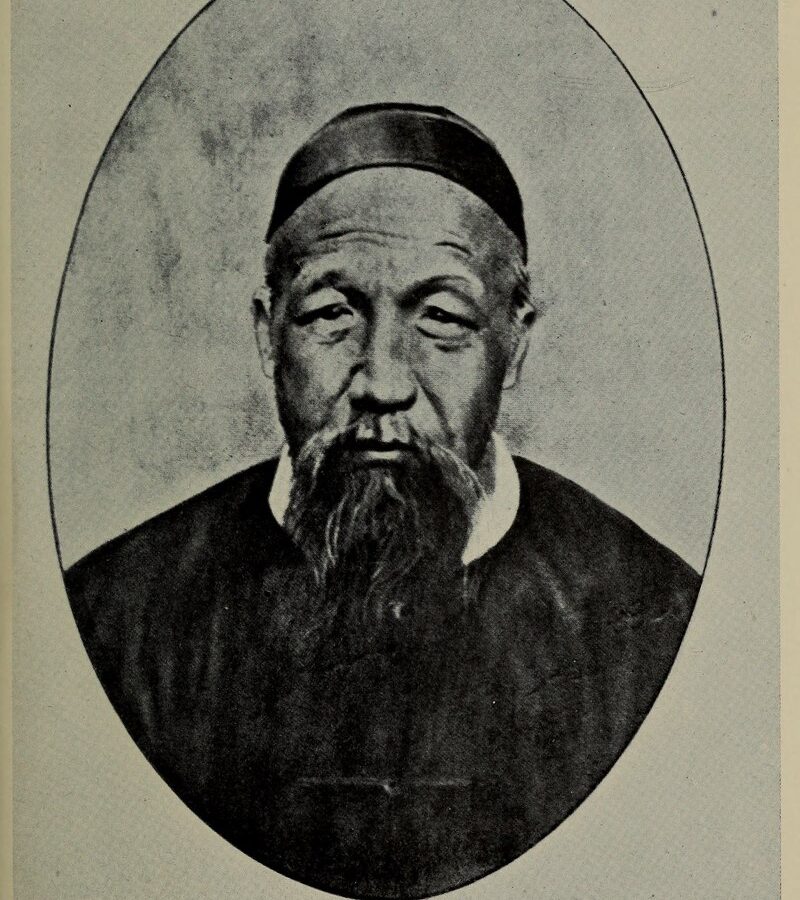
In the chaos of China’s late Qing Dynasty, where power shifted like sand and political careers were often short-lived, one man rose above it all — not with brute force, but with his words. Zeng Guofan, revered as one of the “Four Eminent Statesmen of the Late Qing Restoration,” wasn’t born a prodigy. He failed the imperial exams seven times. Yet within a decade, he climbed 10 official ranks, ultimately becoming one of the most influential figures of his time.
What was his secret? Alongside tireless discipline and moral integrity, Zeng Guofan adhered to a set of six principles that guided his speech, precepts that enabled him to navigate the complexities of politics with wisdom and grace. His story is not just about success — it’s a masterclass in self-restraint, humility, and the power of well-chosen words. For Zeng, speech was never to be casual or careless — it was to be deliberate, thoughtful, and measured.
He lived by one core rule: “Speak less, and speak with great care.” As the old saying goes: “Illness enters through the mouth; misfortune leaves by it.” Therefore, one should speak only what is meaningful, and hold back what need not be said.
Zeng Guofan himself once cautioned: “Let your actions not be driven by impulse, nor your words by the tongue’s fancy.” It was through personal experience that he came to understand the truth of this principle.
On the occasion of his father’s birthday, an old acquaintance named Zheng Xiaoshan arrived to offer his respects — a visit that would soon turn unexpectedly tense. At the time, Zeng had just been admitted to the prestigious Hanlin Academy and was riding high on success. Seizing the moment, he pulled Zheng aside and launched into a lengthy monologue about his achievements and life, boasting, rambling, and revealing things better left unsaid. Deeply offended, Zheng abruptly left in anger.
Filled with deep regret, Zeng Guofan resolved from that moment on to speak with greater care, no longer letting thoughtlessness, selfishness, or impulse guide his words.
Zeng Guofan’s 6 guiding precepts for speech
Precept 1: Never speak too bluntly
Speech is more than mere communication — it is an art form, a delicate dance that can either uplift or harm. When spoken with skill and care, words bring beauty, harmony, and understanding. However, when delivered carelessly, even the sincerest message can cause harm and lead to conflict.
One must remember that every person treasures their dignity and self-respect. To speak without regard for another’s feelings is to risk breaking the fragile thread of trust and respect that holds relationships together. Zeng Guofan counseled his sons with timeless wisdom on this matter, saying: “Throughout history, two faults have often brought ruin: arrogance and loose speech.”
One should not speak brashly, like a roaring river that rushes headlong and crashes through everything in its path, but like a gentle spring winding softly through the mountains — soothing, calm, and refreshing. It is not only what you say, but how you say it — and the intention behind your words — that gives them their true power. A soft, thoughtful tone opens hearts and minds far more than blunt, careless words, even when they are true.
Remember how you speak often matters more than what you say. Even the most sincere truths, when spoken bluntly, may fall on deaf ears. Gentle and respectful speech honors others, makes room for their voice, and invites meaningful dialogue and genuine connection. In mastering the art of measured speech, you cultivate not only effective communication but empathy, respect, and harmony.
Precept 2: Never engage in gossip
Those who gossip are often held in low regard, especially when they speak ill of others behind their backs. Zeng wrote in his family letters, “One who always speaks of others’ rights and wrongs must be a meddlesome person.”
Gossip often disguises itself as concern, curiosity, or even justice, but it is rarely any of these. More often, it masks insecurity or pride. Though it may seem harmless in the moment, gossip corrodes relationships, poisons reputations, and reflects most poorly on the one who speaks it. Over time, every careless word may come back to haunt its source, making the damage difficult to repair.
Those who take pleasure in stirring up petty matters or exaggerating minor faults cannot be considered truly virtuous. True wisdom and virtue lie in focusing inward, cultivating one’s growth, rather than wasting energy on idle talk. Moreover, speaking ill of others behind their backs and meddling in their affairs is a mindset that can easily lead to the next trap Zeng warned against: complaint and judgment.
Precept 3: Never voice complaints
In life, some like to complain about themselves, others, or the world around them. But complaints solve nothing; they never bring us closer to a solution. And who truly wants to listen to endless grievances? A chorus of complaints only darkens the atmosphere, pulling everyone into a vortex of negativity.
Those who habitually grumble reveal not only a weakness of character but a fragile heart unwilling to endure life’s trials. When confronted by hardship, they either cast blame outward or retreat inward into despair, losing sight of the power they hold to change their circumstances.
This also reflects a deeper failure — not only to be thoughtful, kind, and considerate toward others, but to remain humble and remember that no one is perfect. It shifts our focus toward the flaws of others, instead of prompting us to examine our own honestly. In truth, what we complain about in others often serves as a mirror, revealing the very areas where we, ourselves, need to grow and improve.
So why judge and complain about others? True strength lies in turning inward and asking: Why was I meant to witness this? What lesson is here for me? How can I grow stronger and wiser from it? When we remain trapped in complaint, our vision narrows, and bitterness takes root, blinding us to the realities of resentment and stagnation. But when we turn inward and commit to self-improvement, we break free from this cycle and open the door to growth, humility, and resilience.
Precept 4: Never speak boastfully
In our interactions with others, sincerity must always come first. Boastfulness, arrogance, and exaggeration only erode trust and cast doubt on one’s character. To overpromise — especially on things one cannot fulfill — is to invite disappointment and lose credibility. Boasting may seem to impress in the moment, but in reality, it exposes one’s insecurities and often invites misfortune.
During the Jin dynasty, an official named Zhou Boren was known for his boastful nature. On one occasion, Emperor Yuan of Jin held a grand banquet, surrounded by his esteemed ministers. As the wine flowed and spirits lifted, the emperor raised a toast and declared, “Are we not today gathered like the sages of old — Yao, Shun, and Yu?” The court applauded in agreement. But Zhou, drunk and unguarded, blurted out, “Though all are emperors, how could today’s ruler compare to the sages of old?” His words, though perhaps honest, were ill-timed and arrogant. The emperor, enraged, ordered Zhou’s immediate execution, though he later granted him a pardon.
The lesson is clear: humility preserves peace, while pride invites ruin. Do not parade your opinions or inflate your worth like Zhou did, or you may bring calamity upon yourself. True strength lies not in loud declarations, but in quiet confidence and measured speech. This story is left to us as a warning — do not parade your opinions or inflate your worth like Zhou did, or you may bring calamity upon yourself.

Precept 5: Never speak recklessly
It’s essential to speak with purpose and clarity — let your words convey thoughtful consideration and genuine understanding. Every phrase you utter shapes others’ perceptions and can either build bridges or burn them down. Thoughtless chatter and speaking on matters you don’t fully understand only weaken your credibility.
As the old saying reminds us: “The speaker may not mean it, but the listener takes it to heart.” Words are powerful forces; they can inspire and heal, or wound and divide. Careless speech often plants seeds of doubt and mistrust, eroding the foundation of relationships and respect. Those who fail to master their words reveal a lack of self-control and wisdom, and they quickly lose the confidence of others.
True strength lies in mastering the art of speech: choosing words with thoughtful reflection and always considering their impact. This discipline is not merely about avoiding mistakes; it is about consciously shaping your character. When your words reflect integrity, reliability, and insight, you quietly build trust and demonstrate genuine understanding — a rare and invaluable quality in any relationship or leadership. So guard your words as you would your most precious possession, for once released, they cannot be reclaimed.
Precept 6: Never speak harshly
Zeng Guofan often reminded his children that the way we speak is the most accurate reflection of our character. Words carry immense power — not just to express, but to shape reality. Harsh words do more than merely sting; they ensnare others in pain, breed deep resentment, and can unravel bonds of trust beyond repair. When wielded carelessly, speech becomes a weapon, cutting far deeper than any visible wound.
Genuine kindness in speech transcends mere politeness — it is a conscious act of grace, a deliberate choice to recognize the humanity in others and honor the delicate trust that binds us. By choosing gentleness over cruelty, we not only extend compassion to those around us but also cultivate a profound peace within ourselves.
As the old saying reminds us: “A kind word warms three winter months; a cruel word chills even in June.” Harsh speech inflicts wounds invisible to the eye yet lasting in the soul, like spiritual atom bombs whose damage can echo for a lifetime. The actress Ruan Lingyu, in her final letter, poignantly confessed: “My death matters little, but I still fear the terror of people’s words.”
Such is the profound power of language: it can build up or tear down, heal or destroy. Its scars often run deeper than flesh, shaping destinies and defining lives. Choose your words wisely, because in them lies the power to change the world.
In summary
So before you speak, let your mind weigh your words, and cast aside those that may wound.
Ask yourself:
- Do these words reflect the six precepts?
- Are they kind? Are they necessary? Are they true?
- Do they preserve the other person’s dignity?
- And most importantly: If something stirs anger, unhappiness, or judgment in me, what does it reveal about me?
Never forget that each word you choose helps shape not only your relationships but your very character and, ultimately, the course of your life.
Translated by Katy Liu and edited by Tatiana Denning
Follow us on X, Facebook, or Pinterest
