

The Chinese idiom “to strike the tiger’s teeth” describes the fearless resolve needed to challenge a powerful, perilous foe. During the Qianlong reign of the Qing Dynasty, a county magistrate named Wu Yi embodied that spirit — risking everything to stand up to one of the empire’s most corrupt figures.
Wu Yi rose through the imperial examinations on his deep knowledge of ancient inscriptions and stone texts, but scholarship was only part of his reputation. Known for unbending integrity and boldness, he served as magistrate of Boshan County in Shandong for just seven months — long enough to earn the lasting devotion of its people.
Heshen sends rogue enforcers
In Qianlong’s 57th year, the all-powerful Grand Secretary Heshen — infamous for graft — heard a rumor that rebel leader Wang Lun was still alive. Violating imperial regulations, he dispatched 13 armed agents, led by Du Chengde and Cao Junxi, to Shandong. Flashing their credentials, the men swaggered through towns, drinking, extorting, and frightening both civilians and local officials who dared not interfere.
A clash in Boshan County
When the thugs reached Boshan, their drunken shouting and vandalism enraged Wu Yi. He sent constables to arrest the ringleaders. Hauled before the magistrate, Du Chengde refused to kneel. Slamming his dispatch token onto the table, he barked: “We serve the Capital’s Nine Gates Command. Who are you to obstruct us?”
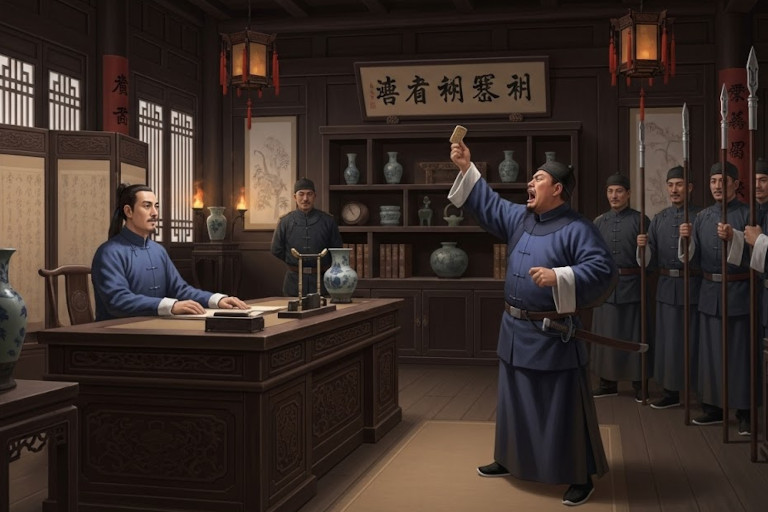
Wu Yi lifted the token, studied it, and replied coolly: “Your orders say you must report to local authorities for assistance. You have been in Boshan three days without greeting the magistrate — is that not disobedience? And the token authorizes only two officials, yet eleven more stand outside. Explain yourselves.”
Stunned into silence, Du Chengde could only glare. Wu Yi turned to his constables: “Take this disruptive official out and give him a proper beating!” Outside, townsfolk erupted in applause.
The price of integrity
Shandong’s higher officials panicked. Governor Ji Qing, anxious to shield himself, reported Wu Yi for “arbitrary punishment,” omitting any mention of Heshen’s illegal order. Heshen, realizing public discussion would expose his misuse of power, quietly returned the memorial. Ji Qing and his allies then fabricated new charges of “excessive discipline,” and Wu Yi was dismissed after barely half a year in office.
Public outcry and a thwarted return
More than a thousand Boshan residents petitioned Ji Qing to keep their righteous magistrate. Touched, the governor promised to seek reinstatement and even escorted Wu Yi to Beijing to plead his case. There, the senior Grand Secretary A Gui scolded Ji Qing: “Dispatching capital troops to the provinces is illegal — yet you impeached the one man who enforced the law!”

But Heshen, who controlled the Ministry of Personnel, blocked Wu Yi’s restoration. From then on, however, Heshen no longer dared to send his personal agents beyond the capital.
A legacy remembered
After Emperor Qianlong died, Heshen fell overnight. Officials hurried to recommend Wu Yi for office. The Jiaqing Emperor approved him at once, but when the imperial messenger reached Wu Yi’s home, the brave magistrate had died one month earlier. News of his passing brought heartfelt mourning from the people who had benefited from his brief, principled rule.
Wu Yi’s story endures as proof that striking the tiger’s teeth — challenging corruption at any cost — may exact a personal price, yet it can still shake the powerful and inspire generations to come.
Translated by Joseph Wu
Follow us on X, Facebook, or Pinterest
