
Power never announces itself directly. It hides in plain sight — encoded in rituals, repeated in routines, disguised as inevitability. Most people sense the patterns, but can’t quite name them, as if invisible rules governed life itself. To understand them, you don’t need more noise or spectacle — you need to look at the quiet structure beneath, the geometry that decides who moves where, and why some can never seem to escape their place.
When the board is the world
In the quiet hum of a chessboard, with its black-and-white geometry, lies an allegory for the vast machinery of society: the unseen forces that organize, limit, and occasionally liberate us. The metaphor — that we are all pieces moving in lines, arcs, leaps, and sacrifices — sets the stage for a reflection on power, identity, and the possibility of escape.
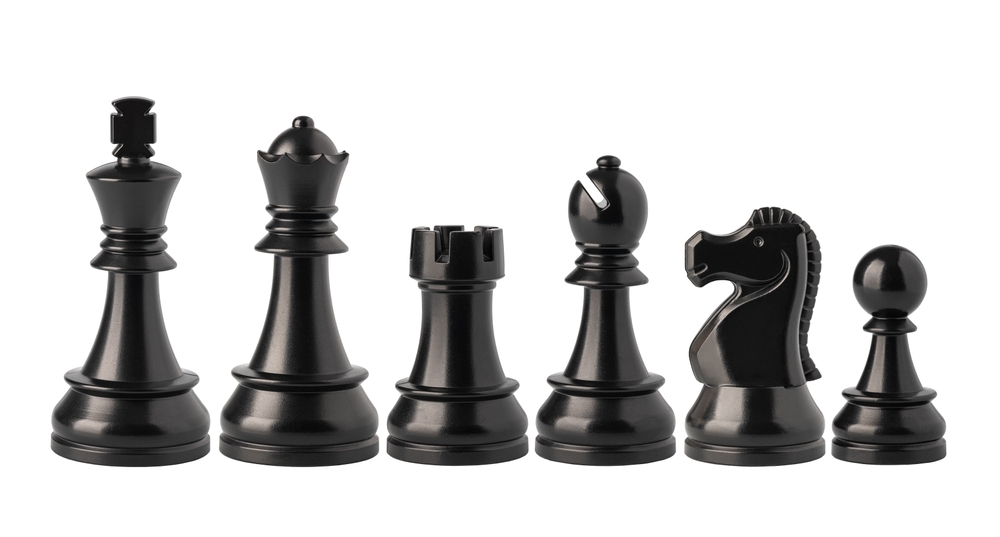
A story told through 6 archetypes: pawns, rooks, knights, bishops, queens, and kings
1. Pawns: Unseen power
Pawns are the vast foundation — the masses who follow, labor, and persist. They comprise the majority. Though easily sacrificed, without them, the game — and the state — crumbles. They are predictable, replaceable, and too often unaware of their own essential power. Consider the countless workers in factories, offices, and ride-share platforms: nameless, necessary, substitutable. They enable every other movement on the board, often unaware that they are the board’s very essence.

2. Rooks: Relentless engines
Next come the rooks: methodical, disciplined, and essential. Rookies form the backbone of any functioning institution — those people who grind it out, plow through the routine, and keep the gears turning. But their strength is their limit. When the terrain shifts, they freeze. A rook is linear. It cannot pivot or innovate; it needs external forces to change direction.
Imagine the industrious entrepreneur who builds factories and infrastructure — effective in growth, faltering when disruption comes. The legendary industrialist Andrew Carnegie typifies this. Rising from a bobbin boy, he became a titan of steel, built railroads, and created one of history’s greatest enterprises — but did so through vertical integration, efficiency, and relentless expansion.
3. Knights: Unpredictably brilliant
Knights are unpredictably brilliant. They leap, connect distant fields, and surprise everyone. Their ingenuity makes them game‑changers — creative, disruptive, and often underestimated. Think of visionaries and boundary‑pushers: innovators, contrarians, creators. People who unplug and wander into the unknown. Silicon Valley’s risk‑takers, creative eccentrics in fashion, tech, or politics — moving in L‑shapes we can’t trace. They need planners, though — someone steady behind the scenes. Because of one misstep, they fall.
4. Bishops: Quiet architects
Enter the bishops: patient, strategic, and deeply intentional. They sit, observe, and plan for years. When the moment arrives, they strike. Edward Snowden embodies this. A once‑insider turned whistleblower, he observed, calculated, and then acted — revealing global surveillance. He put it this way: “Every person remembers some moment in their life where… they looked away, because the consequences of intervening seemed too intimidating… I crossed that line.” His move was epochal, but required the calm planning of a bishop.
5. Queens: Omnipresent force
The queen moves in all directions and can strike anywhere. She embodies modern institutional power, the enforcers unknown, operating above the rules that govern others. Who are the queens in our world? Intelligence agencies, secret networks, those who can remove obstacles with a whisper and whose actions transcend usual constraints. Their influence is immediate, omnipresent, and often unquestioned.

6. Kings: Invisible sovereigns
Finally, the kings. They sit back, distant, unimposing — and yet secure. Their power lies not in force, but in permanence. They are the families and institutions that print money, who exist beyond lists of wealth. They own the board itself. These are the financiers, dynastic power structures, and self-sufficient institutions that shape rules, frames, and the very fields we move in — making changes slow, incremental, and nearly invisible.
The endgame: How to stop the game
In chess, the end comes by checkmate — but in this metaphor, victory lies in refusal. Don’t win within the system; step outside it. Stop playing. Refuse the consumption‑production cycle. Halt the money flow — taxes, debt, work, consumption — all intentional vectors that keep the game alive. If enough stop playing, the board loses its purpose. One day, someone who’s exited may return and flip the board entirely — a radical reset. And then, the unthinkable: no more kings, no more queens, rooks, knights, or pawns. To borrow from the quiet intensity of a closing piano melody: Game over.
Why this metaphor matters
This isn’t fantasy — it’s a narrative framework. Each type mirrors a real human force. The rook, the knight, the bishop — they are not static roles; individuals evolve, stepping between archetypes when systems shift or internal revelations spark change. The pawn might become a knight through learning. A rook, when outmaneuvered, might seek anonymity as a bishop. A bishop, once exposed, becomes queen-influenced, only to retire back into obscurity. The lines are fluid. The power of this chessboard metaphor lies in its ability to convey agency. Even a pawn can destabilize the board by refusing to move. Even a king can lose if the board is shattered altogether.
Supporting the assertions
Andrew Carnegie rose from poverty to steel magnate, epitomizing disciplined efficiency, and used his wealth in philanthropy — building libraries, supporting peace, and attempting to shape culture. Edward Snowden’s intentional, ethical act of whistleblowing was paved with patient planning, reflecting the bishop’s strategic precision.
Reflections in the mirror
In the hush after a chess game, we might ask: Which piece am I?” And more urgently: Could I choose not to play?” To the rook, the path forward is rigid to the pawn, perhaps invisible. But to the knight and bishop, creativity and intent render the board porous. The queen, cloaked in institutional anonymity, acts without many seeing. And the king — well, he’s as powerful as the board is stable.
Yet stability is an illusion maintained through participation — and the simplest rebellion may be the most radical: Walking away. So consider: Where are you? And what happens if you leave the field entirely?
Follow us on X, Facebook, or Pinterest
