
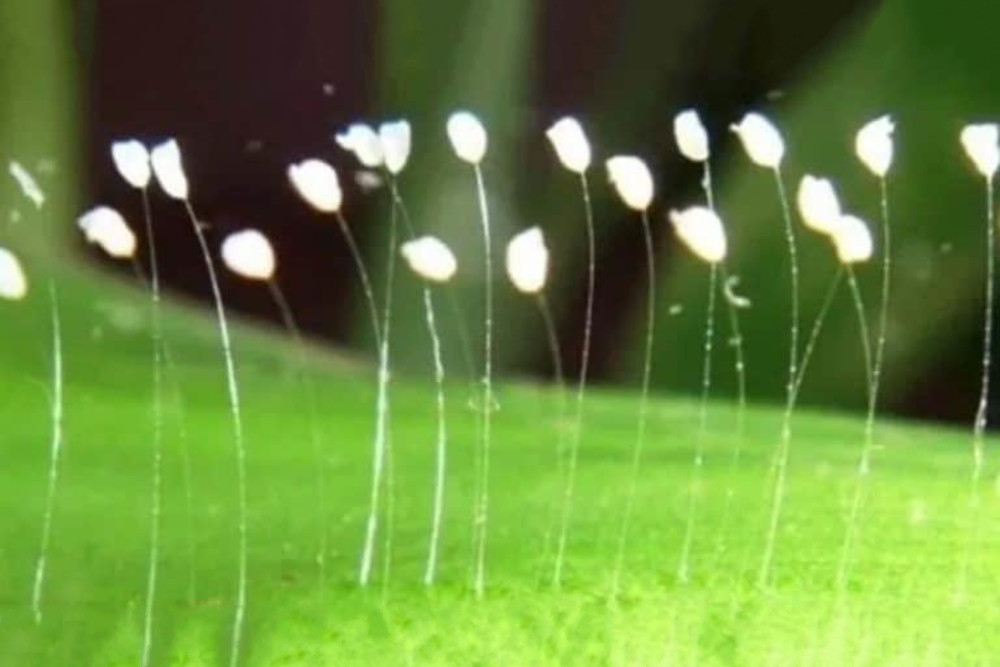
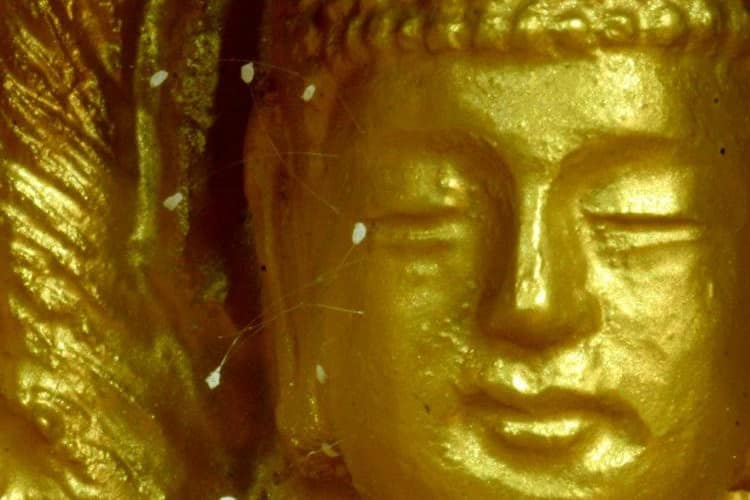
In recent years, a rare and wondrous phenomenon has quietly unfolded across the world: the mysterious blossoming of the udumbara flower, described in Buddhist scriptures as blooming only once every 3,000 years. Unlike earthly flowers that grow from soil, its delicate white blossoms appear on the most unexpected surfaces — glass, metal, paper, and even upon the serene faces of Buddha statues. Remarkably, these tiny flowers can remain in bloom for weeks, months, or even years, as if untouched by the passage of time.
Often discovered in Buddhist temples and the homes of spiritual cultivators, the udumbara’s sudden appearance evokes profound awe and reverence. Each bloom carries with it an unspoken message, a whisper from the divine reminding humankind of something sacred and eternal.
A sign from the Heavens
Buddhist scriptures describe the udumbara as an “auspicious flower,” a rare and profound sign of virtue and celestial blessing. Unlike other plants, it is said not to be born of this world, manifesting only when extraordinary spiritual events take place. The Lotus Sutra Commentary declares: “The udumbara flower is a sign of heavenly blessing, blooming only once every three thousand years, heralding the coming of the Holy King of the Golden Wheel.”
Another ancient text echoes this mystery: “This flower does not exist in the human realm. Only when a Tathāgata descends, or when the Chakravartin — the Golden Wheel-Turning King — comes into the world with boundless virtue, will its blossoms appear.”
Long ago, Shakyamuni Buddha spoke of this extraordinary flower to his disciples. When asked whether they could cultivate the Way while remaining in the world, the Buddha said: “You must wait until the Holy King of the Turning Wheel descends to the human realm. Then, do not miss this rare chance of eternity.”
A devoted disciple, Lotus-Color, asked: “But how will people know when this Holy King arrives to spread the Dharma?” The Buddha replied gently: “At that time, the udumbara flower will bloom across the earth. It will be a sign for all, guiding them to the place where the Holy King teaches and saves souls.”
“This flower,” the Buddha explained further, “is not of this human world. It is a heavenly sign, a blessing, a sacred symbol pointing to the coming of the one who will transmit the Dharma and liberate countless sentient beings. Nurture your good deeds and pure heart. I will watch over you, protecting you until the day you encounter the Holy King. And when you receive his guidance, my heart will rejoice with yours.” Thus, throughout time, disciples and all beings have awaited this great day with longing.
Blossoms appear across the world
In 1997, news spread in Korea that the udumbara flower had appeared on the walls of Cheonggye-sa Temple, its translucent blossoms shimmering like morning dew. Pilgrims and spiritual seekers gathered to witness this sacred sign. Soon, reports emerged from temples and homes across Korea, and then from China, Taiwan, Hong Kong, Malaysia, Singapore, Australia, and the United States — the flower quietly gracing the world, a gentle reminder that the divine promise unfolds among us.
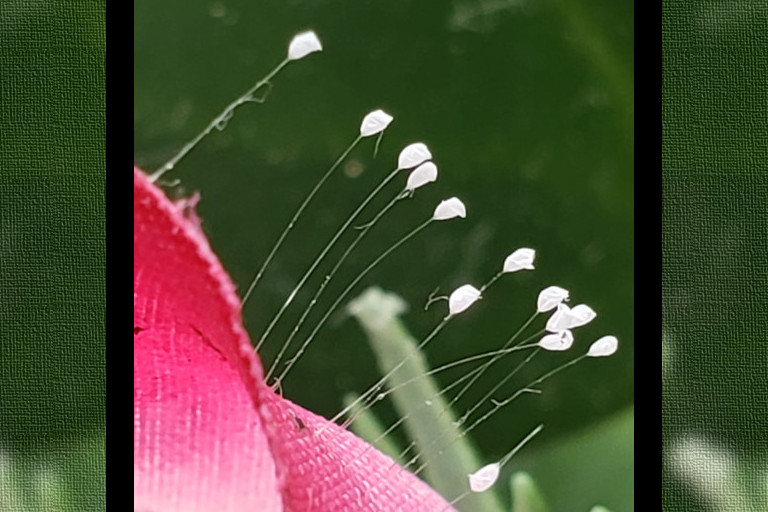
Exquisite and ethereal, the udumbara’s delicate blossoms resemble tiny bells, pure and graceful. Their stems gleam like golden silk, with a faint, subtle fragrance that lingers in the air. White as snow, yet crystal-clear and luminous, the flowers bring peace to the heart and clarity to the spirit. Those who behold them feel a hush of reverence, a stirring of faith, and the palpable presence of the sacred.
Seen in this light, the global blossoming of the udumbara hints at a time of profound spiritual awakening, a subtle reminder that virtue and hope endure. It is as if the heavens have spoken, leaving a fragile, luminous call that invites both reflection and readiness.
In an age shadowed by moral decline, plagues, wars, and all manner of suffering, the udumbara offers more than beauty — it provides guidance. By upholding virtue, performing good deeds, and revering Heaven while trusting in the Creator, one aligns with this sacred presence. The udumbara does not simply bloom; it speaks to the heart, awakening awareness, inspiring reflection, and preparing humanity for the presence of the divine.
Across time and space, the udumbara continues to blossom, a quiet yet radiant testament to the Light in the world, awaiting those hearts that are ready to receive it. Its enduring presence reassures us that the Heavens watch over the virtuous and that even in the darkest moments, beauty, holiness, and grace can touch our lives in subtle but profound ways. The udumbara is not merely a flower; it is a celestial promise, urging humanity to remain steadfast in virtue, unwavering in faith, and open to the miraculous that exists beyond the ordinary.
Translated by Katy Liu and edited by Tatiana Denning
Follow us on X, Facebook, or Pinterest
