
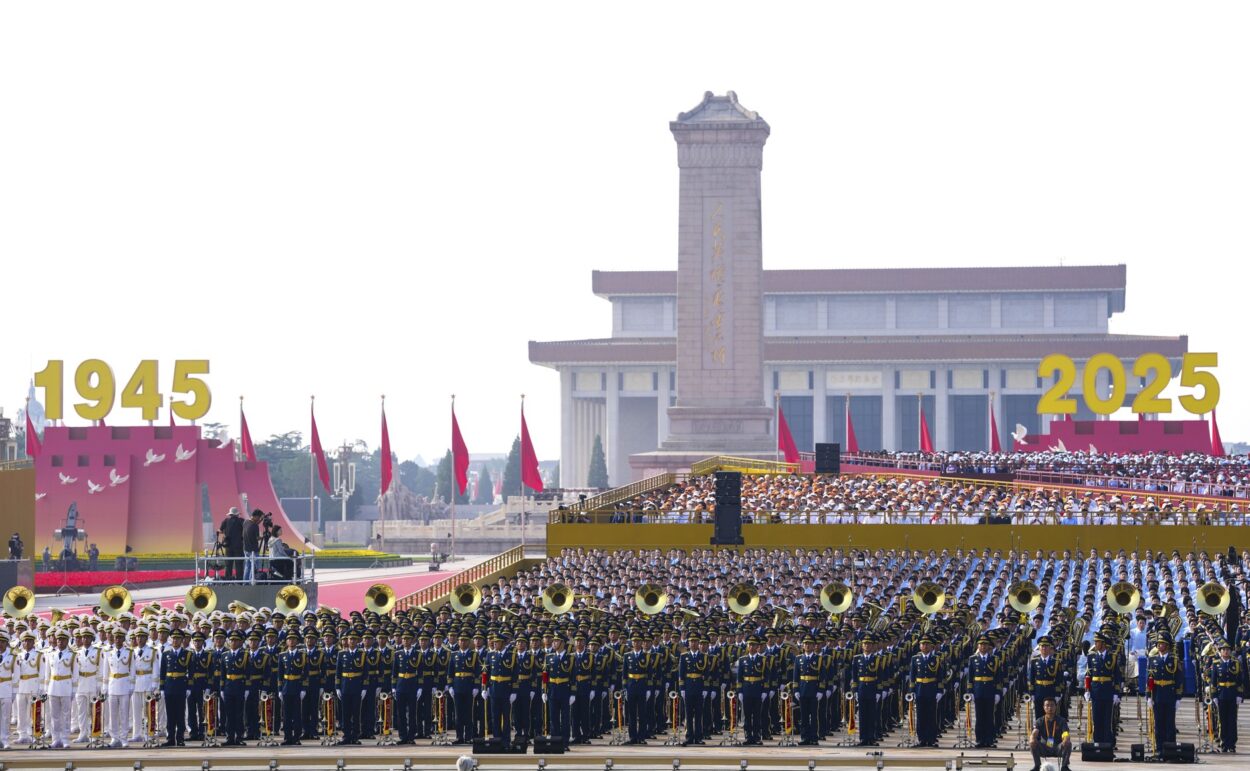
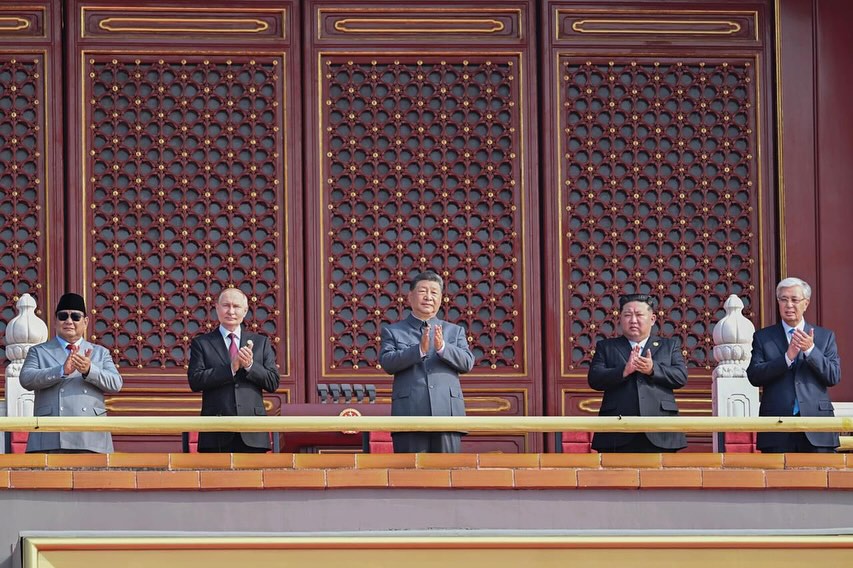
The September 3 military parade is intended as a stage for the Chinese Communist Party (CCP) to create a “great power rising.” However, this carefully arranged political show has become a strange political “magic spell” in the arena of international public opinion. All the leaders who are in the same picture with Xi Jinping are meeting their Waterloo one after another.
Overnight, Nepal’s government was overthrown
In early September, rare mass protests erupted in Nepal’s capital, Kathmandu. What started as a street demonstration against corruption and inflation quickly escalated into a city-wide riot in just 24 hours. The anger was directed at senior government officials, with the minister of finance beaten up in the street, the home of the former prime minister set on fire, and his wife tragically died in the flames.
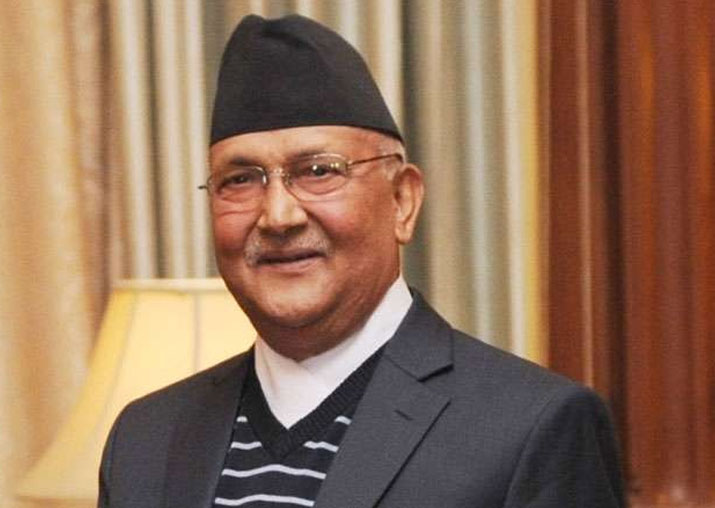
The most shocking news of all: The current prime minister, Mr. Oli, is rumored to have fled the country in a helicopter, and the regime has collapsed overnight. Nepal is almost out of order. The international media have described it as a “lightning fast collapse of power.
Xi Jinping’s ‘photo curse’?
Paradoxically, only days before the riots broke out, Oli made a surprise appearance in Beijing, shaking hands and posing for photographs with Xi Jinping, and also took part in a high-profile military parade on September 3.
China declared that “China and Nepal are in the same boat through thick and thin, sharing the same fate, and writing a chapter in the history of good neighborliness and friendship.” So, a few days later, for this “pro-China prime minister” to instantly sink in the domestic political situation was unexpected to say the least.
It is little wonder that the public has ridiculed the photo of the military parade, which has now become a “graduation photo”: The leaders are all smiles, but after returning home from visiting China, they are facing their own “graduation exams.” Each one of them is looking at a huge disaster. One by one, the “pro-China regimes” are in trouble.
Oli’s fall is not an isolated case, but signifies the latest chapter in the “pro-China regime dilemma.” Over the past few years, almost all regimes that are too close to the CCP and too reliant on Beijing have been plunged into turmoil and crisis. There is even a growing international narrative that these regimes are either erupting in protest or collapsing.
Sri Lanka
In 2022, mass protests broke out in the “Pearl of the Indian Ocean” over a severe debt crisis and energy shortages, with anger directed at the presidential palace. Eventually, President Rajapaksa was forced to flee, becoming the laughing stock of South Asian politics. Behind this crisis lies China’s Belt and Road project, which has put heavy debt pressure on Sri Lanka, particularly the ‘debt to rent’ case at Hambantota Port, labeling the country as a ‘debt trap.’
Bangladesh
In 2023, a nationwide student movement spread like wildfire, challenging the government’s legitimacy and ability to rule. The South Asian country has long been an important economic and trade partner for Beijing. Still, over-reliance on Chinese investment and loans has also made Bangladesh more vulnerable to economic and social conflicts. The students’ anger reflects the younger generation’s utter distrust of the government’s pro-China policies and corrupt institutions.
Indonesia
President Jokowi is supposed to be Beijing’s “friend” in Southeast Asia, not only participating in the Belt and Road Initiative, but also attending many of Beijing’s major events, including military parades. However, recently, there have been large-scale protests in Indonesia that have blamed the government for policy failures and corruption. This proves once again that the closer you get to the CCP, the more pressure your regime is under.
Serbia
In Europe, President Vucic is one of the most pro-China leaders, and Beijing has lauded him, even seeing him as “the gateway to Europe for the Belt and Road.” However, at the end of 2023, massive protests against electoral fraud broke out in Serbia, with tens of thousands of people taking to the streets, shouting slogans and calling for Vucic’s removal. This plunged Vucic’s regime into a crisis unlike any other in history.
This series of “political coincidences” is now known in the international arena as the “Xi Jinping curse”: Regimes that are too close to Xi Jinping, or too close to the CCP, are not only denied real sanctuary, but are also more likely to become the focus of turmoil.
In other words, the relationship between these leaders and the CCP has not only failed to bring them political glamor, but also seems to have been tainted by, leading them step by step to the abyss of public discontent.
Xi’s embarrassment and isolation
Oli’s fall was a blow to Beijing. As leader of the Communist Party of Nepal (CPN), he had always prided himself on “listening to Beijing.” The collapse of the regime has made a mockery of the Belt and Road Initiative, which the CCP has been working so hard to implement.
What is even more embarrassing is that Chinese officials have not dared to acknowledge the evacuation plan publicly, and have only dared to advise Chinese nationals in Nepal to “stay at home as much as possible.” This situation of “not being able to do anything” is in stark contrast to the CCP’s international rhetoric of “responsibility of a great nation.”
The truth about the CCP’s political ‘bad luck’
International public opinion mocks Xi Jinping’s “dark face and bad luck,” suggesting that leaders who take photos with him are under a spell. But putting aside the mystique, the political logic behind this is actually not that complicated. Regimes that rely heavily on Beijing often face their own structural crises, including corruption, debt, and public discontent. In the event of an unexpected event, these regimes are the first to collapse, which then drags Beijing into an awkward situation.
Who you surround yourself with determines your destiny
The group photo of the September 3 military parade is now considered a “menacing photo.” And perhaps this is the reality that Xi is most reluctant to acknowledge, and unable to escape; the Chinese Communist Party is exporting not prosperity, but crisis and turmoil.
Translated by Eva
Follow us on X, Facebook, or Pinterest
