
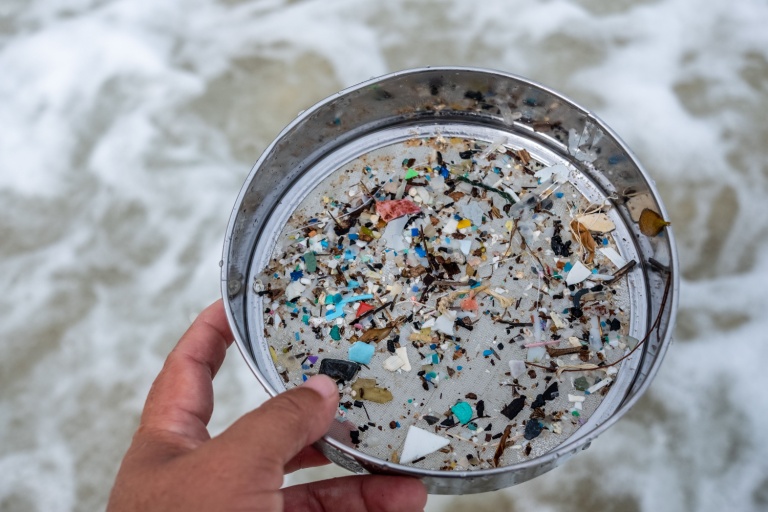
Microplastics are the 21st-century glitter. They get everywhere, they stick to everything, and no matter how much you try to clean, you’ll never really get rid of them. They’re in oceans, tap water, table salt, and, yes, in your blood. So what if the next big weapon against this planetary plague isn’t some billion-dollar filtration tech, but a slimy green pod you can fry with cornmeal?
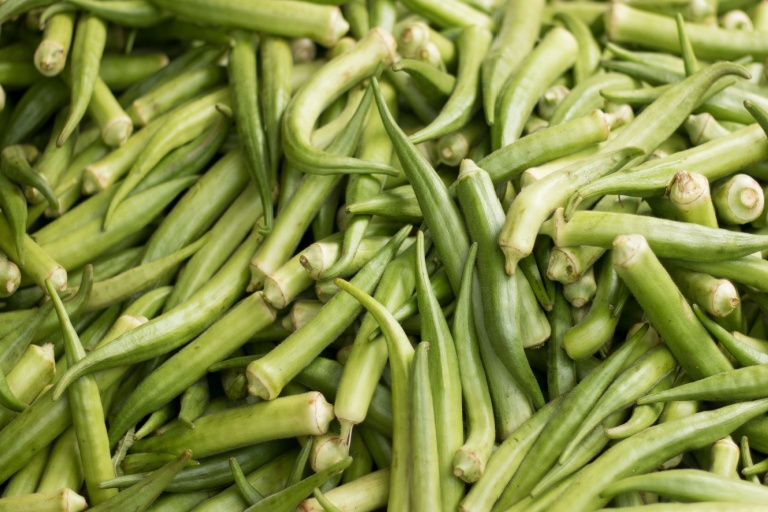
Enter okra — that polarizing vegetable that either makes you think of comfort food or mucous. Along with its spicier cousin, fenugreek, it’s suddenly at the center of a scientific claim that sounds almost too good to be true: These plants might pull microplastics out of water like magnets on steroids. A new peer-reviewed study confirms its effectiveness. But as always, the story gets weirder once you zoom out.
Microplastics: The invisible invasion
Let’s start with the basics. Microplastics are any plastic particles smaller than 5 millimeters. They come from everywhere: degraded bottles, synthetic clothing shedding fibers, tire dust, cosmetics, and packaging materials. Once in the environment, they don’t biodegrade in human time. They break into smaller and smaller shards.
Scientists have found them in seafood, in Arctic snow, and in human placentas. A 2022 study in Science Advances estimated that the average person eats about a credit card’s worth of plastic every week. That’s not just gross — it’s potentially carcinogenic, endocrine-disrupting, and still wildly understudied.
Governments know it’s a problem, but haven’t figured out how to regulate it beyond symbolic bans on plastic straws. Meanwhile, wastewater plants filter some, but billions of particles still slip through. And the ocean? Forget it. Microplastics are basically permanent. So when a group of researchers at the University of Texas published findings in ACS Omega that okra and fenugreek extracts could remove up to 90 percent of microplastics from water samples, the Internet perked up — cue think pieces, headlines, and more than a few memes.
The slimy science: How okra pulls off the trick
The team, led by R. Srinivasan, did something refreshingly low-tech. They cut up okra pods, blended fenugreek seeds, soaked them overnight in water, and then dried the goo into powders. These powders, it turns out, are packed with polysaccharides — long, sticky sugar chains that behave like natural polymers.
When added to contaminated water, the extracts cause microplastic particles to clump together into larger chunks that can be filtered or settled out. This process is called flocculation, and it’s not new. Water treatment plants already use synthetic flocculants like polyacrylamide. The difference? Okra is biodegradable and non-toxic.
Results varied by water type:
- Fenugreek was found to have a significant impact on groundwater, removing nearly 90 percent.
- Okra was surprisingly good in ocean water, around 80 percent.
- A combo of both worked best in freshwater.
The study wasn’t sloppy, either. They ran tests with scanning electron microscopes, zeta potential measurements, Fourier transform infrared spectroscopy — the entire toolbox. It wasn’t just “let’s dunk vegetables in dirty water and hope.” Still, one giant caveat: these were lab-scale tests. Think beakers, not municipal treatment plants.
The hype cycle: Miracle cure or slimy distraction?
Here’s the thing: science like this always sets off two simultaneous reactions.
- Optimism: Imagine a world where low-cost, biodegradable plant extracts clean up rivers in India, lakes in Africa, or municipal systems in the U.S. without toxic byproducts — a natural solution to a synthetic mess.
- Skepticism: How many times have we heard about miracle fixes that fizzle when scaled up? Algae biofuels. Plastic-eating bacteria. Ocean cleanup booms. Great in the lab, messy in reality.
And okra isn’t exactly cheap at scale. Processing plants to produce tons of consistent polysaccharide extract, disposing of the resulting plastic-laden sludge, and competing with global agriculture markets — it’s a logistical nightmare.
Additionally, there’s the “greenwashing” risk. Corporations love to hype up natural fixes as PR cover while pumping out more plastic. Imagine Nestlé bragging about “okra-treated” bottled water while still selling billions of PET bottles.
A slimy history: Plants vs pollution
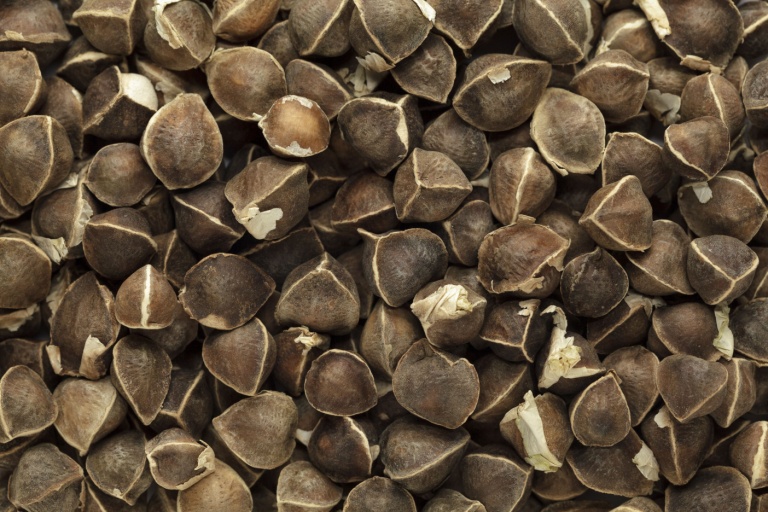
If this sounds like hippie pseudoscience, it’s not. Plants have been used for water treatment for centuries. Seeds of the Moringa oleifera tree are known natural flocculants in parts of Africa and South Asia. Indigenous communities have long relied on plant extracts to clarify water.
What’s different now is the scale of the crisis. We’re not just talking about cloudy pond water. We’re talking about invisible polymer particles clogging the entire planetary system. Microplastics are the asbestos of our era: once hailed as modern miracles, now recognized as stealth killers.
And history tells us something else: when industries create pollution problems, solutions often come from outside the industry. Think leaded gasoline (banned after outsider pressure) or DDT (curtailed after Silent Spring). Okra and fenugreek are outsider disruptors in a game dominated by Big Chemical.
The speculative turn: Where this could go
Let’s indulge in some “what ifs.”
- Biotech Okra 2.0: Imagine CRISPR-edited okra plants engineered to produce super-sticky polymers optimized for specific plastics — PET, polyethylene, polystyrene. Farms become bio-factories.
- DIY water filters: What if you could literally buy an okra cartridge for your Brita, toss it in, and watch microplastics vanish? Instagram-worthy slime filter content incoming.
- Corporate takeover: Big Chemical isn’t going to let farmers have the patent party. Expect buyouts, patent races, or “improved synthetic versions” with the same branding.
- Political football: Regulators might latch onto okra as the low-cost fix to dodge harder questions about cutting plastic production. Instead of banning fast-fashion polyester, they’ll say: don’t worry, we’ll floc it out.
Of course, each of these paths has pitfalls. Gene-edited okra could raise new safety issues. DIY filters might underperform. Corporate patents could price out communities that need it most. And political co-option could turn a potentially radical tool into a band-aid.
Microplastics, money, and power
Let’s zoom out. The problem isn’t just scientific — it’s political. Plastic is cheap, durable, and profitable. That’s why production is still climbing despite decades of “awareness campaigns.” By 2060, global plastic use is projected to triple. Meanwhile, regulation is patchy. The EU pushes bans and extended producer responsibility schemes. The U.S. drags its feet. Developing nations, many already drowning in plastic waste from richer countries, lack the infrastructure to respond.
Who’s supposed to pay for the cleanup? If okra and fenugreek actually work, will polluters fund their deployment? Or will the burden, once again, fall on communities at the receiving end of contamination? This is where the science collides with justice. Rural communities in the Global South might benefit most from affordable, natural treatment — if they’re given access. However, history suggests the opposite: patented tech, sold at a premium, marketed as a “green solution” in wealthy nations first.
The critical take: Slimy salvation or just another hustle?
Here’s where we land. Okra and fenugreek won’t magically erase the microplastics choking the planet. But they might become a tool — one of many — in a patchwork strategy of mitigation. The real question is whether they’ll be developed as public goods or as another corporate hustle.
Because science doesn’t exist in a vacuum, every natural solution has to pass through the meat grinder of patents, politics, and profit. And history shows us that what starts as a radical fix often ends as greenwashed PR. Still, there’s something deeply compelling about the idea that two plants — one a staple of Southern cooking, the other of Indian spice racks — might outperform billion-dollar technologies in cleaning up one of humanity’s dumbest messes.
Final word: Eat your okra, but don’t trust it alone
So, should you start dumping chopped okra into your tap water? No. Should governments fund large-scale field trials? Absolutely. Should we remain skeptical while still curious? Definitely. Because if there’s one truth about environmental science in 2025, it’s this: every “solution” is political. Okra might clump microplastics together. However, unless we clamp down on plastic production itself, the tide will continue to rise.
The plants are doing their part. Now it’s our turn.
Follow us on X, Facebook, or Pinterest
