
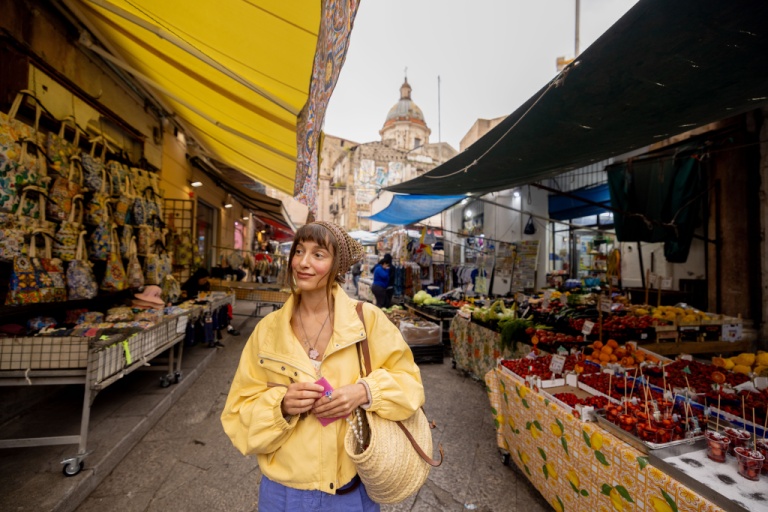
Slow travel isn’t a buzzword yet, but for many proponents of this new form of mindful travel, it is becoming a mentality — a way of life.
While exhaustion has become a quiet badge of honor, the idea of rest as resistance feels almost radical. To stop, to unplug, to refuse the cult of productivity is to stand against the velocity of modern life itself. Yet beneath this stillness lies no laziness, but a quiet form of defiance — a return to something older and more human. From monks who practiced wu wei to modern minimalists who reclaim unstructured time, the act of resting is being rediscovered not as escape, but as endurance — a rebellion measured not in noise, but in presence.
In a sunlit square in Santiago de Cuba, I once watched a woman selling guava jam from a wooden stall, her fingers sticky with fruit and her voice rising and falling as she greeted passersby. For several hours, I lingered — buying jam, learning how it was made, and hearing stories about earlier days when colonial trade ships docked in this very port. It wasn’t on any “must-see” list, yet it became the moment I remember.
In recent years, travel has quietly changed course. The once-dominant paradigm of fast visiting is giving way to a different kind of movement: slow travel. Instead of racing through cities and ticking off landmarks, more travelers now ask: What can I feel here? Who can I meet? What stories unfold if I stay?
Slow travel, mindful travel, travel as a kind of pilgrimage: these are not platitudes but a growing mainstream. Two-thirds of major travel operators now embed “slow” features in their packages — a sign that what was once niche is now entering mass awareness.
Why is this shift happening now? At its heart, slow travel responds to a cultural dilemma: we move more than ever, but we feel less. The acceleration of technology, ubiquitous digital distraction, and the pressure to maximize every minute have made many journeys feel hollow. Slow travel is a counter-gesture: to slow, to immerse, to see with more than eyes. But embracing it well requires care, nuance, and awareness.
What slow travel really means
To call something “slow travel” is to gesture broadly; it invites clarification. At its core, slow travel emphasizes depth over breadth, connection over consumption, and presence over volume. Unlike mass or fast tourism — characterized by destinations as boxes to tick — slow travel encourages lingering, local rhythms, and low-mobility itineraries.
Bhavana Gesota writes: “Slow travel is being in a place long enough to experience it without having a strict itinerary. It isn’t about seeing everything but experiencing the soul of a place.” Pico Iyer, echoing this sentiment, has said: “In an age of speed, I began to think, nothing could be more invigorating than going slow. In an age of distraction, nothing could feel more luxurious than paying attention.”
Carl Honoré, often credited as a proponent of the broader “slow movement,” observes: “Slow travel now rivals the fly-to-Barcelona-for-lunch culture. Advocates savor the journey, traveling by train or boat or bicycle, or even on foot, rather than crammed into an airplane.”
In more technical terms, academics define slow travel (or slow tourism) as tourism grounded in reduced mobility, longer stays, and a deliberate orientation toward local culture, sustainability, and internal experience. This is not merely a romantic ideal. It is connected to global cultural and infrastructural shifts: remote work, environmental urgency, and an evolving travel marketplace that values time more than ever. Let’s trace how these forces converge.
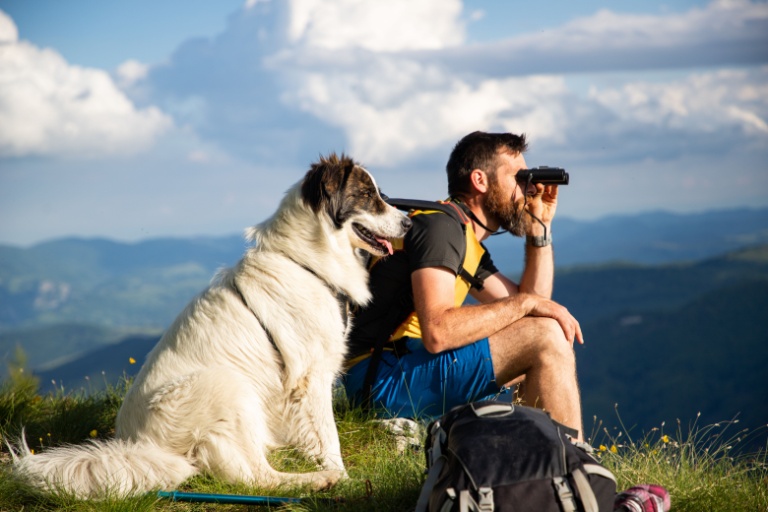
The structural shift: Time, attention, and economics
The rise of slow travel doesn’t occur in a vacuum — it is embedded in global transformations of how we live, work, and move.
One of the strongest enabling forces is the decoupling of work from a fixed location. As remote and hybrid work become normalized, many people can continue working from abroad without giving up their income. In empirical research, remote work has altered travel patterns: workers are more likely to take non-work longer trips, adjust mode choice, and incorporate “travel + work” into their lives. Visa’s transactional data confirms the change: average trip durations have increased. Travelers now stay longer and prioritize immersive, offbeat places over rushing to see everything.
Consumers are not only freer to slow down — they increasingly demand it. Market analysts report that after the post-pandemic “revenge travel” surge, the pendulum has swung: travelers now prefer spending more per trip rather than squeezing in more trips. Hilton’s 2025 trend report observes that many travelers are seeking “recommendations from locals” and aspire to “travel like a local.”
For example, Euromonitor calls slow travel “the buzz word of 2025,” noting that it has permeated mass tourism offerings, which once were adopted only by boutique or niche firms. Yet the logic is not only aesthetic. Slow travel aligns with ethical urgency: lower carbon, more sustainable, less exploitative. According to research on slow tourism development, the model intertwines environmental protection, social equity, and local economic benefit.
Despite these alignments, slow travel is not equally accessible to all. Time, capital, visa regimes, caregiving responsibilities, and digital divides all pose structural barriers. A critical lens must remain part of any narrative. As structural shifts enable slower journeys, the next question is: What stories emerge from them? The narrative potential of slow travel is central to its appeal — and to its ability to sustain itself beyond a fad.
Narrative: The journey that teaches stillness
In slow travel, pace becomes a narrative device. A slower day lets detail arrive: dawn light on a cobbled street, the scent of jasmine at dusk, the cadence of a language not rushed into translation. The more you linger, the more the place begins to tell its own story.
When I visited the island of Lefkada, Greece, I stayed for six weeks in a seaside hamlet. In week one, I took day trips and saw landmarks. In week four, I barely left (except to walk on the shore). In that stretch, I discovered a once-active olive press, now silent, where villagers still drop by to chat. I learned about a painter who lived there, whose canvases charted seasonal light, and whose granddaughter now runs a small gallery in a converted ferry shed. That slow dwelling allowed me to see through the art, the rhythm of harvest, and the glaze of salt on stone.
That kind of story can only emerge when time is generous. In Antarctica or Patagonia, travelers often speak of landscapes transformed by time. But in human-scaled settings — villages, neighborhoods, back alleys — the transformation is internal. The journey becomes a mirror, or a slow unfolding. Stories created in this mode are not only for consumption — they carry resonance, perhaps even a subtle transformation in the reader. But slow travel also carries paradoxes and tensions.
Tensions, paradoxes, and ethical pitfalls
No model is perfect, and slow travel carries its own contradictions. Here are some tensions to bear in mind:
- Privilege, access, and equity: Slow travel often privileges those with flexible work schedules, financial resources, and mobility rights (e.g., visas, passports). It risks becoming an “elite hobby” if it doesn’t attend to inclusivity.
- Commodification and co-option: As slow travel enters mainstream tourism marketing, there is danger of dilution: “stay three nights, drop one excursion, call it slow.” When “slow” becomes a label divorced from integrity, it loses meaning.
- Overtourism in slow form: Paradoxically, if many travelers all congregate in one village for a month each, that locale might suffer strain. Dispersal must be intentional.
- Stagnation vs. stagnancy: The challenge is to maintain narrative energy — even when embracing stillness. A story that feels stagnant loses its readers.
- The “time tax”: Not everyone can afford to take weeks or months. Some travelers may feel time-constrained guilt if they cannot “do slow” rigorously.
A thoughtful slow travel narrative acknowledges these tensions rather than effacing them. As stories must respond to their contexts, so must slow travel futures. What might lie ahead?
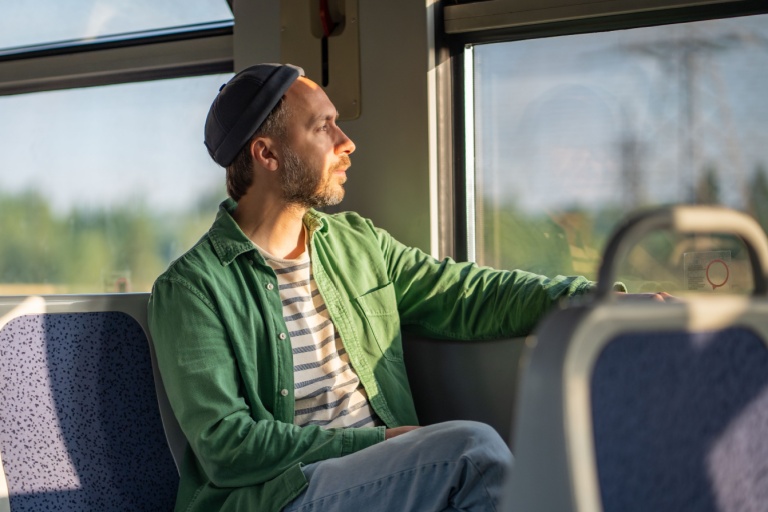
What slow travel means for destinations and culture
When travelers stay longer, the effects ripple widely. Destinations can benefit from steadier revenue, dispersed visitation, and deeper community engagement. Local guides, markets, and farms — all have a chance to be part of stories rather than poles of spectacle. Emerging research on slow tourism emphasizes sustainable planning: Local governance, community voice, and resource balance are critical. Some destinations are rethinking permit systems, zoning, and visitor caps to prevent commodification while encouraging depth.
To advocate slow travel is also to invest in a responsible narrative. As one promoter says: “Promoting slow travel is really about telling the right story: showing travelers what amazing experiences they can have when they slow down.” Yet not every place is ready for deep stays. Infrastructure, waste management, and cultural sensitivity matter. Slow travel is not an automatic cure for overtourism — it must be localized, just, and humble.
Slow travel’s subtle revolution
Slow travel’s appeal lies in its paradox: you travel by slowing. In doing less, you see more. In lingering, you understand. In connection, you transcend superficiality. From the woman selling jam in Santiago de Cuba, to olive presses in Lefkada, to quiet mornings in Kyoto, slow travelers learn to attend. They move inside places, not just across them.
I end where I began: lingered in a square, tasted jam, heard stories. That moment was not on any list but felt essential. If you make one shift in your next trip, let it be pace. Choose less, stay more, and enter a place with attention. The journey will be different — not more monumental, but more alive.
Follow us on X, Facebook, or Pinterest
